

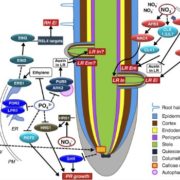
Review: The responses of root system architecture to nutrients
Blog, Plant Science Research Weekly, Research, Research BlogThe arrangement of a plant’s root system in the soil (root system architecture, RSA) changes in response to nutrients through different signaling pathways. It is assumed that RSA adapts to optimize the uptake of nutrients from the environment, but strong evidence is still lacking. This review by Shahzad…
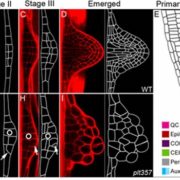
PLETHORA transcription factors orchestrate de novo organ patterning during Arabidopsis lateral root outgrowth
Blog, Plant Science Research Weekly, Research, Research BlogLateral root development in plants is a complex process that involves co-ordination of several molecular components to initiate the formation of meristematic cells. Uncovering the details of these processes is confounded by functional redundancy and tight cyclic regulation of different components in…
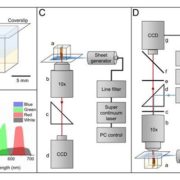
Light sheet microscopy imaging of light absorption and photosynthesis distribution in plant tissue
Blog, Plant Science Research Weekly, Research, Research BlogChlorophyll fluorescence is a common tool to investigate the behavior of the photosynthetic appratus, therefore photosynthetic capacity, at any physiological state. However, the different optical density of the samples can lead to light-dependent over- or underestimation of effective PSII quantum yields.…
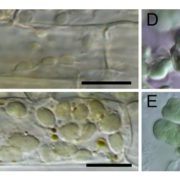
Re-creation of a key step in the evolutionary switch from C3 to C4 leaf anatomy
Blog, Plant Science Research Weekly, Research, Research BlogThe C4 Rice project aims to transition rice from a C3 crop to one that performs C4 photosynthesis, in order to realize a predicted 50% increase in yield. Here, Wang et al. expressed a positive regulator of chloroplast development, the maize GOLDEN2-LIKE transcription factor, in rice. The resulting…

Chlamydomonas photoreceptor gene editing by zinc-finger nucleases and CRISPR/Cas9
Blog, Plant Science Research Weekly, Research, Research BlogNew genome editing technology, such as zinc-finger nucleases and CRISPR/Cas9, are revolutionizing reverse genetics studies because they allow fast and precise genetic modifications in many species. However, they require efficient transformation and selection methods. This is notably a problem for algae…
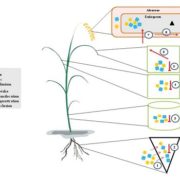
Strategy for enhancement of iron and zinc in biofortified rice
Blog, Plant Science Research Weekly, Research, Research BlogPolished white rice is a major food source for much of the world but is not a good source of the essential micronutrients iron and zinc. Like microbes, plants enhance their uptake of iron from the environment by synthesizing small “iron carrying” molecules called respectively siderophores or phytosiderophores…
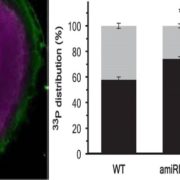
Phosphate transfer from maternal tissue to embryo
Blog, Plant Science Research Weekly, Research, Research BlogMany nutrients move through the plant body via the phloem. The developing embryo, which depends on the maternal plant for its nutrients, is not directly (symplastically) connected to maternal tissues, so nutrients must be exported across membranes to reach the embryo. PHO1 was identified previously as…
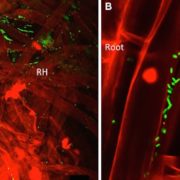
A root hair-seeking endophytic microbe from an unusual volcanic swamp corn enhances phosphate uptake
Blog, Plant Science Research Weekly, Research, Research BlogIn plants the location of microbes to specific cell types, including endophytes, is still scarcely described in contrast with the situation in the animal kingdom. Shehata et al. describe a bacterial endophyte (Strain 3F11, possibly Enterobacter asburiae) from Zea nicaraguensis, a wild corn growing at…

The role of botanical gardens in species conservation
Blog, Plant Science Research Weekly, Research, Research BlogBotanical gardens are sanctuaries where plant diversity is celebrated, conserved, studied, and shared. As more species are put under pressure from anthropogenic activities, the importance of botanical gardens in preserving and protecting threatened species is increasing. A recent study on the role of…