


Live and Let Die: Phosphatidic Acid Modulates the Self-Incompatibility Response
Research, The Plant Cell, The Plant Cell: In BriefPollen tubes are remarkable vehicles that deliver immobile sperm nuclei from the stigma to the ovule during angiosperm reproduction. Their journey delicately balances turgor pressure with the precise spatiotemporal regulation of polarized growth machinery to navigate pollen tubes and their cargo to the…

Life of PPi: Soluble PPases and H+-PPase act cooperatively to keep pyrophosphate levels in check
Blog, Research, The Plant Cell, The Plant Cell: In BriefInorganic phosphate (PPi) is a byproduct of many metabolic reactions, including those involved in sucrose, sugar nucleotide, and cellulose biosynthesis. Although PPi is an important phosphate donor and source of cellular energy, high levels of cytosolic PPi are toxic, disrupting the metabolic reactions…
A Tale of Three Studies: Uncovering the Crucial Roles of m6A Readers
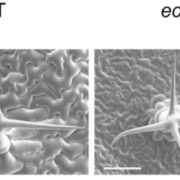
Blog, Research, The Plant Cell, The Plant Cell: In BriefThe story behind m6A (methylation of the N6 position of adenosine), the most common internal mRNA modification in eukaryotes, has long been a source of intrigue. This epitranscriptomic mark is deposited at specific mRNA sequences by m6A writers and removed by m6A erasers. The m6A marks recruit and anchor…
The Lipase Link: Abscisic Acid Induces PLASTID LIPASES, Which Produce Jasmonic Acid Precursors
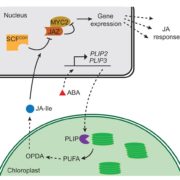
Blog, Research, The Plant Cell, The Plant Cell: In BriefCrosstalk, crosstalk— it’s a word that keeps coming up. Indeed, and perhaps not surprisingly, plant hormone signaling pathways all seem to affect each other to some extent. For example, the MYC2 transcription factor plays roles in abscisic acid (ABA) and jasmonic acid (JA) signaling in the response…

Divide and Conquer: High-Throughput Screening of Chlamydomonas Cell Cycle Mutants
Blog, The Plant Cell, The Plant Cell: In BriefCell division is essential for growth and reproduction. The cell cycle machinery is well conserved between yeast and animals, but whether this conservation extends to the plant lineage is not clear, having diverged over two billion years ago: ample time and opportunity for divergence in sequence and…
Review: A guide to sequence your favorite plant genomes (App. Plant Sci)
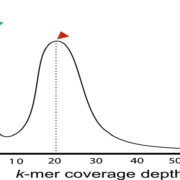
Plant Science Research WeeklyEvery year, genome assembly gets faster and cheaper. Li and Harkness provide a practical guide to today’s methods, with caveats and precautions that need to be considered at each step, even questions to ask before embarking on a sequencing project. Topics include how to estimate genome size and complexity,…

Gravisensors in plant cells behave like an active granular liquid (PNAS)
Plant Science Research WeeklyWhen you try to tip rocks out of a bucket, nothing happens until the steepness of the angle is sufficient to start them shifting (the “avalanche angle”). By contrast, water starts moving with even the slightest tilt to the bucket. Now think about the gravity sensing particles in plant cells, starch-rich…

Mutations in a subfamily of ABA receptor genes promote rice growth and productivity ($)
Plant Science Research WeeklyLike all plant hormones, ABA controls diverse processes, including stomatal aperture and seed dormancy, and growth rate. Miao et al. have used CRISPR/Cas9 technology in rice to selectively mutant subsets of the 13-member PYL family of ABA receptors. They found notable differences when mutating group…

The cytokinin trans-Zeatin plays a role in long distance nitrogen signaling ($) (Plant Cell)
Plant Science Research WeeklyPlants modify gene expression and physiological processes to overcome temporal and spatial variations in nitrogen availability. These modifications rely on complex root-shoot-root signaling networks which are triggered by cytokinin biosynthesis. Poitout and colleagues use mutant analysis, transcriptome…