


ONE GENE: DIFFERENT mRNAs, DIFFERENT TISSUES, DIFFERENT FUNCTIONS IN DEVELOPMENT
Research, The Plant Cell, The Plant Cell: In a NutshellNapoli et al. show that mRNA splicing variants have tissue- and developmental stage-specific activity in flower development https://doi.org/10.1105/tpc.17.00840.
By Roberta Ghelli and Patrizia Brunetti
Background: Plants that are self-pollinating contain both male (stamen) and female (pistil)…

Pathogenic Bacteria Use A “Self-Eating” Process to Trick Plants
Research, The Plant Cell, The Plant Cell: In a NutshellÜstün et al. show that pathogenic Pseudomonas enhances the autophagic turnover of proteins in Arabidopsis https://doi.org/10.1105/tpc.17.00815.
By Suayib Üstün and Daniel Hofius
Background: Autophagy and the proteasome are the major pathways for protein degradation in eukaryotes. While the…
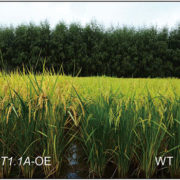
Developing High-Yield Early-Maturation Crops by Manipulating Nitrogen Utilization
Research, The Plant Cell, The Plant Cell: In a NutshellWang et al. investigate the function of OsNRT1.1A in rice. Plant Cell (2018). https://doi.org/10.1105/tpc.17.00809.
By Wei Wang, Bin Hu and Chengcai Chu
Background: To cope with an increasing global population and decreasing availability of arable land, improving crop yield is a major agricultural…

Clathrin-Mediated Endocytosis: Plant Homologs of the Clathrin Uncoating Factor Auxilin
Research, The Plant Cell, The Plant Cell: In a NutshellAdamowski et al. use CRISPR to investigate the function of plant auxilin proteins https://doi.org/10.1105/tpc.17.00785.
By Maciek Adamowski
Background: Endocytosis is one of the basic pathways of cellular trafficking. By endocytosis, proteins located in the plasma membranes, for instance receptors,…
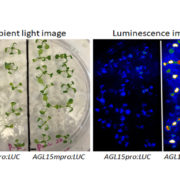
Switching off Seed Maturation Genes in Seedlings
Research, The Plant Cell, The Plant Cell: In a NutshellChen et al identify AGL15 as a direct target of HSI2-dependent transcriptional repression in Arabidopsis seedlings https://doi.org/10.1105/tpc.17.00655.
By Naichong Chen and Randy Allen
Background: The developmental transition from seeds to seedlings is a critical step in the plant life cycle.…

Update: Cation/H+ transporters affect membrane trafficking
Plant Physiology, Plant Physiology: UpdatesBy Heven Sze and Salil Chanroj.
Plants remodel their cells through the dynamic endomembrane system. Intracellular pH is important for membrane trafficking, but the determinants of pH homeostasis are poorly defined in plants. Electrogenic proton (H+) pumps depend on counter-ion fluxes to establish…
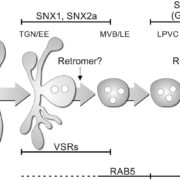
Turnover of Tonoplast Proteins
Plant Physiology, Plant Physiology: News and ViewsBy Rumen Ivanov and David G. Robinson
Our knowledge of vacuole biogenesis and the transport of proteins to the vacuole has advanced consistently over the last 30 years. In meristematic cells, the tonoplast appears to develop directly out of the endoplasmic reticulum (Viotti et al., 2013). Once it is…
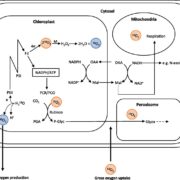
Photosynthetic Oxygen Production: New Method Brings to Light Forgotten Flux
Blog, Plant Physiology, Plant Physiology: News and Views, ResearchOxygen (O2) is evolved during photosynthetic electron transport when water is split by the oxygen-evolving complex to provide protons and electrons to the chloroplastic electron chain, thereby generating ATP and NADPH—the energy source and reducing power for plant metabolism. The majority of this chemical…
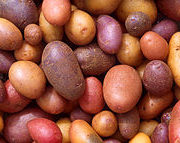
Improving on the Humble Spud
Blog, Plant Physiology, Plant Physiology: News and Views, ResearchThe humble spud. Simple, unassuming, yet vital in supporting a large proportion of the world’s population. Historically speaking, much of the research performed on potatoes (Solanum tuberosum) has gone into enhancing their disease resistance, justifiably so given the severe famines brought about through…