


Role of BASIC PENTACYSTEIENE transcription factors in a subset of cytokinin signaling responses (Plant J)
Plant Science Research WeeklyWhen cytokinin binds to its receptor AHKs (Arabidopsis Histidine Kinase), the signal is transduced through AHPs (Arabidopsis Histidine-containing Phosphotransfer protein) and eventually to type-B ARRs (Arabidopsis Response Regulators) transcription factors (TFs). Type-B ARR TFs mediate the primary cytokinin…

Antagonistic action of ABA and cytokinin signaling mediates drought stress response in Arabidopsis ($) (Mol Plant)
Plant Science Research WeeklyDrought stress results in a conglomeration of hormone pathways that interact to coordinate plant growth and stress response. ABA and cytokinin signaling are known to be antagonistic but it is unclear how these two pathways are connected. Huang et al. identified roles for several ARR proteins, negative…
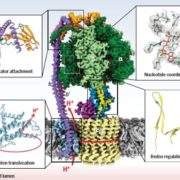
Chloroplast ATP synthase structure generated through cryo-EM ($) (Science)
Plant Science Research WeeklyGreen plants use photosynthesis to covert light into ATP (adenosine triphosphate) through the molecular action of the chloroplast F1Fo ATP synthase (cF1Fo). The ATP synthesis happens in the hydrophilic head (c F1) and is powered by the cFo rotary motor located in the photosynthetic membrane. This rotary…
What We're Reading: June 1st
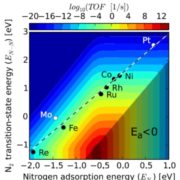
WWR Full PostReview: Beyond fossil fuel–driven nitrogen transformations ($)
Obtaining the high yields needed to feed the human population depends on the application of nitrogen-containing fertilizers to non-leguminous crops, yet the production of these compounds consumes 1 – 2% of global energy output. Plant…

NLR mutations suppressing immune hybrid incompatibility (Plant Physiol)
Plant Science Research WeeklyHybrid incompatibility (HI) is effectively the opposite of hybrid vigor, and indicates a deleterious effect arising from the combination of two genomes. Because of reduced fitness of the hybrids, HI can be considered as contributing towards speciation. In Arabidopsis thaliana, HI has been recognized…
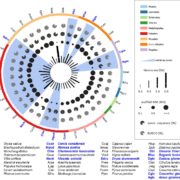
Phylogenomics reveals multiple losses of nitrogen-fixing root nodule symbiosis (Science)
Plant Science Research WeeklyThe ability to participate in nitrogen-fixing root nodule symbiosis shows an interesting phylogenetic pattern, with some families showing a large number of nodulating species interspersed with non-nodulating ones, and some families showing only a few nodulating species. A current model suggests that…
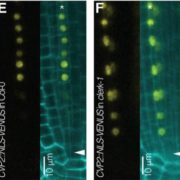
CLERK is a novel receptor kinase required for sensing of root-active CLE peptides in Arabidopsis (Development)
Plant Science Research WeeklySmall secreted peptides including CLEs have been identified as contributing to plant development. CLE26 and CLE45 have been shown to regulate protophloem differentiation in the root tip. Anne et al. used a combination of genetic screening and transcriptomics to identify factors downstream of these peptides.…
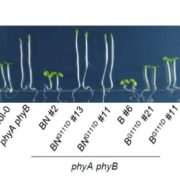
Phytochrome B mutants discern distinct roles of PIF degradation and sequestration (Plant Cell)
Plant Science Research WeeklyThe interaction between phytochromes and phytochrome-interacting factors (PIFs) is key to light signaling. Both sequestration and degradation of PIFs occurs, and Park et al. have explored the relative contributions of these two PIF fates to the light response. They studied two mutants, one with a point…
Plant scientists use big data to map stress responses in corn
Blog, The Plant Cell, The Plant Cell: NewsIowa State University
AMES, Iowa – Plant scientists at Iowa State University have completed a new study that describes the genetic pathways at work when corn plants respond to stress brought on by heat, a step that could lead to crops better capable of withstanding stress.
The findings, published…