

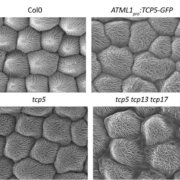
Novel functions of TCP5 in petal development and ethylene biosynthesis (Plant J.)
Plant Science Research WeeklyThe flower is one of the most important organs of a plant as it provides fruits and seeds. Due to its economic value, flowers are studied extensively to understand its developmental process. Based on the popular ABC model of flower development, floral organ development is mostly regulated through the…

Roles of AGCVIII kinases in the hypocotyl phototropism of Arabidopsis seedlings (Plant Cell Physiol.)
Plant Science Research WeeklyPhosphorylation and de-phosphorylation are fundamental events for signal transduction. Phytohormone and light signaling are no exception in this case. Plants face towards light by creating lateral auxin gradient between exposed and shaded sides. This asymmetric auxin distribution is mediated through…
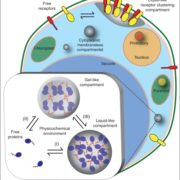
Review: Organization out of disorder – liquid-liquid phase separation in plants (COPB)
Plant Science Research WeeklyWithin cells there are vast numbers of different activities and processes occurring simultaneously. In eukaryotic cells, some of these processes are segregated into distinct membrane-bound compartments. Cuevas-Velazquez and Dinneny review how membraneless compartments also contribute to subcellular organization,…

What We're Reading: June 8th
Blog, Research, Research Blog, WWR Full PostGuest editor: Danielle Roodt Prinsloo
Danielle is a PhD candidate in the Forest Molecular Genetics (FMG) Programme at the University of Pretoria, South Africa. She has been a Plantae Fellow since September 2017, having joined after attending her first ASPB Plant Biology meeting. Danielle is a plant…
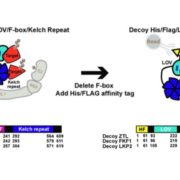
Decoys untangle complicated redundancy and reveal targets of circadian clock F-box proteins (Plant Physiol)
Plant Science Research WeeklyThe processing of the circadian clock requires that regulatory proteins are ubiquitinated and degraded, through their interactions with F-box proteins. Lee et al. used a decoy strategy to characterize the targets of three related F-box proteins involved in clock function, ZTL, LKP2 and FKF1, which genetic…
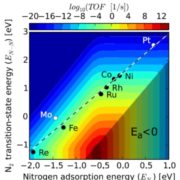
Review: Beyond fossil fuel–driven nitrogen transformations ($) (Science)
Plant Science Research WeeklyObtaining the high yields needed to feed the human population depends on the application of nitrogen-containing fertilizers to non-leguminous crops, yet the production of these compounds consumes 1 – 2% of global energy output. Plant scientists are familiar with the conversion of N2 to NH3 by nirogenase…
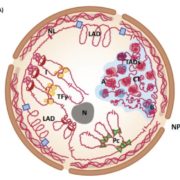
Review: Entering the next dimension - plant genomes in 3D (Trends Plant Sci)
Plant Science Research WeeklyThe three-dimensional arrangement of DNA within the nucleus clearly affects gene expression, but its contribution remains relatively unexplored as compared to other factors. Sotelo-Silveira et al. review new chromosome conformation capture (3C) and derived techniques for assessing genomes in 3D, as well…
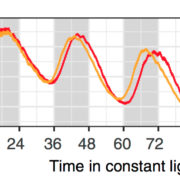
Genes responsible for deceleration of circadian rhythms during tomato domestication (PNAS)
Plant Science Research WeeklyDomestication of crop plants is intimately linked to the modulation of the plants circadian rhythms, allowing adaptation to new agricultural environments. Deceleration of the clock has been instrumental in tomato domestication; however the underlying molecular mechanisms are not fully understood. In…
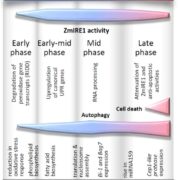
Response to persistent ER stress in plants (Plant Cell)
Plant Science Research WeeklyA key question in plant stress physiology is how the plant perceives stress in order to mitigate its effects. Heat (and other) stress can lead to an accumulation of unfolded or misfolded proteins in the endoplasmic reticulum, which initiates the Unfolded Protein Response (UPR), leading to a change in…