

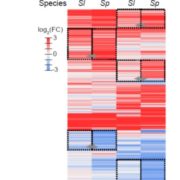
Regulatory Divergence in the Stress Response of Tomato
The Plant Cell, The Plant Cell: In BriefHumans have domesticated crops for thousand of years by artificially selecting plants for numerous traits including morphology, lower toxicity or higher yield. As a result, plant domestication often altered plant fitness and resistance to stress under controlled conditions (Meyer & Purugganan 2013).…

Nitrate Ahoy! Shoot Cytokinin Signals Integrate Growth Responses with Nitrogen Availability
The Plant Cell, The Plant Cell: In BriefNutrients are rarely distributed homogenously in soil. Consequently, plants have local and long-distance signaling systems in place to monitor and coordinate both demand and supply of essential macronutrients such as nitrogen (N). The “N-demand” long distance signal emanates from a section of the…
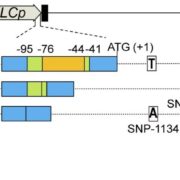
Is Genetic Evolution Predictable?
The Plant Cell, The Plant Cell: In BriefHow often does evolution repeat itself? When the same evolutionary strategy arises multiple times, how often are these strategies built on the same genetic foundations? Addressing this question allows us to understand the relative roles of constraint and contingency in the history of life, but (without…
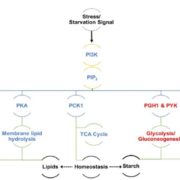
A Molecular Gatekeeper of Algal Biofuel Synthesis
Plant Physiology, Plant Physiology: On The InsideAlgae undergo a complete metabolic transformation under stress by arresting cell growth, inducing autophagy, and hyper-accumulating biofuel precursors such as triacylglycerols and starch. However, the regulatory mechanisms behind this stress-induced transformation are still unclear. Understanding the signaling…
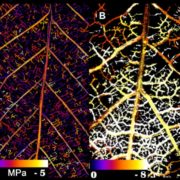
Low Xylem Vulnerability in Oaks
Plant Physiology, Plant Physiology: On The InsideUnder conditions of drought stress, the continuous column of water in the plant xylem experiences increasing tension caused by declining water potential at the sites of evaporation. Eventually, air is drawn into the water transport system, forming embolisms in the xylem conduits. Although plants have…
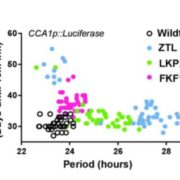
New Insights into the Molecular Biology of Plant Circadian Rhythms
Plant Physiology, Plant Physiology: On The InsideThe circadian clock is an endogenous timekeeper that synchronizes essential biological processes with the outside world. Eukaryotic clocks rely on the ubiquitin proteasome system to target core clock factors for degradation. Altering clock protein degradation can change the period length of the clock.…
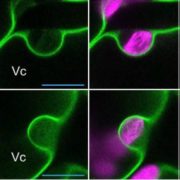
Selective Chloroplast Microautophagy
Plant Physiology, Plant Physiology: On The InsideWhen plants are exposed to excessive light, photoinhibition occurs and chloroplasts become damaged. Photodamaged chloroplasts undergo vacuolar digestion through a poorly understood autophagic process called chlorophagy. In general, cell biologists recognize two types of autophagy: macroautophagy and…
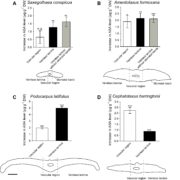
ABA Biosynthesis Occurs in the Mesophyll
Plant Physiology, Plant Physiology: On The InsideThe plant hormone abscisic acid (ABA) plays a critical role in enhancing plant survival during water deficit. While there is no doubt that ABA is a carotenoid derivative and that carotenoid cleavage occurs in the chloroplast, uncertainty remains about which tissues are responsible for synthesizing ABA.…
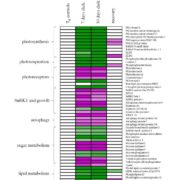
How Does a Plant Tolerate Prolonged Darkness?
Plant Physiology, Plant Physiology: On The InsideThe exposure of plants to prolonged darkness leads to the exhaustion of starch reserves and carbon and energy starvation. In such cases, plants must use alternative nutrient and energy sources to survive. Autophagy is an important mechanism that breaks down proteins and lipids and thereby provides the…