

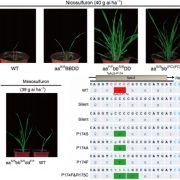
Generation of herbicide tolerance traits and a new selectable marker in wheat using base editing (Nature Plants)
Plant Science Research WeeklyNowadays, weeds represents a major problem to agriculture due to the limited availability and expense of tools to manage them. Using new technologies to create herbicide-tolerant, non-transgenic varieties could improve weed control. Here, Li et al. analyzed multiallelic editing of the wheat TaALS (encoding…
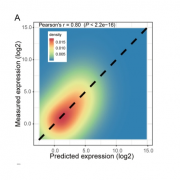
Chromatin signature and transcription factor binding provide a predictive basis for understanding plant gene expression (Plant Cell Physiol)
Plant Science Research WeeklyMachine learning is a booming research field, also in Plant Science. Here, Wu et al. use chromatin modifications and transcription factors to predict transcription levels in Arabidopsis and rice. This is not only important for prediction but also to understand the mechanisms underlying epigenetic regulation.…
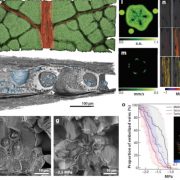
Plant Science Research Weekly: May 3rd
WWR Full PostReview: Functional status of xylem through time ($)
If you haven’t been paying attention, you may have missed the great advances that have been taking place in xylem research recently. This excellent review by Brodersen et al. is your chance to catch up. Like all aspects of plant science, new…
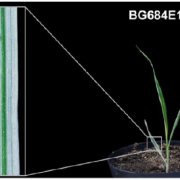
The White Stripes Featuring ALBOSTRIANS, a Chloroplast-Localized CCT Domain Protein
Research, The Plant Cell, The Plant Cell: In BriefVariegation in different organ types has been of great interest to biologists. The study of pigment variegation in maize kernels led to the discovery of transposable elements (McClintock, 1950), whereas the study of eye pigment variegation in Drosophila has led to interesting insights into chromatin…

Two pathways for trafficking the borate receptor BOR1
Plant Physiology, Plant Physiology: News and Views, ResearchPolar localization of plasma membrane proteins is an important way cells regulate signaling pathways, transport across membranes, and growth. Polarization has obvious cellular effects, but localization of membrane components also contributes significantly to processes such as tip growth in root hairs…

Recognizing The Plant Cell first authors: Mariana Diaz
The Plant Cell, The Plant Cell: Author ProfilesMariana Diaz, first author of SMC5/6 Complex Subunit NSE4A is Involved in DNA Damage Repair and Seed Development in Arabidopsis
Current position: Postdoctoral researcher, Matsunaga laboratory, Tokyo University of Science
Education: Ph.D., University of Cologne/Max Planck Institute for Plant Breeding…

An RNA-chaperone-like Protein in Chloroplasts
Research, The Plant Cell, The Plant Cell: In a NutshellJiang et al. isolated a plastid-localized RNA-chaperone-like protein and investigated its function. Plant Cell https://doi.org/10.1105/tpc.18.00946.
By Jingjing Jiang, Xin Chai, Nikolay Manavski, and Wei Chi
Background: RNA folding, which underlies the formation of RNA structure, is important…

An Electron Shuttle for Lignin Biosynthesis
Research, The Plant Cell, The Plant Cell: In a NutshellGuo et al. uncover a unique electron donor protein for syringyl lignin biosynthesis in Arabidopsis thaliana. The Plant Cell (2019). https://doi.org/10.1105/tpc.18.00778
By Chang-Jun Liu
Background: Plants use sugar from photosynthesis as a carbon and energy source for their growth and development.…

Letting Sleeping DOGs Lie: Regulation of DOG1 during Seed Dormancy
Research, The Plant Cell, The Plant Cell: In BriefThe auspicious timing of seasonal germination is crucial to plant fitness and survival. Consequently, seed dormancy is tightly regulated by both developmental and environmental cues, which are integrated via crosstalk between several phytohormone signaling pathways including gibberellins, abscisic acid…