


Recognizing Plant Physiology first authors: Viviana Andrea Correa Galvis
Plant Physiology, Plant Physiology: Author ProfilesViviana Andrea Correa Galvis, first author of Photosynthesis in Arabidopsis thaliana is unaffected by the function of the vacuolar K+ channel TPK3
Current Position: Post-doctoral researcher at the Max Planck Institute for Molecular Plant Physiology, Germany
Education: PhD in Plant Biology, Heinrich…

How Plants Adapt to Different Temperatures
Research, The Plant Cell, The Plant Cell: In a NutshellMéndez-Vigo et al. explore how plants from different world regions adapt to different temperature conditions. Plant Cell https://doi.org/10.1105/tpc.18.00938.
By Belen Méndez-Vigo and Carlos Alonso-Blanco
Background: Plants adapt to seasonal and yearly fluctuations in ambient temperature…
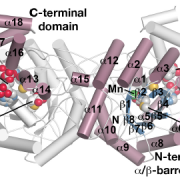
Methionine-Derived Glucosinolates: The Compounds that Give Brassicas their Bite
Research, The Plant Cell, The Plant Cell: In BriefThe compounds that give wasabi (Eutrema japonicum) its kick and bok choy (Brassica rapa ssp. chinensis) its distinctive flavor are breakdown products of glucosinolates derived from not so pungent amino acids. These zesty phytochemicals help Brassica plants adapt to their many environmental niches worldwide…

A Glucose Transporter Promotes Stomatal Conductance and Photosynthesis
Research, The Plant Cell, The Plant Cell: In a NutshellHai Wang et al. identify a regulator of stomatal movement and photosynthesis. Plant Cell https://doi.org/10.1105/tpc.18.00736
By Hai Wang, Biotechnology Research Institute, Chinese Academy of Agricultural Sciences
Background: Fixation of atmospheric CO2 through photosynthesis is crucial for the…
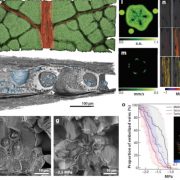
Review: Functional status of xylem through time ($) (Annu Rev Plant Biol)
Plant Science Research WeeklyIf you haven’t been paying attention, you may have missed the great advances that have been taking place in xylem research recently. This excellent review by Brodersen et al. is your chance to catch up. Like all aspects of plant science, new tools and techniques have provided tremendous new insights…
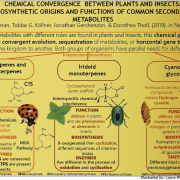
Review. Chemical convergence between plants and insects: biosynthetic origins and functions of common secondary metabolites (New Phytol)
Plant Science Research Weekly
Plants and insects aren't closely related, but they have a plethora of similar chemical weapons used for their interactions (defense, attraction, etc.). Beran et al. describe the function and biosynthesis of secondary metabolites that are shared in both insects and plants.
The monoterpenes and…

Review: Jasmonate signalling in carnivorous plants: Copycat of plant defence mechanisms (J Exp Bot)
Plant Science Research WeeklyCarnivorous plants are one of the easiest ways to demonstrate to children that “plants are cool too”. In their new review, Pavlovič and Mithöfer show that carnivorous plants can also be a gateway to introduce the subject of how plants defend themselves against herbivory, by drawing links between…
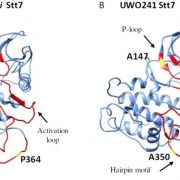
Cold-adapted protein kinases and thylakoid remodeling impact energy distribution in an Antarctic psychrophile (Plant Phys)
Plant Science Research Weekly“Earth is a cold place with 80% of its biosphere permanently below 5°C,” begins this study of an Antarctic psychrophile (“cold-lover”). As Szyszka-Mroz et al. indicate, the permanently cold-adapted inhabitants of permanently frozen lakes are highly vulnerable to the effects of climate change,…

PCH1 regulates light, temperature, and circadian signaling as a structural component of phytochrome B-photobodies in Arabidopsis (PNAS)
Plant Science Research WeeklyPhytochrome is one of the key photoreceptors in plants, and famous for switching between active and inactive (Pfr and Pr) forms by absorption of far-red and red light; additionally, Pfr converts slowly to Pr independently of light. Furthermore, in the nucleus, the Pfr form can aggregate into photobodies.…