


Recognizing Plant Physiology authors: Sam Barnett
Plant Physiology, Plant Physiology: Author ProfilesSam Barnett, co-first author of Dynamic thylakoid stacking is regulated by LHCII phosphorylation but not its interaction with photosystem I
Current Position: Postdoctoral Research Fellow, Mechanobiology Institute, Singapore
Education: PhD in Biophysics, University of Sheffield; MSc Mechanobiology…

Recognizing Plant Physiology first authors: Will Wood
Plant Physiology, Plant Physiology: Author ProfilesWill Wood, co-first author of Dynamic thylakoid stacking is regulated by LHCII phosphorylation but not its interaction with photosystem I
Current Position: Research Associate at the University of Sheffield
Education: PhD in plant photosynthesis at the University of Sheffield (2017); MSc Mechanistic…

Regulation and Function of a Plant Energy Sensor
Research, The Plant Cell: In a NutshellRamon et al. show how plants have modified the ancient, highly conserved eukaryotic energy sensor to better fit their unique lifestyle and cope with changing environmental conditions. Plant Cell https://doi.org/10.1105/tpc.18.00500
By Nathalie Crepin and Filip Rolland, KU Leuven, Belgium
Background:…
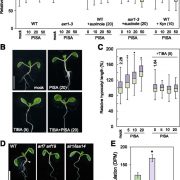
Pinstatic Acid: a Novel Modulator of PIN Trafficking
Plant Physiology, Plant Physiology: On The InsideThe polar subcellular localization of the auxin efflux machinery determines the directionality of auxin flow in plants. In particular, the dynamics of polar localization of PIN proteins regulates the rate and direction of cellular auxin export and this ultimately determines auxin gradients in the tissue.…
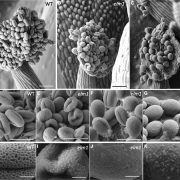
A Role for Mitochondrial Fission in Pollen Growth
Plant Physiology, Plant Physiology: On The InsideThe tapetum is the innermost layer of the anther and encloses the locule wherein pollen develops. In addition to supplying nutrients for pollen growth, the tapetum synthesizes and transfers pollen outer wall precursors for the formation of the pollen outer wall. To synthesize, secrete, and transfer materials…

PINOID Is Required for Formation of the Stigma and Style in Rice
Plant Physiology, Plant Physiology: On The InsideIn rice (Oryza sativa), both the male and female floral organs are produced in the same flower: thus, only rarely do rice grains result from cross-pollination. Since cross-pollination is difficult in rice so, too, is the production of hybrid seed. Plants with defective stigmas may have commercial value…

A SNARE Protein Involved in H+-ATPase Trafficking
Plant Physiology, Plant Physiology: On The InsideMembrane proteins are synthesized in the endoplasmic reticulum and are trafficked through the Golgi, from which they are sorted to the plasma membrane, tonoplast, or other target membranes. In all eukaryotes, secretory traffic to the plasma membrane is mediated by SNARE proteins. In Arabidopsis, three…

Insights into Thermonastic Leaf Movements
Plant Physiology, Plant Physiology: On The InsideMany plant species actively reorient their organs in response to dynamic environmental conditions. Petiole hyponasty is an upward movement of petioles driven by a higher rate of cell expansion on the lower (abaxial) compared with the upper (adaxial) side. Hyponasty is common among rosette species facing…

Plant Science Research Weekly: June 14th
WWR Full PostReview: N-degron pathway-mediated proteostasis in stress physiology
The rate of most biological processes is ultimately determined by protein activity levels, which of course are determined by rate of degradation or inactivation as well as production. Dissmeyer reviews the Cys/Arg branch of…