

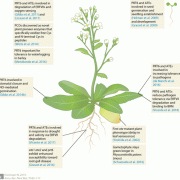
Review: N-degron pathway-mediated proteostasis in stress physiology (Annu Rev Plant Biol)
Plant Science Research Weekly
The rate of most biological processes is ultimately determined by protein activity levels, which of course are determined by rate of degradation or inactivation as well as production. Dissmeyer reviews the Cys/Arg branch of the N-degron pathway (previously called the N-end rule pathway) that contributes…
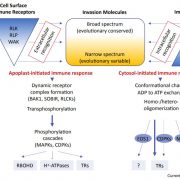
Review: Plant immunity, refining the model (Trends in Plant Sci and Curr Opin Plant Biol)
Plant Science Research WeeklyInteractions between plants and microorganisms occur in many different ways and on many different levels. Scientists have been attracted to this field of research because of the need to identify the agents causing infectious diseases in economically important crops. Models have been developed to describe…

Review: The challenges of delivering genetically modified crops with nutritional enhancement traits (Nature Plants) ($)
Plant Science Research WeeklyDespite the widespread success of genetically modified (GM) crops resistant to herbicides and insect herbivory, GM food crops with nutritional enhancement traits remain on the fringes of commercial agriculture. In this review, Napier et al. examine the current state of GM food crops and the obstacles…
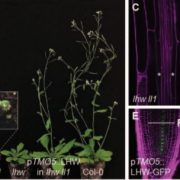
Evolution of vascular plants through redeployment of ancient developmental regulators (bioRxiv)
Plant Science Research WeeklyLand plants (Tracheophytes), utilize the well-developed vascular tissue for conducting water and other nutrients necessary for plant growth. In Arabidopsis and other land plants, the key player of vascular cell division is well characterized and this includes the TMO5-LHW (TARGET OF MONOPTEROS 5 –…

Pinstatic acid promoters auxin transport by inhibiting PIN internalization (Plant Physiol)
Plant Science Research WeeklyAuxin transport regulated by directional transporters such as PIN (PIN-FORMED) proteins ensures maintenance of proper auxin levels for growth and development. Plants modulate auxin flow by regulating the localization of PIN through exocytosis and endocytosis allowing recycling of PIN protein within a…
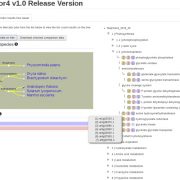
MapMan4: A refined protein classification and annotation framework applicable to multi-omics data analysis (Mol Plant)
Plant Science Research WeeklyRevolutions in omics technologies have rapidly increased the number of plant genomes, transcriptomes and proteomes available. However, protein sequences need to be assigned a biological function to provide useful insights for comparative genomics and transcriptomics. Here, Schwacke et al present MapMan4,…

Transport protein particles contribute to endosomal organization and function (Plant Cell)
Plant Science Research WeeklyTransport protein particles (TRAPPs) are multisubunit complexes that regulate intracellular trafficking, but haven’t yet been well characterized in plant cells. The authors previously identified AtTRAPPC11 as an abundant protein in the SYP61 vesicle proteome, with homology to mammalian TRAPPC11. Here,…
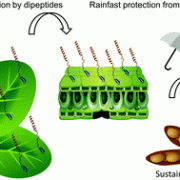
A bifunctional dipeptide functionalizes crop surfaces for sustainable pest management (Green Chemistry)
Plant Science Research WeeklyMost synthetic pesticides do not stick well on plants especially during raining season and can be washed off during irrigation shorty after application. Therefore, the farmer may need to apply several times or hope for dry days to spray. Swinges et al. developed a synthetic peptide with two separate…

Gene redundancy: is it also redundant in the "real world"?
Research, The Plant Cell, The Plant Cell: In a NutshellIllouz-Eliaz et al. report that GA receptor genes that appear redundant under controlled climate conditions have unique roles under field conditions. Plant Cell https://doi.org/10.1105/tpc.19.00235
By Natanella Illouz-Eliaz, Uria Ramon, Hagai Shohat, Shula Blum, Sivan Livne, Dvir Mendelson and David…