

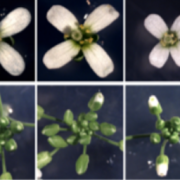
Mediator Skills: MED16 Controls Endoreduplication
Research, The Plant Cell, The Plant Cell: In BriefThe discovery of Mediator began with the observation that two transcriptional activators could interfere with each other’s function in vitro, even though they did not bind to the same promoter (Kelleher, Flanagan and Kornberg, 1990). The hypothesis, since then well-validated, was that each transcription…

Local and Global Root Growth Dynamics in Maize
Research, The Plant Cell, The Plant Cell: In a NutshellJiang et al. use time-lapse 3D imaging, computer vision, and mathematical modeling to quantify root system architecture. Plant Cell https://doi.org/10.1105/tpc.19.00015
By Ni Jiang and Christopher Topp, Donald Danforth Plant Science Center
Background: Root systems are the literal foundations…

Recognizing Plant Physiology first authors: Konstantinos Vavitsas
Plant Physiology, Plant Physiology: Author ProfilesKonstantinos Vavitsas, first author of The synthetic biology toolkit for photosynthetic microorganisms
Current Position: Senior Research Associate, National and Kapodistrian University of Athens
Education: PhD in Biotechnology, University of Copenhagen (2017), MSc in Applied Biotechnology, Uppsala…

Recognizing Plant Direct first authors: Anna Schulten
Plant Direct, Plant Direct: Author ProfilesAnna Schulten, first author of Do Arabidopsis Squamosa promoter binding Protein-Like genes act together in plant acclimation to copper or zinc deficiency?
Current position: PhD student in the Department of Molecular Genetics and Physiology of Plants (Ruhr University Bochum, Germany)
Education: BSc…

Recognizing Plant Physiology first authors: Marina Borges Osorio
Plant Physiology, Plant Physiology: Author ProfilesMarina Borges Osorio, first author of SPX4 Acts on PHR1-Dependent and -Independent Regulation of Shoot Phosphorus Status in Arabidopsis
Education: PhD in Botany, La Trobe University, Australia (2018); MSc in Genetics and Molecular Biology, UFRGS, Brazil (2010); BSc in Biological Sciences, UFPEL, Brazil…

Plant Physiology is recruiting Assistant Features Editors
Blog, Plant Physiology, Plant Physiology: Editorials, Pubs Pages
By Michael R. Blatt and Mary Williams
Note: This call for applications is now closed. Check back in autumn 2020 for a new call for AFEs.
At the beginning of 2018 Plant Physiology welcomed 23 new Assistant Features Editors to the editorial board. Over the past eighteen months these young scientists…
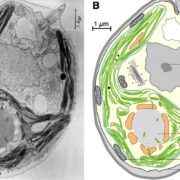
Review: A series of fortunate events: Introducing Chlamydomonas as a reference organism (Plant Cell)
Plant Science Research WeeklyClamydomonas reinhardtii is the most thoroughly characterized unicellular alga. Like yeast, it is a single-celled eukaryotic organism that is easy to culture, and it lives predominantly in its haploid form but is readily mated for genetic studies. Additionally, it is light-responsive, photosynthetic,…

Review: Combinatorial nutrient stresses reveal emergent properties ($) (TIPS)
Plant Science Research WeeklyPlants require at least 14 mineral nutrients to complete their life cycle. These mineral nutrients are unevenly distributed within the soil, and plants have evolved physiological adaptations (changes in root growth, exudation, symbiotic relationships with soil organisms, etc.). to address these nutrient…
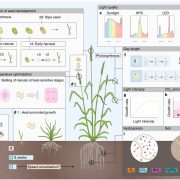
Review: Crop breeding technologies to feed the world (Nature Biotech)
Plant Science Research WeeklyThe world demands food, plant scientists and breeders have the challenge of feeding a growing population. In a recent review Hickey et al. summarize the state-of-the-art technologies used for crop improvement. In use since 2003, ‘speed breeding’ is a set of improved methods for fast-tracking plant…