

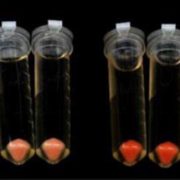
Critical residues for carotenoid biosynthesis by phytoene synthase (Plant Phys)
Plant Science Research WeeklyCarotenoids are diverse structures that contribute to photosynthetic light harvesting and serve as pigments, photoprotectants, and precursors for vitamin A and signalling molecules. Phytoene synthase is the first committed enzyme for carotenoid synthesis, and in tomato it is encoded by two genes, PSY1…
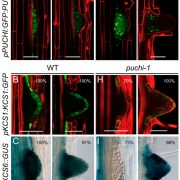
Very long chain fatty acids (VLCFA) are involved in lateral root formation (PNAS)
Plant Science Research WeeklyRoot branching determines the spatial organization of the root and its interaction with the soil. The emergence of lateral roots (LR) is controlled by a complex regulatory network, involving genetic, hormonal and mechanical factors. In this study, Trinh et al. got new insights about PUCHI, a transcription…
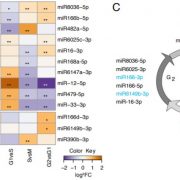
Cell cycle dependent regulation and function of ARGONAUTE1 in plants (Plant Cell) ($)
Plant Science Research WeeklyRegulation of gene expression at transcriptional, translational and post-translation levels is crucial for proper plant growth. Post-transcriptional gene regulation by small RNAs like microRNA (miRNA), siRNA and phasi-RNAs is necessary for meristem maintenance in plants. Unlike in the mammalian system,…

A signal amplifier that regulates soybean root growth in response to salt stress (Plant Cell_
Plant Science Research Weekly
The balance between environmental stress tolerance and plant growth is an important research topic. Plant responses vary among species and varieties, but also with the growth environment. Soil, water, and environmental factors interact to affect plant growth responses to soil salinity. To engineer…
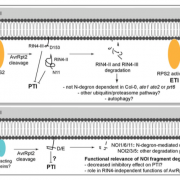
RIN4/NOI fragments utilize different N-end rules of degradation to fight off pathogens (Plant Physiol)
Plant Science Research WeeklyTo fight off invading pathogens, plants such as Arabidopsis are intrinsically programmed with a subset of defense responses often known as pattern-triggered immunity (PTI) and effector-triggered immunity (ETI). AvrRpt2, an effector secreted by the pathogen Pseudomonas syringe, is a protease that can…
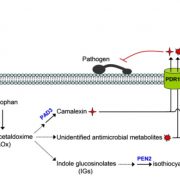
PEN3 and PDR12 secrete camalexin to the apoplast to limit pathogen growth in Arabidopsis (Plant Cell)
Plant Science Research WeeklyPhytoalexins are important antimicrobial compounds that plants synthesize to fend off invading pathogens. In the Brassica family, the tryptophan (trp)-derived phytoalexin ‘camalexin’ provides broad-spectrum resistance against bacterial, fungal, and oomycete pathogens. The regulation of camalexin…
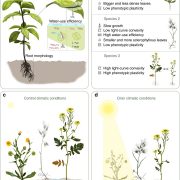
Functional traits and phenotypic plasticity modulate species coexistence across contrasting climatic conditions (Nature Comms)
Plant Science Research WeeklyUnderstanding mechanisms for assembly of plant communities involves estimating different interactions among coexisting species, and how environmental change might affect those interactions. Peréz-Ramos et al. address how functional traits and their plasticity relate to the mechanisms that allow species…
Plant Science Research Weekly: July 5th
WWR Full PostCritical residues for carotenoid biosynthesis by phytoene synthase
Carotenoids are diverse structures that contribute to photosynthetic light harvesting and serve as pigments, photoprotectants, and precursors for vitamin A and signalling molecules. Phytoene synthase is the first committed enzyme…

A Bridge Between Kingdoms: Introduction of a Golden Gate-based Tool Kit for Cyanobacteria
Plant Physiology: News and Views, ResearchOne goal of synthetic biology is to build artificial pathways for bioengineering of high value compounds. To this end, pathways are not only split into individual reactions, but the expression of one enzyme is also split into individual parts (e.g., promotors, ribosomal binding sites, coding sequences,…