

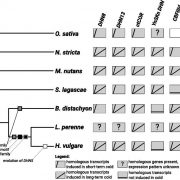
Evolution of cold acclimation in the temperate grass subfamily Pooideae (Plant Physiol)
Plant Science Research WeeklyIn the grass family (Poaceae), the subfamily Pooideae, which includes economically important species like wheat, barley and forage grasses like ryegrass, dominates cold temperate habitats, although the ancestors of this group probably were adapted to tropical climates. Schubert et al. investigated the…

The EDS1-SAG101 complex regulates TNL-based immunity in Solanaceous plants (Plant Cell)
Plant Science Research WeeklyMicrobial pathogens secrete virulence effector proteins into host cells to suppress basal plant defenses. Plant resistance (R) receptors induce robust immune signaling after directly or indirectly detect such effector-mediated host manipulation. In Arabidopsis, immunity transduced through many TNL (TIR-NBS-LRR)…
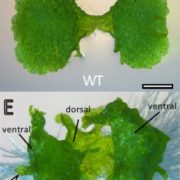
ALOG transcription factors influence the morphological diversity of plant lateral organs (bioRxiv)
Plant Science Research WeeklyLand plants evolved from freshwater streptophytic algae over 450 million years ago and have since separated into morphologically diverse lineages. A key feature in the transition from aquatic to terrestrial life was the development of 3D body plans with lateral organs. In a new preprint, Naramoto and…
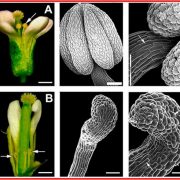
Review: Engineered male sterility by early anther ablation (Frontiers Plant Sci)
Plant Science Research WeeklyMale sterility in seed production could be used to increase crop yields, eliminate pollen allergies or avoid gene flow between genetically modified plants and other species. Here, Roque et al. developed a system to produce engineered nuclear male sterile plants using the pea Pisum sativum ENDOTHECIUM…
Review: Synthetic biology in photosynthetic microbes: present and future (Plant Physiol)
Plant Science Research WeeklyPhotosynthetic microbes are emerging models for synthetic biology applications since they possess relatively simple physiology and cellular organization, fast growth in liquid culture, and facile genetic manipulation. In this paper, Vavitsas et al. review current synthetic biology tools and applications…

Recognizing Plant Cell first authors: Harriet Parsons
The Plant Cell, The Plant Cell: Author ProfilesHarriet Parsons, co-first author and corresponding author of Separating Golgi Proteins from Cis to Trans Reveals Underlying Properties of Cisternal Localization
Current position: Maternity leave until 2020
Education: PhD in Plant Biochemistry, University of Edinburgh
Non-specific interests: Hiking,…
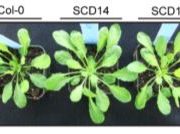
Designer PPR Proteins as Tools to Explore RNA Binding in vivo
The Plant Cell, The Plant Cell: In BriefTechniques to isolate the RNA molecules bound to a specific protein, via co-immunoprecipitation, for instance, have been available for years. The converse—methods to identify the proteins bound to a specific RNA—have been harder to come by, in part because of difficulty in elucidating the determinants…

Recognizing Plant Cell first authors: Jason Sims
The Plant Cell, The Plant Cell: Author ProfilesJason Sims, first author of Meiotic DNA repair in the nucleolus employs a non-homologous end joining mechanism
Current Position: Post-doctoral researcher at the University of Vienna / MFPL
Education: PhD in molecular biology, special doctoral program in Chromosome Dynamics, from the University of…

Scaffolding Brassinosteroid Components to Improve Plant Growth
Research, The Plant Cell, The Plant Cell: In a NutshellAmorim-Silva et al. identify scaffolding proteins that optimize BR signaling. Plant Cell https://doi.org/10.1105/tpc.19.00150
By Vitor Amorim-Silva and Miguel Botella
Background: The plant hormone Brassinosteroid (BR) is essential for proper growth. This hormone is extracellularly perceived…