

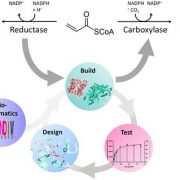
Awaking the sleeping carboxylase ($) (JACS)
Plant Science Research WeeklyOne of the things I like most about synthetic biology is the “why not” attitude. This article by Bernhardsgrütter et al. is intriguing because rather than taking the standard “let’s fix Rubisco approach,” the authors started with a non-CO2 fixing enzyme and engineered it towards having carboxylase…

A bacterium that demethylates opiate thebaine for a green chemistry solution ($) (Nature Sustainability)
Plant Science Research WeeklyOpium poppies produce opiates including morphine and thebaine. Derivatives of these compounds can also have diverse beneficial properties. One of these, naloxone, is a competitive opioid receptor antagonist that can be administered to counteract the effects of opioid overdose. Because of the rise in…
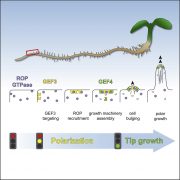
Distinct RopGEFs successively drive polarization and outgrowth of root hairs (Curr. Biol) ($)
Plant Science Research WeeklyRoot hairs vastly increase the surface area of the root in contact with the soil substrate, and are crucial for efficient water and nutrient uptake. They are also an excellent system for studies of polar growth or tip growth in cells, a process that involves the cytoskeleton, defined membrane domains,…

Methyl jasmonate-induced changes of flavor profiles during the processing of green, oolong, and black tea (Frontiers Plant Sci)
Plant Science Research WeeklyTea quality depends on the product's taste and aroma, which are provided by phenolic and volatile compounds respectively. Here, Shi et al. analyzed changes of volatile and amino acid (AA) profiles in fresh tea leaves (Camellia sinensis L.) and during the processing of three tea products (green, oolong…
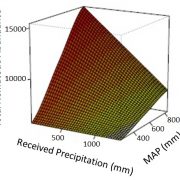
Drought conditions reduce root-feeding nematode predator populations (PNAS)
Plant Science Research WeeklyClimate change is expected to cause numerous negative impacts on plant populations. An under considered area that will be affected are the communities of soil organisms that rely on a delicate balance of environmental conditions, particularly in grasslands that receive moderate precipitation (mesic grasslands).…
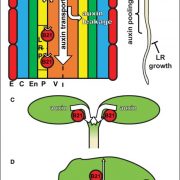
ABCB21 regulates auxin levels in cotyledons, pericycle and leaves (Frontiers Plant Science)
Plant Science Research WeeklyAuxin activity is maintained through regulated biosynthesis, metabolism and transport. In this paper Jenness et al. characterized the physiological significance of a known IAA transporter, ABCB21 (ATP BINDING CASSETTE TRANSPORTER subfamily B member 21) in Arabidopsis. ABCB21 transports shoot derived…
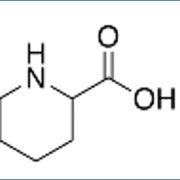
Pipecolic contributes to systemic acquired resistance in barley ($) (MPMI)
Plant Science Research WeeklySystemic acquired resistance (SAR) is a robust long-distance immune response mediated by a diverse contingent of candidate phloem-mobile signals that prime distal uninfected tissues for enhanced resistance to future infections. The lysine-derived catabolite pipecolic acid (Pip) has emerged as a key mediator…
Plant Science Research Weekly: June 28
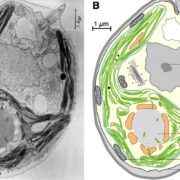
WWR Full PostReview: A series of fortunate events: Introducing Chlamydomonas as a reference organism
Clamydomonas reinhardtii is the most thoroughly characterized unicellular alga. Like yeast, it is a single-celled eukaryotic organism that is easy to culture, and it lives predominantly in its haploid form but…

Recognizing Plant Cell first authors: Julio Sáez-Vásquez
The Plant Cell, The Plant Cell: Author ProfilesJulio Sáez-Vásquez, first author of Ribosome biogenesis in plants: from functional 45S rDNA organization to ribosome assembly factors
Current Position: CNRS Researcher (DR2), LGDP UMR5096 CNRS-UPVD
Education: PhD Université de Perpignan (UPVD), France
Non-scientific Interests: Music, biking…