

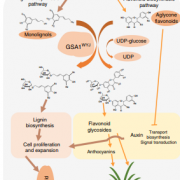
UDP-glucosyltransferase regulates grain size and abiotic stress tolerance associated with metabolic flux redirection in rice (Nature Comms.)
Plant Science Research WeeklyClimate change severely affects plant growth and jeopardizes yields of essential seed crops such as rice. Still, the mechanisms underlying the synergistic regulation of abiotic stress response and important agronomic traits remain poorly understood. Dong et al. cloned and characterized a major QTL in…
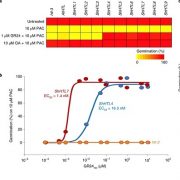
SMAX1-dependent seed germination bypasses GA signalling in Arabidopsis and Striga (Nature Plants)
Plant Science Research WeeklyStrigolactones (SL) are germination cues for parasitic plants, as their seeds will not germinate until they perceive SL exuded from the host plant. In contrast, gibberellins (GA) are the dominant germination hormone in non-parasitic plants; GA-mediated degradation of DELLA repressors permits germination.…
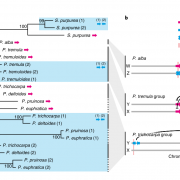
A single gene underlies the dynamic evolution of poplar sex determination (Nature Plants)
Plant Science Research WeeklyDioecy (male and female flowers residing on distinct individuals) has independently arisen several times in angiosperms, yet the genetic basis of dioecy remains obscure. Here, Müller et al. reveal a single gene that acts as a sex-determination switch throughout the Populus genus. A negative regulator…
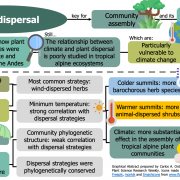
Plant dispersal strategies of high tropical alpine communities across the Andes (J. Ecol.)
Plant Science Research WeeklySince dispersal is crucial for the assembly of plant communities, a better understanding of its relation to climate is needed to predict plant communities' responses to changes in the environment. However, this kind of association is still missing in tropical alpine ecosystems –one of the most vulnerable…
Plant Science Research Weekly: June 12th
Blog, WWR Full PostReview: Guard cell metabolism and stomatal function
Stomatal conductance, gs, is one of the most important and highly regulated plant processes. Lawson and Matthews review how guard cell metabolism, stomatal anatomy and patterning, and signals from the mesophyll affect gs which in turn affects plant…

Recognizing Plant Physiology authors: Junhua Kong
Plant Physiology, Plant Physiology: Author ProfilesJunhua Kong, co-first author of METHYLTRANSFERASE1 and ripening modulate vivipary during tomato fruit development
Current Position: Research Assistant, Institute of Botany, Chinese Academy of Sciences, Beijing, China
Education: PhD from University of Bordeaux, Bordeaux, France; MSc from Hangzhou…

Recognizing Plant Physiology authors: Weiwei Chen
Plant Physiology, Plant Physiology: Author ProfilesWeiwei Chen, co-first author of METHYLTRANSFERASE1 and ripening modulate vivipary during tomato fruit development
Current Position: Associate Professor, Research Centre for Plant RNA Signaling and Zhejiang Provincial Key Laboratory for Genetic Improvement and Quality Control of Medicinal Plants, College…

Recognizing Plant Physiology authors: Mengqin Yao
Plant Physiology, Plant Physiology: Author ProfilesMengqin Yao, co-first author of METHYLTRANSFERASE1 and ripening modulate vivipary during tomato fruit development
Current Position: MSc student, Research Centre for Plant RNA Signaling and Zhejiang Provincial Key Laboratory for Genetic Improvement and Quality Control of Medicinal Plants, College of…

Endosidin20: A Key to Unlock the Secrets of Cellulose Biosynthesis
Research, The Plant Cell, The Plant Cell: In BriefBy now, you would think we’d know everything about cellulose, given its status as the most abundant biopolymer on Earth and its simple chemical composition. Cellulose is composed of β-1,4-D-glucose units assembled into straight chain polymers. These rod-like molecules are packed into strong microfibrils…