


EPSIN1 contributes to plant immunity by modulating the abundance of pattern recognition receptors at the plasma membrane
Plant Physiology, Plant Physiology: News and Views, ResearchWei Zhang
Department of Plant Pathology, Kansas State University, 1712 Claflin Road, Throckmorton Hall, Manhattan, KS, 66502, USA
[email protected]
ORCID 0000-0002-5092-643X
Plants have evolved many pattern recognition receptors (PRRs) that localize to the cell surface. As the frontline…

New Teaching Tool, "Three-Way Interactions between Plants, Microbes, and Arthropods (PMA): Impacts, Mechanisms, and Prospects for Sustainable Plant Protection"
Blog, Pubs Pages, The Plant CellWe’re excited to announce the publication of The Plant Cell’s latest Teaching Tool, “Three-Way Interactions between Plants, Microbes, and Arthropods (PMA): Impacts, Mechanisms, and Prospects for Sustainable Plant Protection,” by Maria J. Pozo, Benedicte R. Albrectsen, Eduardo R. Bejarano, Eduardo…
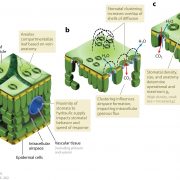
Review: Guard cell metabolism and stomatal function (Annu. Rev. Plant Biol.)
Plant Science Research WeeklyStomatal conductance, gs, is one of the most important and highly regulated plant processes. Lawson and Matthews review how guard cell metabolism, stomatal anatomy and patterning, and signals from the mesophyll affect gs which in turn affects plant productivity and water use efficiency. This is an excellent…

Review: Targeting root ion uptake kinetics to increase plant productivity and nutrient use efficiency (Plant Physiol.)
Plant Science Research WeeklyContinuous agricultural production is required to feed the growing population, and fertilizers are important factors determining the productivity of today’s high-input agriculture. Fertilizers increase the cost of production, some are produced from finite sources, and some create environmental concern,…
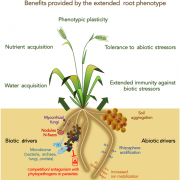
Review: An extended root phenotype: the rhizosphere, its formation and impacts on plant fitness (Plant J.)
Plant Science Research WeeklyThe rhizosphere is a continuous space for microbial colonization that comprises the rhizospheric soil, the rhizoplane (root surface), and the root endosphere, which is the apoplastic space in the root cortex. It is inhabited by unique populations of microorganisms, influenced by plant genotype and the…
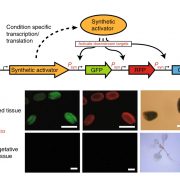
Modulation of gene expression in plants with orthogonal regulatory systems (Nat. Chem. Biol.)
Plant Science Research WeeklySome of the most promising applications in synthetic biology need precise control of gene expression. For instance, metabolic engineering in plants requires the expression of enzyme-coding genes at a precise time, space, and quantity to ensure correct output. Recently, Belcher, Vuu, and colleagues engineered…
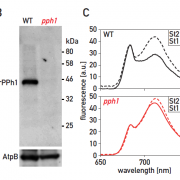
Role of two phosphatases in state transition of Chlamydomonas (Plant Physiol.)
Plant Science Research WeeklyPlants and green algae can rapidly adapt to changing light conditions. Depending on light availability or other metabolic needs, Light Harvesting Complexes (LHC) II can be reallocated to photosystem I (PSI) from photosystem II (PSII) and vice versa. This is known as state transition and is mediated by…
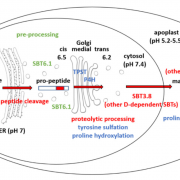
The biogenesis of CLEL peptides involves several processing events in consecutive compartments of the secretory pathway (eLIFE)
Plant Science Research WeeklySmall signaling peptides are cleaved from precursor proteins by the action of proteases and are also subject to other post-translational modifications. Subtilases (SBT) are mostly extracellular proteases, but SBT6.1 is membrane-localized at the Golgi and plasma membranes. Furthermore, it has been shown…
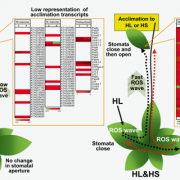
Systemic signaling during abiotic stress combination in plants (PNAS)
Plant Science Research WeeklyIn nature, plants face multiple environmental stresses simultaneously. Plant responses to combined stresses are often not merely the sum of responses to individual stresses; in the tissue that initially perceive stresses (local tissue), plants can integrate different stress signals to elicit unique responses.…