

Comparing genomes of diverse plants reveals new candidate genetic components for plant disease resistance
Research, The Plant Cell, The Plant Cell: In a NutshellBaggs et al. look for key immune genes bases on their presence/absence patterns in different plant species. The Plant Cell https://doi.org/10.1105/tpc.19.00903
by Erin Baggs, University of California, Berkeley, USA
Ruby O’Grady, The John Innes Centre and The Sainsbury Laboratory, Norwich, UK…

Breaking the Mold: Reduced Protein Storage in Brassica napus Seed Triggers Unexpected Structural Changes
Research, The Plant Cell, The Plant Cell: In BriefDuring development, seeds pack away large amounts of storage nutrients in the form of starch, proteins, and lipids (typically triacylglycerides), but the ratios of these storage products vary tremendously between seed types. Because of the obvious agricultural implications, researchers have long sought…

Recognizing Plant Physiology authors: Shinichiro Komaki
Plant Physiology, Plant Physiology: Author ProfilesShinichiro Komaki, first author of Functional analysis of the plant chromosomal passenger complex
Current Position: Assistant Professor, Division of Biological Science, NAIST, Japan
Education: Ph.D., Bioscience, NAIST, Japan
Non-scientific Interests: listening to music, finding clover mutants
Brief…

Recognizing Plant Physiology authors: Liza Esther Alexander
Plant Physiology, Plant Physiology: Author ProfilesLiza Esther Alexander, first author of Maize Glossy2 and Glossy2-like Genes Have Overlapping and Distinct Functions in Cuticular Lipid Deposition
Current Position: Bioscience Innovation Postdoctoral Fellow, Roy J. Carver Department of Biochemistry, Biophysics and Molecular Biology, Iowa State University
Education:…

Sugar Is Sweeter: Plants Open Their “Mouths” for Glucose, Not Malate, In the Morning
Research, The Plant Cell, The Plant Cell: In BriefRegulation of stomatal opening and closing in plants in response to environmental cues continues to be well studied (García-León et al., 2019; Li et al., 2020), as it is important for balancing the intake of carbon dioxide for photosynthesis (PS) with the release of water during transpiration. But…
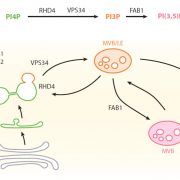
Review: Functions of anionic lipids in plants (Annu. Rev. Plant Biol.)
Plant Science Research WeeklyMoving materials within and out of cells requires that membranes carry identification labels, but when the membrane itself moves, that ID label must be updated. These requirements are met ingeniously by the anionic lipids, which are both a modifiable information system and simultaneously modify the physicochemical…
Review: Sequencing and analyzing the transcriptomes of a thousand plant species (Annu. Rev. Plant Biol.)
Plant Science Research WeeklyOver the past decade, Next Generation Sequencing (NGS) has been used for de novo assembly of crop genomes (i.e., tomato, potato) under the motto “If it tastes good, let’s sequence it”. By contrast, the One Thousand Plant (1KP) Initiative set out to obtain transcriptomic data of phylogenetically…

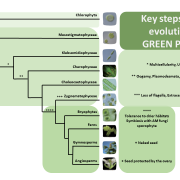
Multiple metabolic innovations and losses are associated with major transitions in land plant evolution (Curr. Biol.)
Plant Science Research WeeklyThe colonization of land by a single streptophyte algae lineage around 450 million years ago culminated in the evolution and radiation of all terrestrial flora, the embryophytes. Adapting and thriving in the land environment required many morphological and physiological innovations, as well as the acquisition…
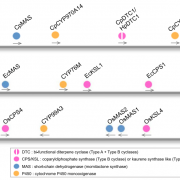
Genomic evidence for convergent evolution of gene clusters for momilactone (PNAS)
Plant Science Research WeeklyPlants produce a rich diversity of chemical compounds. In fungi, the genes encoding specialized biosynthetic pathways are frequently arranged in contiguous loci forming biosynthetic gene clusters (BGC). In plants, BGCs are not common, however, some cases have been found in angiosperms. Among the known…