


On the Inside: Blue Light Sensitivity in One Order of Ferns
Plant Physiology, Plant Physiology: On The InsideStomata respond to changes in the light environment through multiple mechanisms that jointly regulate the tradeoff between carbon assimilation and water loss. The rapid and highly sensitive widening of stomatal aperture in response to low-fluence blue light is present in most vascular plant groups but…
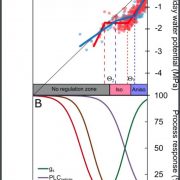
Extrapolating physiological response to drought through step-by-step analysis of water potential
Blog, Plant Physiology, Plant Physiology: News and Views, ResearchGuillaume Charrier
Université Clermont Auvergne, INRAE, PIAF, F-63000 Clermont-Ferrand, France.
[email protected]
Water potential (Ψ) defines the energy required to move water between the different compartments of a closed system. Water flows passively in the direction of decreasing…
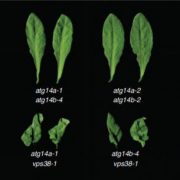
How to Eat One’s Feelings: Autophagy and Phosphatidylinositol 3-Phosphate
Blog, Research, The Plant Cell, The Plant Cell: In BriefMoving around taught me two essential skills, only one being relevant here: how to put up wallpaper, and how critical it is to label boxes to help the moving company drop them at their intended location. Now think of a cell: the boxes are vesicles, their contents are proteins and metabolites, and the…

Review: Homoeologous exchanges, segmental allopolyploidy, and polyploid genome evolution (Front. Genetics)
Plant Science Research WeeklyPolyploidy or whole-genome duplication (WGD) is an important process in plant evolution and speciation. Additional sets of chromosomes can be derived from intraspecific genome duplication (autopolyploidy) or hybridization of divergent genomes and chromosome doubling (allopolyploidy). In early stages…
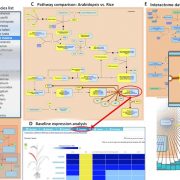
Gramene 2021: harnessing the power of comparative genomics and pathways for plant research (Nucleic Acids Research)
Plant Science Research Weekly
Gramene (www.gramene.org) is a curated, open-source, integrated data resource for comparative functional genomics in crops and model plant species. It launched 20 years ago and has continually grown and expanded to incorporate new tools and resources. This update by Tello-Ruiz et al. describes its…
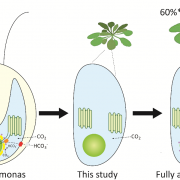
Condensation of Rubisco into a proto-pyrenoid in higher plant chloroplasts (bioRxiv)
Plant Science Research Weekly
Rubisco is a major enzyme in assimilating CO2 during photosynthesis. The efficiency of CO2 assimilation is compromised by a low ratio of CO2/O2, especially in C3 plants like rice, wheat and soybean. Algae sequester Rubisco as a condensate in a microcompartment called a pyrenoid within the chloroplast…
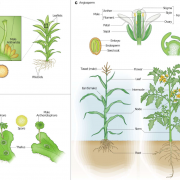
Conserved transcriptional programs underpin organogenesis and reproduction in land plants (bioRxiv)
Plant Science Research WeeklyLand plant evolution accompanied a plethora of evolutionary novelties such as cells that compose complex organs (e.g., stems, leaves, roots) and male/female gametophytes. The identity and conservation of the transcriptional programs underlying organogenesis and reproductive development across land plants…

CAMEL in the canal: Regulation of PIN proteins during canalization (Science)
Plant Science Research WeeklyAuxin transport during development or wound regeneration is known to require auxin-induced channel or ‘canal’ formation that includes polar localization of PIN auxin transport proteins. Hajný and colleagues have characterized a receptor-like kinase (RLK) complex involved in auxin-induced pattern…
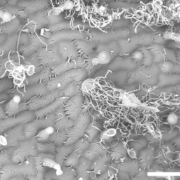
Formation of flavone-based wooly fibres by glandular trichomes of Dionysia tapetodes (bioRxiv)
Plant Science Research Weekly
Many people are familiar with the popular houseplant Cephalocereus senilis, which also known as old man cactus because it is covered with long white hairs that are thought to protect it from frost and UV light. A similar function is described for the wooly fibers that cover the alpine plant Dionysia…