

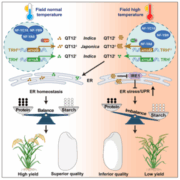
Cracking the code of rice grain quality under heat stress
Plant Science Research WeeklyRice is one of the most important food crops globally, providing more than 20% of the world’s calorie intake and over 75% for the population in Asia. Therefore, apart from yield, grain quality is another critical agronomic trait for breeding and improvement, especially under stressful environmental…
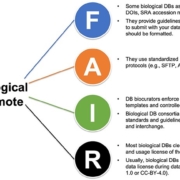
Training scientists to make their data FAIR
Plant Science Research WeeklyI’m sure many of you have experienced frustration when trying to access an intriguing dataset that either doesn’t exist, isn’t open, or is set up in an impossibly unintuitive manner. Part of that problem stems from a lack of training of early-career scientists in how to make their data findable,…
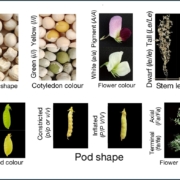
Plant Science Research Weekly: May 9, 2025
WWR Full PostForum. Plant surveillance: The emerging role of substrate-binding proteins
Plants are sessile organisms and, unlike animals, cannot escape adverse environmental conditions. To cope with this limitation, they have evolved a complex surveillance system to detect and respond to fluctuating conditions…
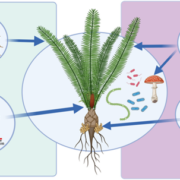
Review: Cycads, chemicals, and coevolution
Plant Science Research WeeklyCycads are an ancient lineage of gymnosperms with fascinating ecological interactions. In a recent review, Salzman et al. examine the various adaptations of cycads, from attracting pollinators to repelling parasites, focusing on the roles of their wide array of specialized metabolites. A somewhat unique…
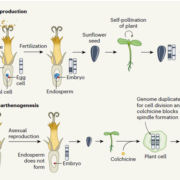
Breaking the breeding cycle: Parthenogenesis paves the way for faster sunflower breeding
Plant Science Research WeeklyHybrid crops are key to modern agriculture, offering higher yields, improved stress resilience, and greater uniformity through heterosis (“hybrid vigor”), where offspring from two different inbred lines outperform their parents. However, producing homozygous inbred lines for stable hybrid seed production…
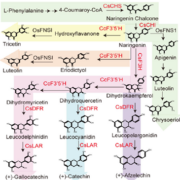
“Tea rice”- the catechin fortified rice
Plant Science Research WeeklyRice feeds nearly half of the world population. Rice grains are rich in starch but low in micronutrients and bioactive compounds such as flavonoids. By contrast, tea leaves are rich in antioxidants such as catechins but low in calories. Zhu and colleagues combine the advantages of rice and tea by producing…
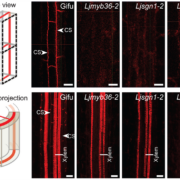
The hidden architecture of symbiosis: Casparian strips in root and nodule integration
Plant Science Research WeeklyThe Casparian strip (CS), a lignin-rich apoplastic barrier in the root endodermis, forms early in development and regulates solute flow between the soil and the vasculature. It allows plants to control ion uptake, defend against pathogens, and coordinate developmental signals. While its functions in…
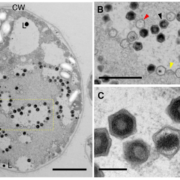
The elephant in the genome: Cryptic infection by giant viruses
Plant Science Research WeeklyEukaryotic genomes contain many endogenous viral elements (EVEs), which are genetic footprints of past viral infections. With the discovery of Nucleocytoplasmic Large DNA Viruses (NCLDVs), or giant viruses, research has turned to exploring how giant endogenous viral elements (GEVEs) shape host genomes.…
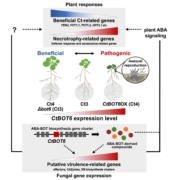
Friend or Foe? How fungi switch between helping and harming plants
Plant Science Research WeeklyPlants coexist and interact with various microorganisms in the soil environment, including fungi. These associated fungi can not only cause diseases but also establish symbiotic interactions that boost plant health. This is the case of the endophyte Colletotrichum tofieldiae, where some strains can improve…