

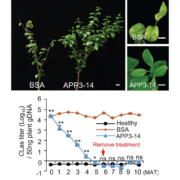
Stopping citrus greening with peptide therapy
Plant Science Research WeeklyCitrus greening disease (also known as Huanglongbing) has had a huge impact on citrus fruit production worldwide, with Florida particularly hard hit. The disease is caused by insect-vector-spread bacteria, including Candidatus Liberibacter asiaticus (CLas). There is some genetic variability in susceptibility,…
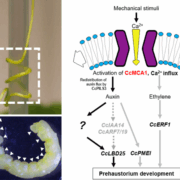
How plant vampires strike: Mechanosensitive channels in haustorium formation
Plant Science Research WeeklyWhile the existence of vampires is up for debate, their botanical counterparts are very real - and much easier to find. Parasitic plants, such as Cuscuta campestris, wrap around their hosts, draining them of water and nutrients, and causing serious economic losses in agriculture. The first critical step…
Plant Science Research Weekly: April 25th, 2025
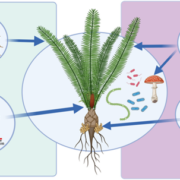
WWR Full PostReview: Cycad, chemicals, and coevolution
Cycads are an ancient lineage of gymnosperms with fascinating ecological interactions. In a recent review, Salzman et al. examine the various adaptations of cycads, from attracting pollinators to repelling parasites, focusing on the roles of their wide array…
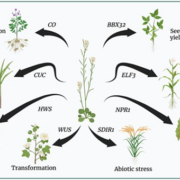
Review: Celebrating 150 years of Arabidopsis genetics
Plant Science Research WeeklyThe first known report of an Arabidopsis thaliana mutant appeared approximately 150 years ago (1873). In the intervening years, Arabidopsis has become an essential model for plant genetic research, driving groundbreaking discoveries across multiple disciplines. In a recent review, Yaschenko et al. provide…
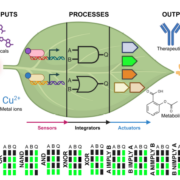
Review. Genetic switchboards: Rewiring plant traits with synthetic circuits
Plant Science Research WeeklyThe expression of a transgene in plants can impose a significant stress, sometimes referred to as metabolic burden. Synthetic gene circuits offer a precise approach to engineering plant traits by regulating gene expression through programmable operations. This review by Lloyd et al. examines the core…
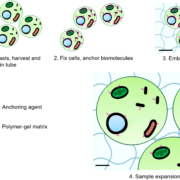
Cells are larger than life when ExPOSEd
Plant Science Research WeeklyCells are as small as life gets, but can be much larger than they appear if given room for expansion. This is possible with expansion microscopy, a technique that enables three dimensional cell imaging by physically expanding cellular components for visualization. Although expansion microscopy has been…

Expanding the resolution limits of conventional microscopy in whole plant tissues
Plant Science Research WeeklyHow can we precisely image plant tissues in super-resolution when approaching the optical limits of conventional microscopes? One solution lies in expansion microscopy, a technique that embeds tissue samples in an expandable hydrogel that proportionally increases the distances between structures, allowing…
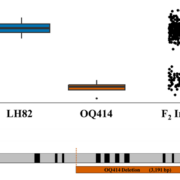
CA-nundrum: How a spontaneous mutation in carbonic anhydrase uncouples leaf δ13C, WUE and C4 photosynthesis
Plant Science Research WeeklyWith climate change, drought is expected to happen more frequently, making supplemental irrigation increasingly necessary to sustain crop productivity. One target trait to improve climate resilience is water use efficiency (WUE), defined by the ratio of carbon assimilation to water used by the plant.…
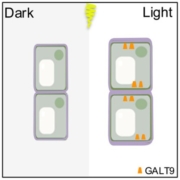
Lights, camera, pectin: Bringing hypocotyl elongation out of the dark
Plant Science Research WeeklyLight is a powerful signal, shaping plant development and growth. However, the cellular mechanisms that translate light signals into precise developmental responses are still being unravelled. The Arabidopsis hypocotyl (the embryonic stem, situated underneath the cotyledons in seedlings) rapidly restricts…