

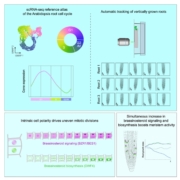
Brassinosteroids positively regulate growth through asymmetrical division
Plant Science Research WeeklyBrassinosteroids are plant hormones that play important roles in cell proliferation and expansion, but it is still unclear exactly what those roles are. Vukasinovic and colleagues show, in Arabidopsis thaliana root cells, that instrinsic brassinosteroid gradients signal anticlinal division. Single-cell…
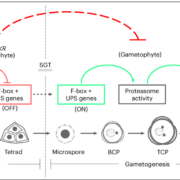
SHUKR in the sporophytic tissue directs male gametophyte development in Arabidopsis
Plant Science Research WeeklyIn flowering plants, reproduction involves the alternation of two generations: the diploid sporophyte and the haploid gametophyte. Traditionally, the male gametophyte was thought to develop autonomously with minimal regulation by the sporophyte. However, recent research by Sivakumar, Pandey, and Ramesha…

Classic regulators, new functions: FT and TFL1 shape Arabidopsis seed traits
Plant Science Research WeeklyFLOWERING LOCUS T (FT) and TERMINAL FLOWER1 (TFL1), two members of the phosphatidylethanolamine-binding protein (PEBP) family, are well-known regulators of flowering time and inflorescence architecture in Arabidopsis thaliana. However, recent work by Bigas et al. uncovers their additional roles in regulating…

Plant Science Research Weekly: April 11, 2025
WWR Full PostReview: Celebrating 150 years of Arabidopsis genetics
The first known report of an Arabidopsis thaliana mutant appeared approximately 150 years ago (1873). In the intervening years, Arabidopsis has become an essential model for plant genetic research, driving groundbreaking discoveries across multiple…
Plant Science Research Weekly: March 21, 2025
WWR Full PostResolving phytohormone response zones by fluorescent reporters
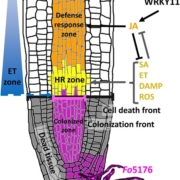
Phytohormones such salicylic acid (SA), ethylene (ET), and jasmonic acid (JA) are known to regulate plant immunity, but their spatial dynamics has remained unclear. Using a set of fluorescent reporters in Arabidopsis, Calabria et al.…
Resolving phytohormone response zones by fluorescent reporters
Plant Science Research WeeklyPhytohormones such salicylic acid (SA), ethylene (ET), and jasmonic acid (JA) are known to regulate plant immunity, but their spatial dynamics has remained unclear. Using a set of fluorescent reporters in Arabidopsis, Calabria et al. resolved the hormonal responses upon Fusarium oxysporum infection at…
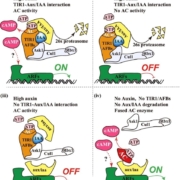
Adenylate cyclase is a critical component of auxin transcriptional responses
Plant Science Research WeeklyThis exciting paper by Chen, Qi, Zou et al. adds a new twist to the story of auxin. Until this work, the current model for how auxin mediates transcriptional changes has been that auxin (IAA) binds to TIR1, a ubiquitin ligase, when interacts with and causes the degradation of Aux/IAA repressor proteins,…
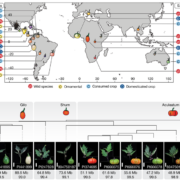
Double trouble: The Solanum pan-genome shows gene duplication complicates predictability
Plant Science Research WeeklyA pan-genome has been assembled for the Solanum genus, which contains many diverse and economically important crops including potato, tomato, and African eggplant. Genomes were assembled for 22 species, and genes were predicted based on previous reference genomes and from RNA sequences across multiple…
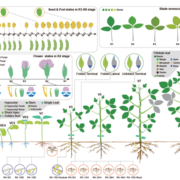
SoyOmics: A new tool to explore the transcriptome dynamics of soybean
Plant Science Research WeeklySoybean, originally domesticated in China, is widely recognized for its high protein and oil content, making it a crucial crop for human consumption, animal feed, and biofuel production. Despite its economic and agricultural significance, research tools and genomic resources for soybean have lagged behind…