
How plant vampires strike: Mechanosensitive channels in haustorium formation
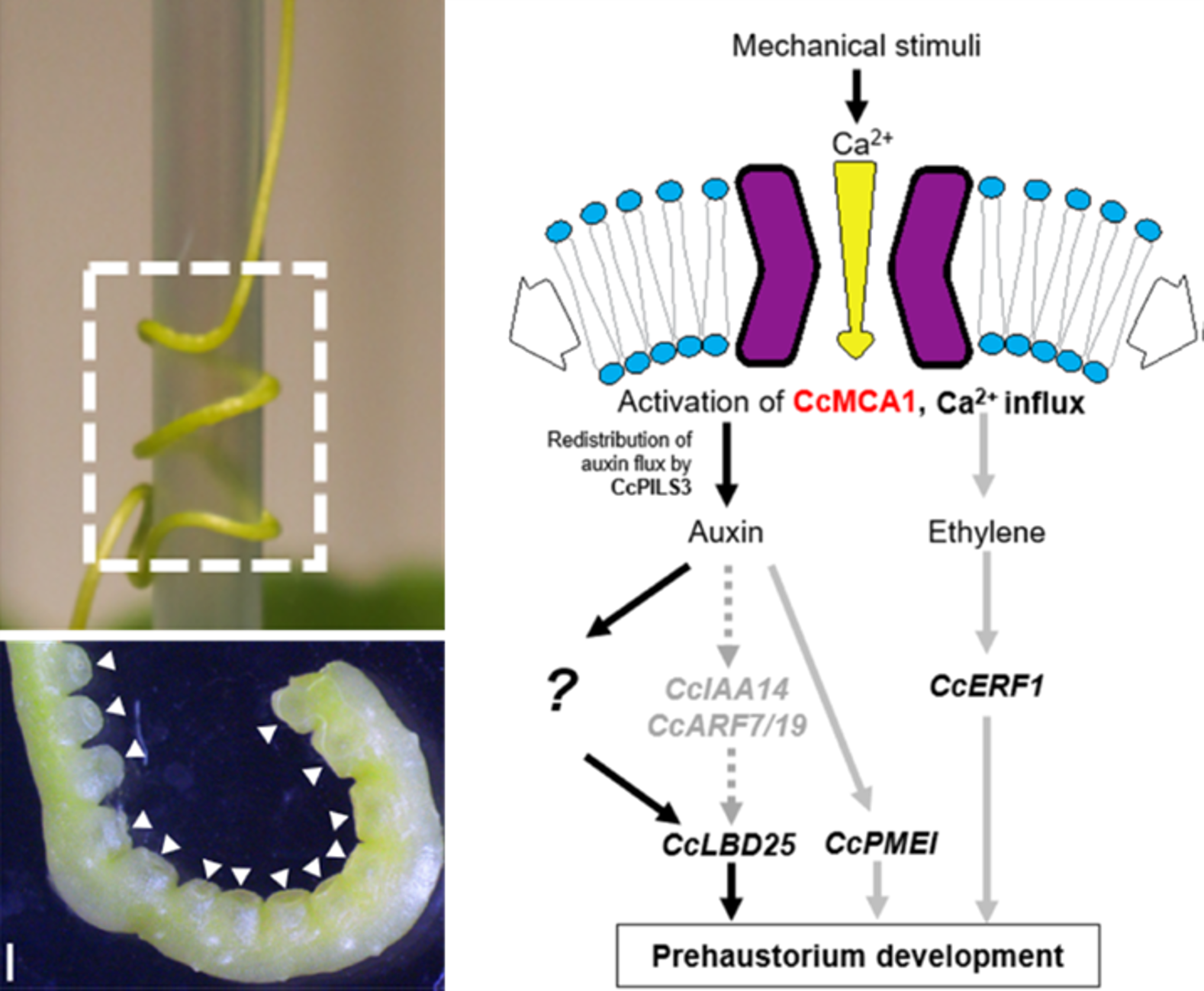 While the existence of vampires is up for debate, their botanical counterparts are very real – and much easier to find. Parasitic plants, such as Cuscuta campestris, wrap around their hosts, draining them of water and nutrients, and causing serious economic losses in agriculture. The first critical step in their attack is the formation of a haustorium – a specialized organ that attaches to the host and facilitates resource theft. Although light and mechanical cues are known to trigger haustorium primordium development, the underlying molecular mechanisms remain unclear. To address this, Park and colleagues focused on mechanosensitive ion channels (MSCs) and identified CcMCA1 as a key player in prehaustorium development. Silencing CcMCA1 significantly reduced haustorium formation, mimicking the effects of chemical inhibitors. This was accompanied by a downregulation of genes associated with haustorium development, some of which are also involved in auxin and ethylene signaling. However, the precise roles of phytohormones in this process remain to be elucidated. This study sheds light on the molecular machinery behind parasitic plant development and reveals promising targets for eliminating these “plant vampires”! (Summary by Ching Chan @ntnuchanlab) Plant Cell Physiol. 10.1093/pcp/pcaf009