

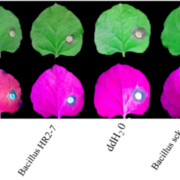
A broad-spectrum antimicrobial peptide identified from Burkholderia bacterium
Plant Science Research WeeklyMicrobial pesticides are widely applied to improve crop production, but the active molecules are largely unexplored. In a recent study, Mohamed et al., identified an antimicrobial peptide (AMP) from crop-associated microbes and showed its inhibitory effects on various phytopathogens. The authors first…
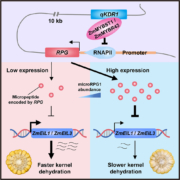
A novel micropeptide regulates kernel dehydration in maize through ethylene signaling
Plant Science Research WeeklyKernel dehydration rate (KDR) is a critical factor affecting mechanized maize harvesting and kernel quality. Despite its agricultural importance, the molecular mechanisms regulating KDR remain unclear. Previous studies have identified several QTLs controlling KDR, but their functional characterization…
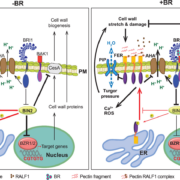
Brassinosteroid-driven cell expansion: How FERONIA and BIN2 shape plant growth
Plant Science Research WeeklyFERONIA (FER), a member of the Catharanthus roseus receptor-like kinase 1–like (CrRLK1-like) receptor kinase family, was initially identified as a key regulator of female fertility in Arabidopsis. Later studies revealed that FER is a multifunctional protein involved in nearly all aspects of plant growth…
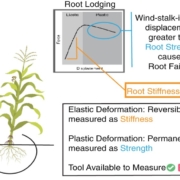
Firmly grounded: Root system stiffness and plant mechanics
Plant Science Research WeeklyField-based technologies are essential for understanding plant mechanical behavior in field-relevant contexts. This behavior can be elastic, with temporary deformation measured as stiffness, or plastic, with permanent deformation measured as strength. While field-based technologies exist for addressing…
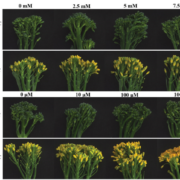
It’s not easy being green: Maintaining broccoli postharvest quality
Plant Science Research WeeklyUp to 40% of harvested broccoli never reaches consumers due to quality losses during senescence, including yellowing and nutrient degradation. Reactive oxygen species cause oxidative stress within the plant, accelerating these negative changes through the jasmonate (JA) pathway. Gage et al. investigated…
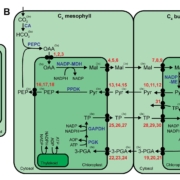
Review: The complexities of metabolite transport in C4 photosynthesis
Plant Science Research WeeklyC4 photosynthesis, an adaptive mechanism to spatially concentrate CO2 around Rubisco to enhance carbon fixation, has evolved independently at least 60 times in plants. This process spatially separates the initial carbon fixation by PEPC and carbon reduction by Rubisco, which requires that compounds move…

From water to land: What bryophytes reveal about plant evolution and adaptations
Plant Science Research WeeklyThe transition of plants from aquatic to terrestrial environments occurred approximately 400 million years ago, leading to the diversification of two major lineages: tracheophytes (vascular plants) and bryophytes (non-vascular plants). While most studies on plant adaptation to environmental stressors…
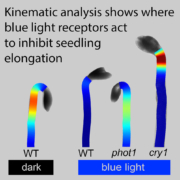
Two blue-light photoreceptors (cry1 and phot1) function differently in hypocotyl light responses
Plant Science Research WeeklyPlants have several types of light receptors that control various responses to light, such as leaf expansion, time-of-flowering, and hypocotyl elongation. When seeds are germinated in the dark, their hypocotyl elongates rapidly because darkness is perceived as being deep underground; the elongation is…
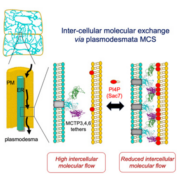
Plasmodesmata: A new frontier for membrane contact site intercellular communication
Plant Science Research WeeklyMembrane contact sites (MCSs) serve a critical role in intracellular communication, particularly between organelle membranes, enabling direct molecular transfer. Less clear is the role MCSs play in intercellular communication. New evidence from Pérez-Sancho et al. implicates plasmodesmata in this function…