


Gustaf E. Degen: Plant Physiology First Author
Plant Physiology: Author Profiles
Gustaf E. Degen, first author of "High cyclic electron transfer via the PGR5 pathway in the absence of photosynthetic control"
Current Position: Postdoctoral Research Associate, Johnson Lab, School of Biosciences, University of Sheffield, UK
Education: PhD at Lancaster Environment Centre, Lancaster…

Ying Zhang: Plant Physiology First Author
Plant Physiology: Author Profiles
Ying Zhang, first author of "Tetratricopeptide repeat protein SlREC2 positively regulates cold tolerance in tomato"
Current Position: Ph.D student of in Shenyang Agricultural University.
Education: 2016.09 – 2019.06 Shenyang Agricultural University, Olericulture, Master.
2019.09 – Shenyang…

How do cucumber leaves respond to fruiting?
The Plant Cell: In a NutshellDai et al. demonstrate the key function of a non-coding RNA delicately regulating cucumber fruit–leaf relationship
By The research group led by Prof. Minmin Miao from Yangzhou University
Background: For fruit-bearing crops, plants must allocate photosynthate from leaves to fruits. Most…
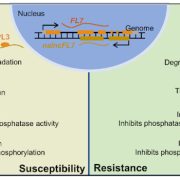
A cascade facilitates Arabidopsis resistance to pathogens
The Plant Cell: In a NutshellAi and Li et al. explore the mechanism by which an RNA-binding protein regulates plant immunity.
By Gan Ai1,3, Tianli Li 1,3, Hai Zhu1, Xiaohua Dong1, Xiaowei Fu1, Chuyan Xia1, Weiye Pan1, Maofeng Jing1, Danyu Shen1, Ai Xia1, Brett M. Tyler2, Daolong Dou1*
1College of Plant Protection, Academy…
Plant Physiology Webinar: How respiratory energy can drive *everything*
Blog, Plant Physiology, WebinarsPlant Physiology Webinar: How Respiratory Energy Can Drive *Everything*
Celebrating the April 2023 Focus Issue on Respiration
Recorded Thursday April 6, 2023
About this webinar
Respiration is central to plant metabolism and consumes roughly half the carbon fixed by photosynthesis.…
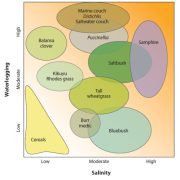
Review: Salt-tolerant crops: Time to deliver
Plant Science Research WeeklyFew topics are as inherently interesting from both fundamental and applied perspectives as salt tolerance in crop plants. From the basic science side, cells have several strategies that they use to keep Na+ levels low in their cytosol in spite of what can be a very steep concentration gradient from out…
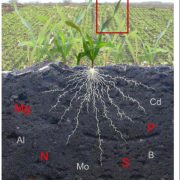
Review: Difficult situations cause blushing in plants, much as they do in people
Plant Science Research WeeklyAs with people, plants blush in difficult circumstances. Situations such as nutrient stress make plants uncomfortable, resulting in the accumulation of anthocyanins in different plant tissues and color changes in the tissues. Jezek et al. reviewed how and why anthocyanins accumulate in foliar tissues…

Opinion. Burning lignin: overlooked cues for post-fire seed germination
Plant Science Research WeeklySmoke is a crucial germination trigger in ecosystems with naturally recurring fires, such as savannas and Mediterranean forests. There are various compounds in smoke, yet karrikins (KARs) –the primary product of cellulose combustion– have dominated the research efforts to elucidate the mechanisms…

Review: Temperature sensing in plants
Plant Science Research WeeklyLike all organisms, plants respond to changes in temperature by activating pathways that enable them to stay alive in spite of rising or lowering temperatures. Interestingly though, there is no universal temperature sensing mechanism across the domains of life. Changes in membrane fluidity (think of…