

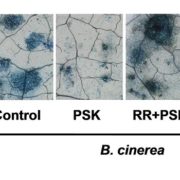
Pentapeptide Protection of Botrytis-Infected Tomato by Phytosulfokine
Blog, The Plant Cell, The Plant Cell: In BriefFungal pathogens such as Botrytis cinerea can cause devastating losses to agricultural crops – ask any strawberry, grape, or tomato grower. To prevent these losses, plants can summon a variety of immune responses by recognizing specific molecules associated with pathogen attack and/or internal damage.…
Press Release: How to target a gene
Research, The Plant Cell, The Plant Cell: NewsScientists find proteins important for plant development, DNA repair and gene targeting
Freiburg, Mar 08, 2018
All living cells have invented mechanisms to protect their DNA against breaks during duplication and against damage by UV-light or chemicals. A team of biologists led by Prof.…

Sweet route to greater yields
Plant Physiology, Plant Physiology: Editorials, ResearchThree years ago, biotechnologists demonstrated in field trials that they could increase the productivity of maize by introducing a rice gene into the plant that regulated the accumulation of sucrose in kernels and led to more kernels per maize plant.
They knew that the rice gene affected the performance…

Trehalose-6-Phosphate and Reproductive Resource Allocation in Maize
Plant Physiology, Plant Physiology: On The InsideFlowering is a developmental stage that is particularly sensitive to drought; restriction of water at this time can decrease seed set, final seed number, and harvested seed yield. Kernel abortion during drought at flowering can be alleviated by supplying Suc to reproductive tissue. Consequently, Suc…
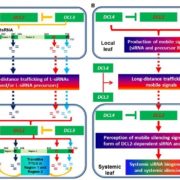
Systemic RNA Silencing in Tobacco
Plant Physiology, Plant Physiology: On The Insidegene RNA silencing is a cellular gene regulatory mechanism that is conserved across fungal, plant, and animal kingdoms. Through sequence-specific targeting, RNA silencing can degrade mRNA for posttranscriptional gene silencing (PTGS) or modify related DNA for transcriptional gene silencing. RNA silencing…
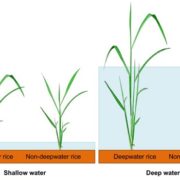
Transcriptome Studies of Deepwater Rice
Plant Physiology, Plant Physiology: On The InsideRice (Oryza sativa) paddies frequently become submerged during the rainy season in some parts of South and Southeast Asia, such as Bangladesh, India, Thailand, Vietnam, and Cambodia. Submergence stress is harmful to plants. In addition to causing O2- and CO2-deficient conditions by restricting environmental…
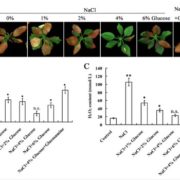
Apple Hexokinase Mediates Response to Salinity Stress
Plant Physiology, Plant Physiology: On The InsideAbiotic stresses such as drought, salinity, low temperature, and flooding usually lead to sugar accumulation. It has been reported that the accumulation of Glc, Suc, and Fru under high salinity plays an important role in carbon storage, osmotic regulation, and homeostasis, as well as scavenging of free…
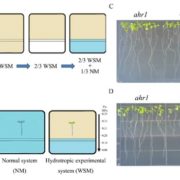
Brassinosteroids and Hydrotropism
Plant Physiology, Plant Physiology: On The InsideSoil water availability is a major constraint for crop growth throughout the world. Hydrotropism, the bending of roots in response to moisture gradients, enables plants to take better advantage of available soil water. In contrast to gravitropism and phototropism which have been studied extensively,…
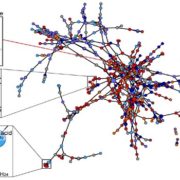
Mycorrhiza-Triggered Networks in Leaves
Plant Physiology, Plant Physiology: On The InsideOne effect of mycorrhizal fungi is to stimulate the plant immune system, leading to induced systemic resistance (ISR). Thus, mycorrhizal fungi influence the interactions between plants and aboveground herbivores. The molecular mechanisms underlying these types of beneficial microbe-plant interactions…