


Fresh as an Exitron: A Flower-specific Splice Variant of AUXIN RESPONSE FACTOR8 Helps Shape the Stamen
Research Blog, The Plant Cell, The Plant Cell: In BriefEukaryotic genes contain protein-coding exons interspersed with non-coding introns. While introns are usually spliced out of mRNA (often in conjunction with various exons), intron retention usually causes mRNA to remain in the nucleus instead of being exported to the cytoplasm for translation. This process…

Developing a database for your lab rules and protocols
BlogPart of the “Self Reflection” series by and for early-career researches
After an hour-long search, you’re pouring over an old notebook from a previous post-doc in the lab, trying to recreate a protocol that your lab thought you would never use again. There's an upside-down y with a squiggle…

Autophagy: Both Friend and Foe in Pseudomonas Infection
Blog, The Plant Cell, The Plant Cell: In BriefEukaryotes use two major systems for getting rid of unwanted proteins: the ubiquitin proteasome system and autophagy. The proteasome degrades ubiquitinated proteins. Autophagosomal vesicles encapsulate cellular waste and either deliver it to the vacuole or fuse with a lysosome. Animal cells use autophagy…

Trust but Verify: A Lesson in Technology Limitations and Error Propagation
Blog, The Plant Cell, The Plant Cell: In BriefBy C. Robin Buell
Unlike molecular biology techniques that are routinely used in individual investigator labs, the high cost of infrastructure historically has resulted in genome sequencing being performed at genome centers in which quality control and quality assessments are a mainstay, and it is…
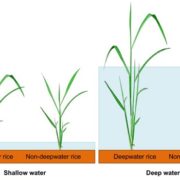
Transcriptomics of deepwater rice (Plant Physiol)
Plant Science Research WeeklyFor most plants, becoming submerged under water can be lethal due to a restriction in gas exchange. One strategy for submergence tolerance is called an escape strategy, such as that employed by deepwater rice; the plant elongates rapidly to raise its leaves above the water level. Minami et al. used transcriptomics…

Crystal structure and pH dependency of peptidase & ligase activity in Arabidopsis legumain (Plant Cell)
Plant Science Research WeeklyLegumains are proteins identified first from legumes that have subsequently been identified in other organisms. They are also described as asparaginyl endopeptidases (AEPs) and vacuolar cysteine proteases or vacuolar processing enzymes. Enzymatically, legumains can express peptidase and peptide ligase…

A family of small, cyclic peptides buried in preproalbumin since the Eocene epoch (Plant Direct)
Plant Science Research WeeklySmall cyclic peptides are produced in many organisms; some are produced by ribosomes and others not. Fisher et al. explore a class of small cyclic peptides known as orbitides, which have been identified in plants of Asteroideae subfamily of the plant family Asteraceae. The fact that these are abundant…
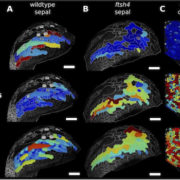
Why and how plants make puzzle cells (eLIFE)
Plant Science Research WeeklyIn proliferating tissues, plant cells start small and then expand to up to 100 times their original size. Sapala, Runions and collaborators studied the relationship between mechanical stress and shape to see if mechanical stress could affect the shape of epidermal cells. Simulations were run to see the…
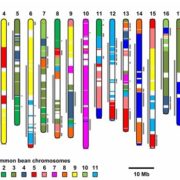
The subgenomes of polyploid plants evolve at different rates (Plant Cell)
Plant Science Research WeeklyPolyploidy can result either through genome doubling followed by intraspecific crosses, or when two genomes from independent species hybridize, leading to autopolyploidy, or allopolyploidy, respectively. Polyploidy is an important evolutionary tool; the resultant redundancy from the duplication of genes…