


Review: Applying synthetic biology and genetic engineering to photosynthesis
Plant Science Research WeeklyPhotosynthesis is a complex process that has the potential to be greatly improved through human modifications. However, these modifications have been limited by two main factors: the high degree of conservation of the components, and the multiprotein complexes that require specifically modified proteins…
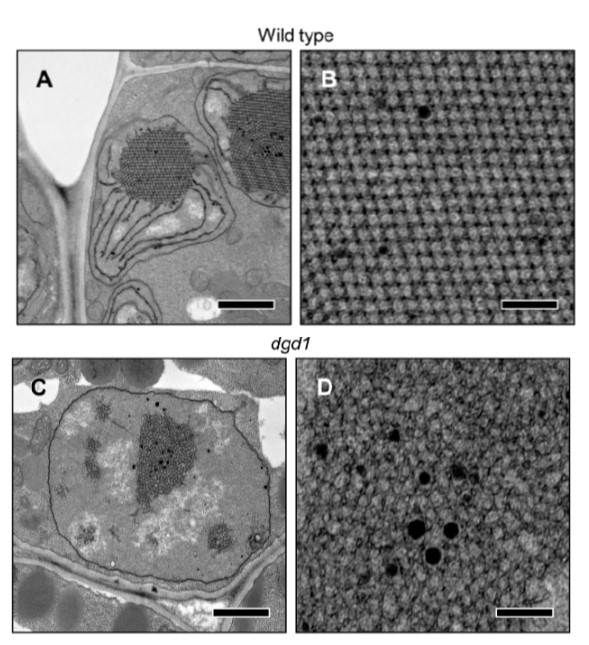
Etioplasts: The Role of Digalactosyldiacylglycerol
Blog, Plant Physiology, Plant Physiology: On The InsideIn dark-grown plants, the plastids of cotyledon cells develop as etioplasts. Etioplasts contain unique internal lattice membrane structures called prolamellar bodies (PLBs) and lamellar prothylakoids (PTs). PLBs accumulate protochlorophyllide (Pchlide), a chlorophyll intermediate, in a complex with NADPH…
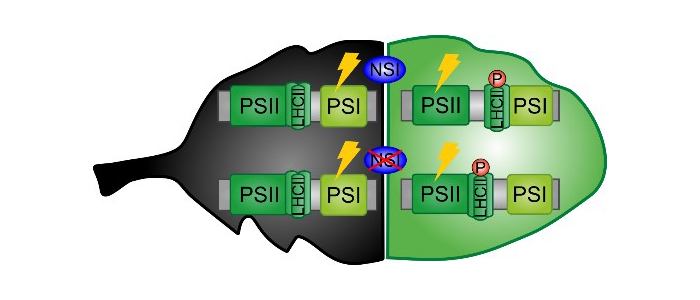
Regulation of Photosynthesis: Shedding Light on Protein Acetylation
Research, The Plant Cell, The Plant Cell: In a NutshellKoskela and Brünje et al. identified a chloroplast protein acetyltransferase, which is required for the regulation of light harvesting in Arabidopsis. Plant Cell (2018) https://doi.org/10.1105/tpc.18.00155.
by Minna M. Koskela, Annika Brünje, Iris Finkemeier, Paula Mulo
Background: Plants…
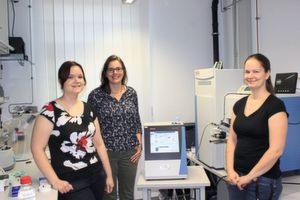
New discovery on photosynthesis discovered
Blog, The Plant Cell, The Plant Cell: News9:07:18 | Editor: Marc Platthaus From Neue Erkenntnis zur Fotosynthese entdeckt Translated by Google.
The conversion of carbon dioxide and sunlight into energy (or biomass) and oxygen: hardly any process is as crucial to life on earth as photosynthesis. Although the process has been studied extensively…
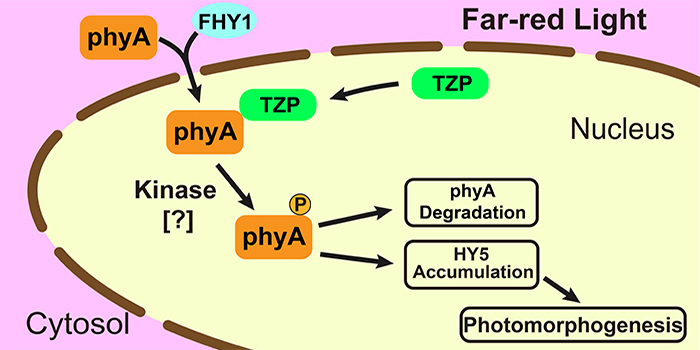
A New Player In Plant Respose to Far-red Light
Research, The Plant Cell, The Plant Cell: In a NutshellZhang et al. discover a protein that interacts with the photoreceptor phyA and plays a role in plant response to far-red light. Plant Cell https://doi.org/10.1105/tpc.17.00677
By Shaoman Zhang, Cong Li and Jigang Li
Background: Far-red (FR) light, corresponding to 700- to 750- nm wavelengths…
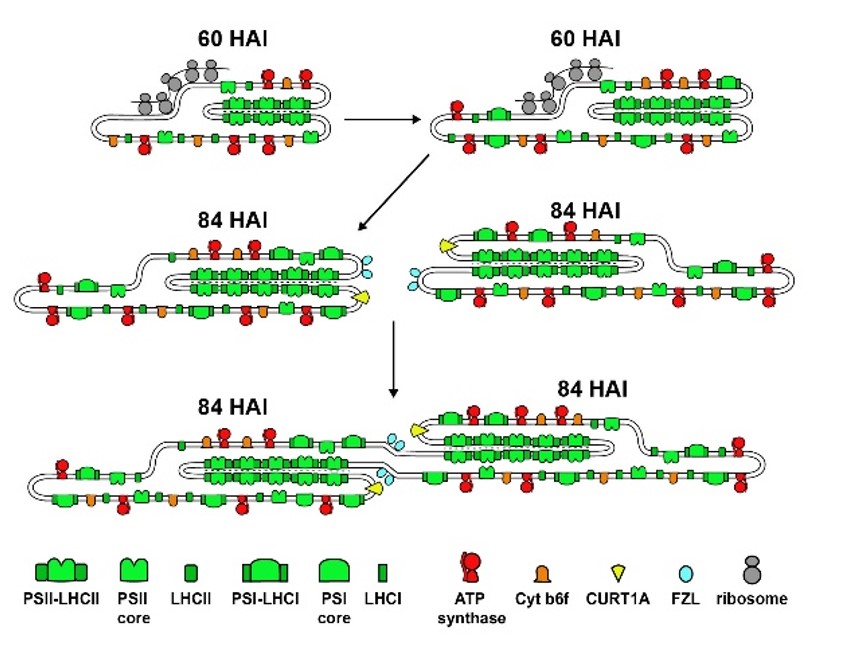
Biogenesis of thylakoid assembly in 3D
Plant Science Research WeeklyDuring seedling greening, chloroplasts are formed from proplastids. Liang and Zhu et al. used a combination of 3D electron tomography of cryo-fixed Arabidopsis cotyledons at various times after illumination to track their development. The fine structure images, accompanied by transcriptomic analysis…
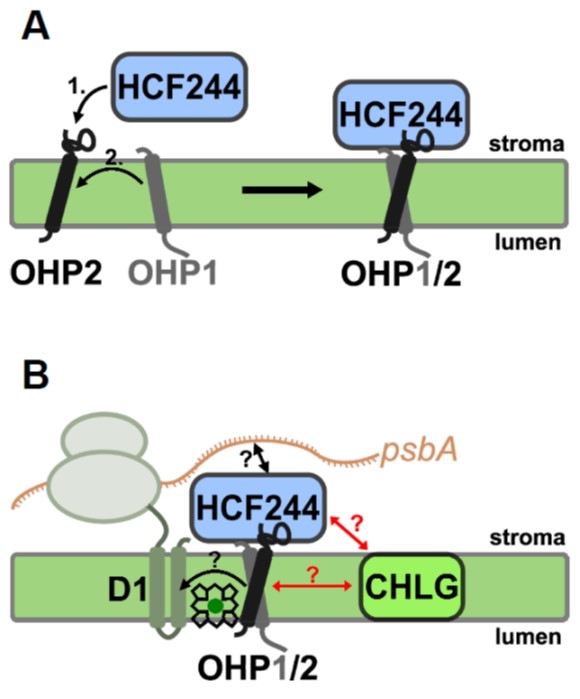
Synthesis and assembly of the PSII core subunits
Plant Science Research WeeklyPlants have many proteins found in the light-harvesting complex, whereas cyanobacteria have only the high-light-inducible proteins (Hlips). One-helix proteins (OHPs) are the plant homologs of Hlips, but their precise functions have been unclear. Hey and Grimm used genetic and biochemical approaches…
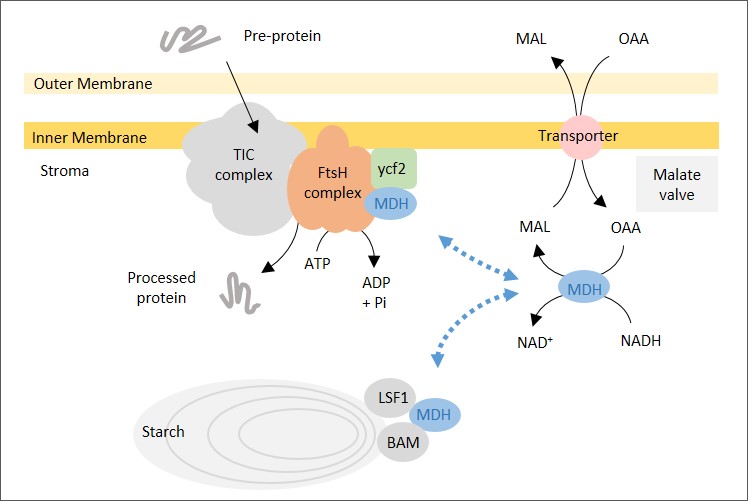
Moonlighting NAD+ Malate Dehydrogenase is Essential for Chloroplast Biogenesis
The Plant Cell, The Plant Cell: In BriefSome proteins are put to work in more than one job, in a form of evolutionary improvization. They are often described as "moonlighting" proteins, referring to the practice of people taking a second job, typically after dark, to help pay the bills. A classic example of a moonlighting protein is the…
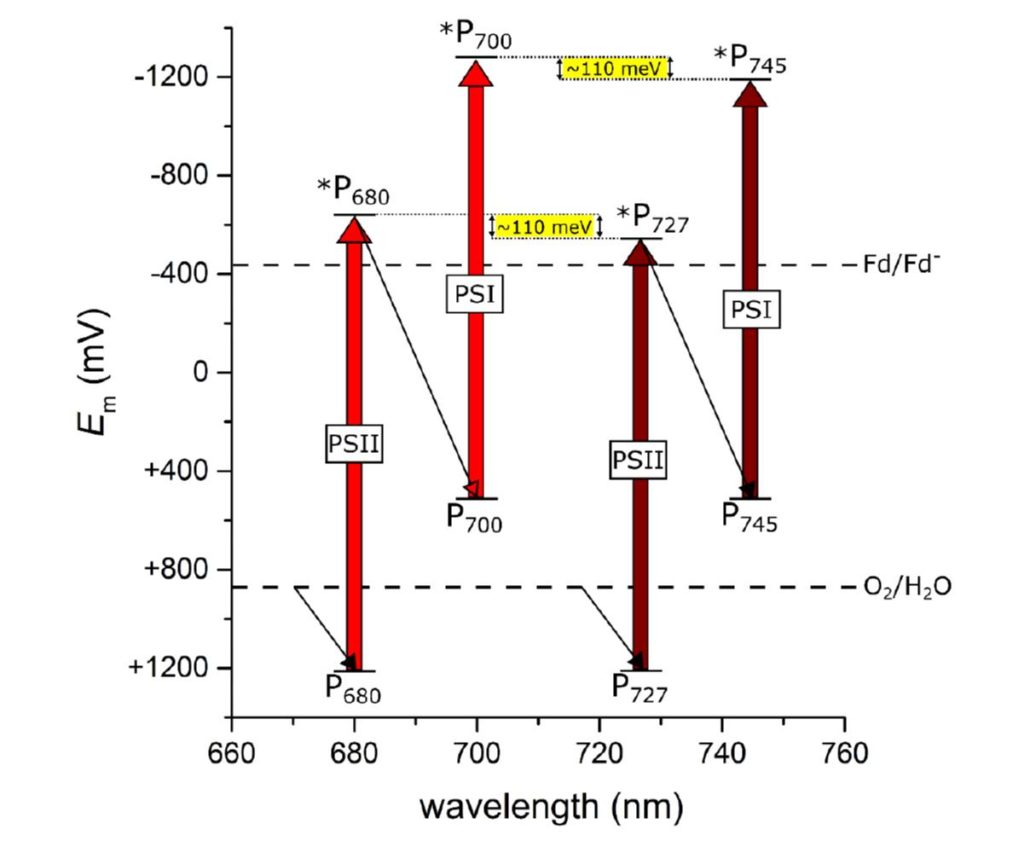
Photochemistry beyond the red limit in chlorophyll f–containing photosystems ($) (Science)
Plant Science Research WeeklyPlant scientists are familiar with the steep drop in photosynthetic activity when plants are illuminated with far-red photons (> 700 nm), because the energy of these long-wavelength photos is insufficient to initiate photochemistry at the chlorophyll a reaction center. Previously, some studies have…