

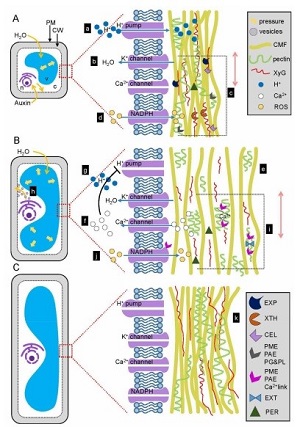
Review: The role of auxin in cell wall expansion (OA)
Plant Science Research Weekly, Research BlogCell wall is the outermost boundary for a cell. For the protection of cell, it maintains its rigidity. At the same time, for providing the shape of cells, it is capable of becoming flexible. This means that the cell wall has the capacity to maintain both rigidity and flexibility based on the requirement.…

Review: Rubisco is not really so bad ($) (Plant Cell Environ)
Plant Science Research WeeklyThe carbon-fixing enzyme Rubisco (Ribulose‐1,5‐bisphosphate carboxylase/oxygenase) is much-maligned and has been described as “sluggish” and with “confused specificity”. In this new Review, Bathellier et al. argue that it is “not really so bad”. Their reasoning is that when Rubisco’s…
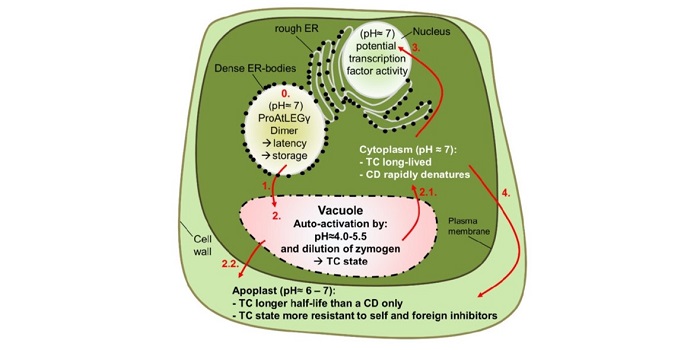
Crystal structure and pH dependency of peptidase & ligase activity in Arabidopsis legumain (Plant Cell)
Plant Science Research WeeklyLegumains are proteins identified first from legumes that have subsequently been identified in other organisms. They are also described as asparaginyl endopeptidases (AEPs) and vacuolar cysteine proteases or vacuolar processing enzymes. Enzymatically, legumains can express peptidase and peptide ligase…

A family of small, cyclic peptides buried in preproalbumin since the Eocene epoch (Plant Direct)
Plant Science Research WeeklySmall cyclic peptides are produced in many organisms; some are produced by ribosomes and others not. Fisher et al. explore a class of small cyclic peptides known as orbitides, which have been identified in plants of Asteroideae subfamily of the plant family Asteraceae. The fact that these are abundant…
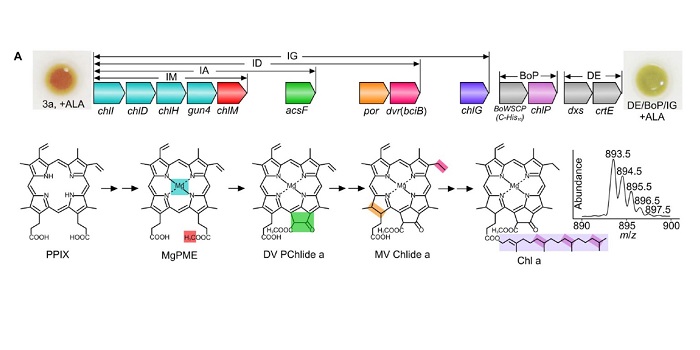
Complete enzyme set for chlorophyll biosynthesis in Escherichia coli (Sci. Adv.)
Plant Science Research WeeklyAlthough the reactions and enzymes involved in the biosynthesis of chlorophyll are well known, the entire pathway has never before been reconstituted in a non-photosynthetic organism. Chen et al. have done this. The cells (E. coli) expressing the full pathway accumulate chlorophyll and look green! However,…
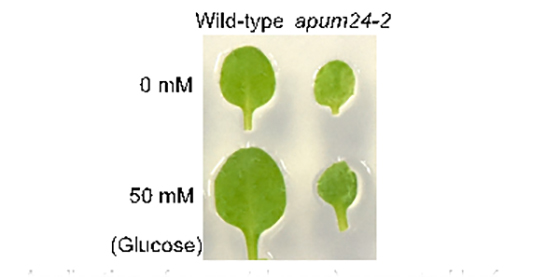
Ribosome Production Under Surveillance
Research, The Plant Cell, The Plant Cell: In a NutshellMaekawa et al. find a ribosome production monitoring system in Arabidopsis thaliana Plant Cell (2017) https://doi.org/10.1105/tpc.17.00778
By Shugo Maekawa, Tetsuya Ishida, Shuichi Yanagisawa
Background: Protein is produced by ribosomes consisting of a number of proteins and several RNAs (ribosomal…
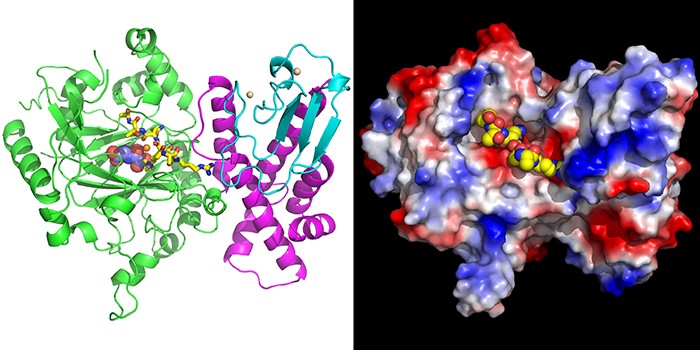
Structure of KDM5 Gives Insight to Histone Demethylation
Research, The Plant Cell, The Plant Cell: In a NutshellYang et al. reveal a conserved H3K4me3 recognition mechanism shared by both plant and animal KDM5 histone demethylases. The Plant Cell (2017). https://doi.org/10.1105/tpc.17.00666
By Z. Yang, Q. Qiu, X. Cao and J. Du
Background: Histone methylation is a conserved gene regulation mechanism in plants…
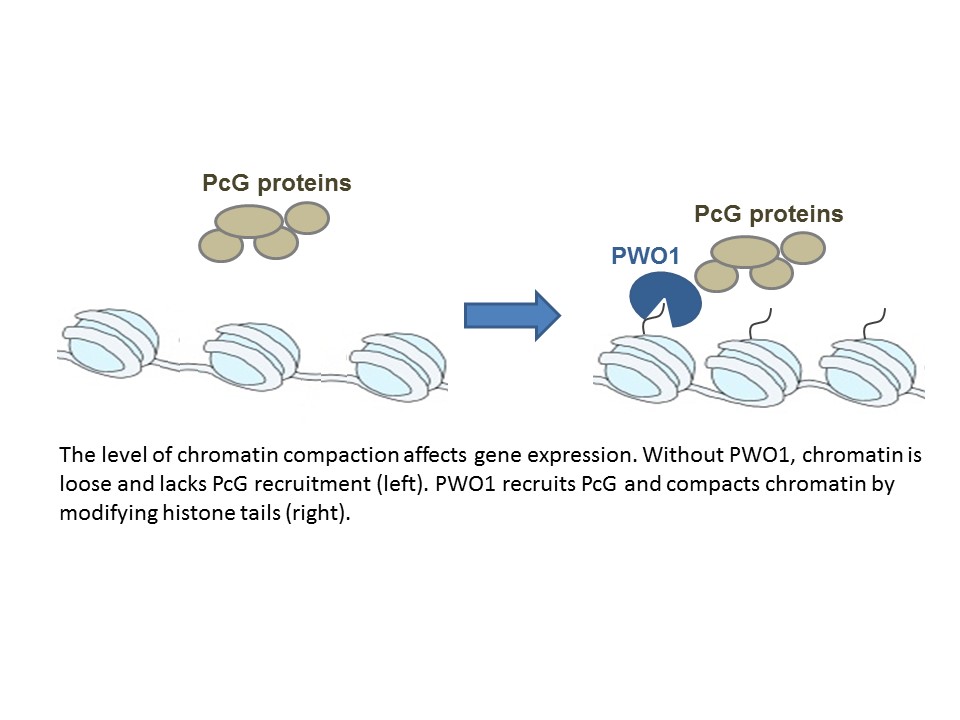
Recruiter of Chromatin Regulators
Research, The Plant Cell, The Plant Cell: In a NutshellHohenstatt et al. describe a new recruiter of PcG chromatin regulators affecting flowering and meristem identity in Arabidopsis. https://doi.org/10.1105/tpc.17.00117
By Pawel Mikulski
1) BACKGROUND: Polycomb group (PcG) proteins are key regulatory proteins involved in maintaining the ability (and…
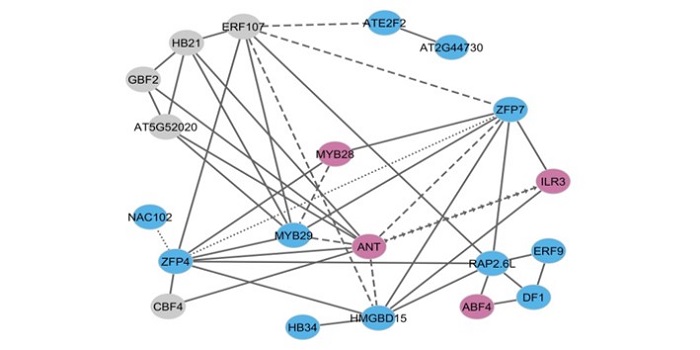
Symphony of the regulators: How do plants control complex responses to environmental signals?
Blog, The Plant Cell, The Plant Cell: In BriefThere are several models we use to conceptualize how plants respond to environmental signals through transcriptional regulation. In perhaps the best-understood model, the perception of some environmental signal flows through one or several mechanisms to a master regulator, often a transcription factor…