


It takes two to be you: promoter motif pairs keep immune responses within cell identity boundaries
Blog, Research, The Plant Cell, The Plant Cell: In BriefBeing a multicellular organism is not an easy task. Proper functioning of individual cell types with different functions requires coordination of gene expression to determine cell identity, but also regulatory mechanisms to respond to environmental cues. The root may appear simple at first sight, but…
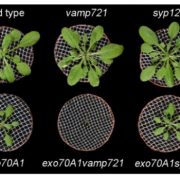
Interactions between exocyst and SNARE vesicle trafficking machinery support plant growth
Blog, Research, The Plant Cell, The Plant Cell: In a NutshellLarson et al. examine the interactions between subunits of the exocyst and SNARE complex and the effects of these interactions on trafficking, secretion, and growth. Plant Cell https://doi.org/10.1105/tpc.20.00280
Emily R Larson1,3, Jitka Ortmannová2,4, Naomi A Donald1, Jonas Alvim1, Michael…
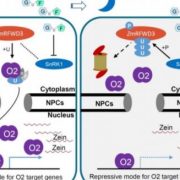
SnRK1-ZmRFWD3-Opaque2: A Nexus of Seed Nutrient Accumulation and Diurnal Cycles
Blog, Research, The Plant Cell, The Plant Cell: In BriefPlant seeds store nutrients in the form of protein, starch, and oil to support seed germination and seedling establishment. The seed nutrient reserves are supplied with carbon and nitrogen assimilated in vegetative tissues, where primary metabolism oscillates in a circadian manner (Farré and Weise,…

Recognizing Plant Cell authors: Janina Steinbeck
The Plant Cell, The Plant Cell: Author ProfilesJanina Steinbeck, first author of In Vivo NADH/NAD+ Biosensing Reveals the Dynamics of Cytosolic Redox Metabolism in Plants
Current position: Postdoc in the Plant Energy Biology Lab, Institute for Biology and Biotechnology of Plants, University of Münster
Education: PhD jointly at the University…

Back to where it came from: chloroplast expression of both Rubisco subunits helps functional enzyme analysis
Blog, Research, The Plant Cell, The Plant Cell: In BriefRubisco catalyzes the key carboxylation step in photosynthetic CO2 fixation and is probably the most abundant protein on Earth. The enzyme is famous for inefficient catalysis and the habit of binding oxygen instead of CO2 in one out of every four binding events, leading to photorespiration reactions…
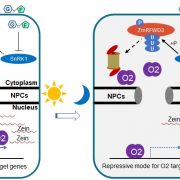
Rhythms in the dark: how endosperm responds to daylight cycles
Blog, Research, The Plant Cell, The Plant Cell: In a NutshellLi et al. discover a diurnal pattern in sucrose content in developing maize endosperm that relies on the action of an E3 ubiquitin ligase on the master regulator transcription factor Opaque2. Plant Cell https://doi.org/10.1105/tpc.20.00352
By Chaobin Li, Zeyang Ma, Rentao Song, China Agricultural…

Recognizing Plant Cell authors: Yang Yang
The Plant Cell, The Plant Cell: Author ProfilesYang Yang, co-first author of The Tip-localized Phosphatidylserine Established by Arabidopsis ALA3 is Crucial for Rab GTPase-mediated Vesicle Trafficking and Pollen Tube Growth
Current Position: Ph.D. candidate.
Education: MOE Key Laboratory of Cell Activities and Stress Adaptations, School of Life…

Recognizing Plant Cell authors: Yuelong Zhou
The Plant Cell, The Plant Cell: Author ProfilesYuelong Zhou, co-first author of The Tip-localized Phosphatidylserine Established by Arabidopsis ALA3 is Crucial for Rab GTPase-mediated Vesicle Trafficking and Pollen Tube Growth
Current Position: Ph.D. candidate
Education: MOE Key Laboratory of Cell Activities and Stress Adaptations, School of…
OsGSK2 integrates jasmonic acid and brassinosteroid signalling in rice
Blog, Research, The Plant Cell, The Plant Cell: In BriefPlant defenses against herbivore or pathogen attack involve the coordination of multiple hormone-mediated signalling networks, including the jasmonate (JA) and brassinosteroid (BR) pathways. Jasmonate is an oxylipin phytohormone that triggers the transcription of defence-related proteins and secondary…