

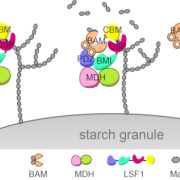
It takes a complex to degrade starch
The Plant Cell: In a NutshellJian Liu, Xuecui Wang, Zeyuan Guan, Junjie Yan and colleagues reveal how the glucan phosphatase LSF1 acts as a scaffold to bring together the necessary enzymes for starch degradation.
https://doi.org/10.1093/plcell/koad259
Background:
Starch is a glucan-polymer that accumulates in chloroplasts…
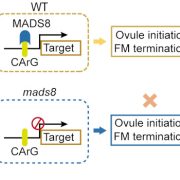
Conserved function of MADS8 in pistil regulation at high temperatures
The Plant Cell: In a NutshellShen et al. explore how female reproductive development is maintained in at high ambient temperatures in barley and rice, and whether members of the SEPALLATA subfamily of floral organ regulators contribute.
https://doi.org/10.1093/plcell/koad246
Chaoqun Shena,b and Matthew R. Tuckerb
a Joint…
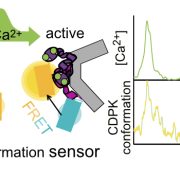
Imaging of Ca2+-decoding in planta
The Plant Cell: In a NutshellLiese et al. reveal a genetically encoded fluorescent biosensor for CDPK conformational activation.
https://doi.org/10.1093/plcell/koad196
By Anja Liese1,2 and Tina Romeis1,2
1 Department for Biochemistry of Plant Interactions, Leibniz Institute of Plant Biochemistry, D-06120 Halle (Saale),…
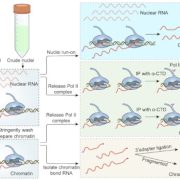
Pros and cons of various popular RNA sequencing methods
The Plant Cell: In a NutshellLiu and Zhu et al. systematically compare various methods for investigating transcription.
The Plant Cell: https://doi.org/10.1093/plcell/koad237
By M. Liu and Z. Dong
Guangdong Provincial Key Laboratory of Plant Adaptation and Molecular Design, Guangzhou Key Laboratory of Crop Gene Editing,…

Review: A century of studying plant secondary metabolism—From “what?” to “where, how, and why?”
Plant Science Research WeeklyPhytochemicals, also known as plant secondary metabolites, play primary roles in plant development, structure, and response to the environment. Their metabolism has been studied for over a century. In a new review, Dixon and Dickinson discuss past and recent advances in understanding the identity, localization,…
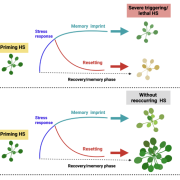
Review. Autophagy: A key player in the recovery of plants from heat stress
Plant Science Research WeeklyPlants have a remarkable ability to adapt to stress. For many stresses, plants respond to short-term mild exposure by becoming more tolerant to subsequent harsher stresses that would otherwise be lethal; this effect is known as priming. Priming occurs through several mechanisms that can include changes…
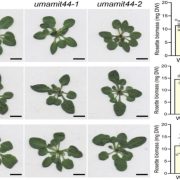
UMAMIT44 exports plastidial glutamate and is essential for plant growth
Plant Science Research WeeklyAmino acids (AA) are fundamental components of peptides, proteins, and enzymes that play a critical role in plant growth, cellular metabolism, and stress response. Plants synthesize most AA within chloroplasts and require membrane transporters to transfer them from stroma to cytosol. Cytosolic AA are…

Altering the location of starch granules by relocalizing a starch granule initiation protein
Plant Science Research WeeklyStarch granules are synthesized in leaf chloroplasts during the day and degraded at night to provide carbon. MFP1 (MAR-BINDING FILAMENT-LIKE PROTEIN 1) is known to have a role in starch granule initiation, but its mechanistic role has been unknown. Sharma et al. hypothesized MFP1’s thylakoid localization…
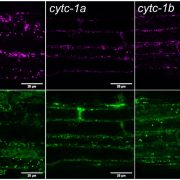
In tune with power: Mitochondrial regulation of energy with TOR
Plant Science Research WeeklyAs seedlings grow, they continuously fine-tune the balance between plant growth and energy consumption for better plant fitness. Mitochondria are essential to generate energy. Here, Canal et al. generated single mutants for a gene involved in the mitochondrial respiratory chain – CYTOCHROME C-1 (CYTC-1),…