

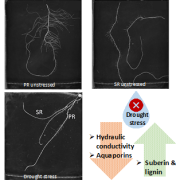
Unveiling distinct responses of maize primary and seminal roots under drought stress
Plant Science Research WeeklyCan you imagine going a day without a sip of water? Neither can plants. Water is essential for supporting diverse physiological processes in plants, including photosynthesis, nutrient transport, temperature regulation, and maintenance of cell turgidity. However, with global increase in temperature and…
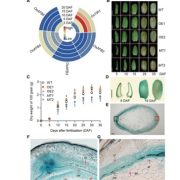
Auxin receptor OsTIR1 mediates auxin signaling during seed filling in rice
Plant Science Research WeeklyThroughout the world, cereal endosperm is a major source of food. However, little is known about the molecular mechanisms underlying the import of sugar into the endosperm of rice plants (Oryza sativa) and how these pathways relate to auxin signaling. In this paper, Wu et al. investigate the role of…
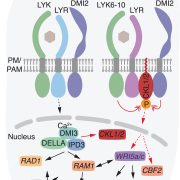
Receptor-associated kinases control lipid provisioning in plant–fungal symbiosis
Plant Science Research WeeklyMost plants benefit from symbiotic associations with fungi, in which the fungi aid in nutrient update particularly of phosphate, and the plant returns the favor by supplying the fungi with lipids. Several but not all of the molecular players required for these important pathways have been identified.…

Convergent evolution in pitcher plant traps reveals a mechanism for composite trait evolution
Plant Science Research Weekly
It’s easy for most of us to grasp how an enzyme evolves new functions or substrate specificities, but envisioning how something incredibly complex like the human eye can be quite challenging (even Darwin was stumped). In this fascinating paper, Chomicki et al. asked how two geographically…
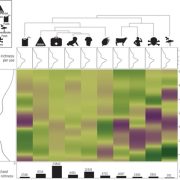
The global distribution of plant diversity and its significance to humans
Plant Science Research WeeklyPlants shape ecosystems and sustain human life. Only a small portion of plant diversity is currently known to be in use, even though most plants may be useful to humans. Over time, certain species become widespread, but others are native to specific geographical regions. Thus, to manage plant resources…

Plant Science Research Weekly: February 2, 2024
Blog, WWR Full PostReview: A century of studying plant secondary metabolism—From “what?” to “where, how, and why?”
Phytochemicals, also known as plant secondary metabolites, play primary roles in plant development, structure, and response to the environment. Their metabolism has been studied for over a century.…

Nuclear pore and nucleoskeleton continuum
The Plant Cell: In a NutshellMermet et al. identify a protein that provides a continuum between the nucleoskeleton and the nuclear pore complex basket via short peptide motifs.
https://doi.org/10.1093/plcell/koad236
Christophe Tatout and Aline Probst
iGReD, Université Clermont Auvergne, CNRS, INSERM, 63001 Clermont-Ferrand,…
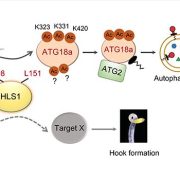
Autophagy regulation by HLS1-mediated acetylation
The Plant Cell: In a NutshellHuang et al. explore the molecular mechanism underlying the regulation of autophagy by HLS1.
https://doi.org/10.1093/plcell/koad252
By Li Huang, Xing Wen, Lian Jin, Huihui Han, and Hongwei Guo
New Cornerstone Science Laboratory, Institute of Plant and Food Science, Department of Biology,…
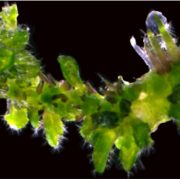
Establishment of regeneration capability of callus cells
The Plant Cell: In a NutshellXu et al. demonstrate the transcriptional regulatory steps responsible for establishing the regenerating capability of callus during Arabidopsis regeneration.
https://doi.org/10.1093/plcell/koad255
By Chongyi Xu1, Pengjie Chang1,2, Shiqi Guo1,2, Xiaona Yang1,2, Xinchun Liu1,2, Baofeng Sui1,2,…