

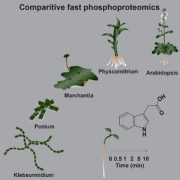
RAF-like protein kinases mediate a deeply conserved, rapid auxin response
Plant Science Research WeeklyThe definition of a phytohormone has not always been clear, though most plant biologists agree that phytohormones can be defined as endogenous molecules capable of triggering signaling cascades and associated responses by binding to specific receptors. They have been extensively studied in flowering…
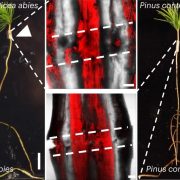
Sealing the deal to graft healing: PAT1 as a novel regulator of graft formation
Plant Science Research WeeklyGrafting is a way to combine the desirable properties of two plants by joining the scions and rootstocks from different plants. While frequently practiced, little is known about how grafting within and between coniferous species works. Most pertinently, grafting success relies on how efficiently connected…
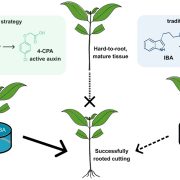
Contribution of synthetic auxin conjugates to clonal propagation of woody species
Plant Science Research WeeklyFrom food and energy to paper and timber, many industries rely on clonal propagation of tree species. Successful propagation of cuttings depends on adventitious rooting ability, which is known to decline with tree age and to be naturally low in many species of interest. Propagators therefore employ naturally…
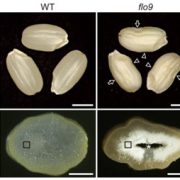
Discovering and characterizing a protein involved in endosperm starch formation in rice
Plant Science Research WeeklyRice is a globally important crop, with most of its calorific component coming from starch. Despite its importance, we do not fully understand the mechanism of starch formation in the rice endosperm. To discover novel factors involved in this process, Yan et al. performed a forward genetics screen and…
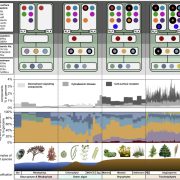
Patterns of evolution: Dissecting the history of pattern recognition receptors from development to immunity
Plant Science Research WeeklyPlants use a suite of cell-surface receptors as signal transducers in both development and immunity. In this study, Ngou et al. utilized computational and functional approaches to examine the evolutionary origin of a subclass of plant cell-surface receptors called pattern recognition receptors (PRRs),…

Seasonal flowering and seasonal growth measure light duration differently
Plant Science Research WeeklyOne of the first lessons a plant biologist learns is that many plants coordinate their seasonal flowering through measuring daylength, and that this process involves both photoreceptors and the biological clock that functions inside of cells. Of course, daylength also affects plant metabolism, in part…
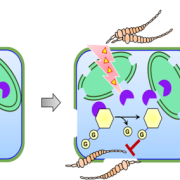
Chemical defense: Exploring two-component plant defense mechanisms in Panax species
Plant Science Research WeeklyIn the interesting world of plant defenses, plants have secret weapons called defense metabolites that stay quiet until a pathogen comes knocking. Plants have evolved two-component chemical defence systems to protect against pathogens while striking a balance between growth promotion and defence mechanisms.…
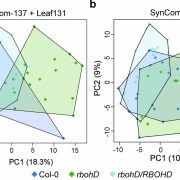
An opportunistic plant pathogen disrupts leaf microbiome through secretion of plant cell wall degrading enzymes
Plant Science Research WeeklyHealthy plants possess a functional immune system, and their leaves harbor a structured microbial community, including opportunistic pathogens. These opportunistic pathogens can trigger plant diseases under conducive conditions, such as when plant immunity is compromised, and the microbial community…
Plant Science Research Weekly: February 16, 2024
WWR Full PostReview: Integrating cellular electron microscopy with multimodal data to explore biology across space and time
Fifty years ago (1974), Albert Claude, Christian de Duve, and George Palade were awarded the Nobel Prize for their discoveries on the structural and functional organization of the cell, which…