

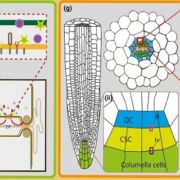
Viewpoint: Cell-cell junctions: What’s their function? (New Phytol)
Plant Science Research WeeklyPlasmodesmata are contiguous cell-cell junctions that provide an avenue for intracellular (symplastic) communication between neighboring plant cells. In recent years, researchers have unravelled key aspects of plasmodesmata development and function in cell-cell signalling during a multitude of responses…
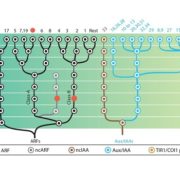
Deep evolutionary roots for the plant hormone auxin (eLIFE)
Plant Science Research WeeklyAuxin is an endogenous plant hormone that orchestrates complex tissue development across diverse green plant lineages. In a recent article, Mutte et al. performed a deep phylogenomics analysis of known and predicted auxin signalling mechanisms present in green plants and their algal predecessors. This…
What We're Reading: April 6th
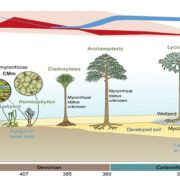
WWR Full PostReview: The origin and evolution of mycorrhizal symbioses
Many fungi are pathogens that kill or weaken their plant hosts. However, there are also many species that form beneficial relationships with plants, algae, and cyanobacteria. One of these mutualisms is the mycorrhizal association between a…
Recognizing featured Plant Cell first authors: André N. Müller
Blog, The Plant Cell, The Plant Cell: Author ProfilesAndré N. Müller, featured first author of The Biotrophic Development of Ustilago maydis Studied by RNA-Seq Analysis
Current Position: Project Manager, GSK Vaccines GmbH, Marburg
Education: PhD in Molecular Phytopathology, Department of Organismic Interactions, Max Planck Institute for Terrestrial…
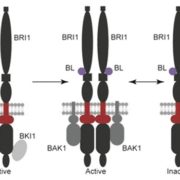
MicroProteins as the First Step toward a Master Key for Posttranslational Regulation
Plant Physiology, Plant Physiology: News and Views, Research
Determining the function of a gene often relies on transgenic plants with altered transcriptional or translational levels. This is usually achieved through overexpression, knockout, or knockdown. However, each of these approaches has specific advantages and drawbacks. For instance, knockouts, which…
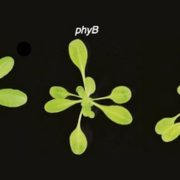
Update: Phytochrome, Carbon Sensing, Metabolism, and Plant Growth Plasticity
Blog, Plant Physiology, Plant Physiology: UpdatesBy Johanna Krahmer, Ashwin Ganpudi, Ammad Abbas, Andrés Romanowski, and Karen J. Halliday
Plants continuously monitor fluctuations in their environment and actively adjust their metabolism to cope with variations in light and carbon resource availability. However, the links between photoreceptor signaling…
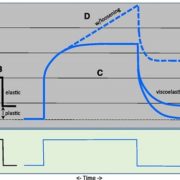
Update: Diffuse Growth of Plant Cell Walls
Blog, Plant Physiology, Plant Physiology: UpdatesBy Daniel Cosgrove
The primary wall of a growing cell is a versatile, subtle, and dynamic structure, with unique properties and functions in the life of the plant (Burton et al., 2010). When a cell grows, its wall stretches irreversibly as the cell enlarges in volume. Cells can start and stop this…

Update: The role of trehalose 6-phosphate in crop yield and resilience
Blog, Plant Physiology, Plant Physiology: UpdatesBy Matthew J. Paul, Asier Gonzalez-Uriarte, Cara A. Griffiths, and Keywan Hassani-Pak
Significant increases in global food security require improving crop yields in favourable and poor conditions alike. However, it is challenging to increase both the crop yield potential and yield resilience simultaneously,…
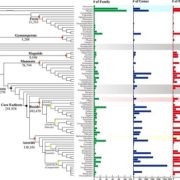
Commentary. 10KP: A phylodiverse genome sequencing plan (GigaScience)
Plant Science Research WeeklyNobody doubts the great insights we have gained about plant diversity and evolution from genome sequencing, but the patchy nature of available genomes within the plant phylogeny remains a problem. Cheng et al. describe the 10KP (10,000 Plants) Genome Sequencing Project, which aims to sequence genomes…