

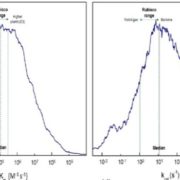
Review: Rubisco is not really so bad ($) (Plant Cell Environ)
Plant Science Research WeeklyThe carbon-fixing enzyme Rubisco (Ribulose‐1,5‐bisphosphate carboxylase/oxygenase) is much-maligned and has been described as “sluggish” and with “confused specificity”. In this new Review, Bathellier et al. argue that it is “not really so bad”. Their reasoning is that when Rubisco’s…
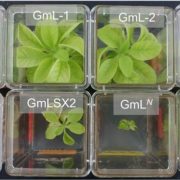
Red algal Rubisco fails to accumulate in tobacco expressing Griffithsia monilis RbcL and RbcS genes (Plant Direct)
Plant Science Research WeeklyFollowing up on earlier studies in which they introduced cyanobacterial Rubisco into tobacco, Lin and Hanson endeavoured to introduce into tobacco Rubisco genes from a red alga, which has an unusually high CO2/O2 specificity. Although they were able to demonstrate the presence of the genes and their…
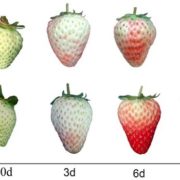
Polyamines regulate strawberry fruit ripening by abscisic acid, auxin, and ethylene (Plant Physiol)
Plant Science Research WeeklyPolyamines, which include putrescine [NH2(CH2)4NH2], spermidine [NH2(CH2)4NH(CH2)3NH2], and spermine [NH2(CH2)3NH(CH2)4NH(CH2)3NH2], are widespread in nature. Although their mechanisms of action remain largely unresolved, they have demonstrated roles in plants ranging from abiotic stress tolerance…
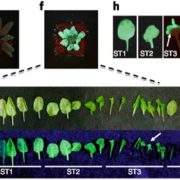
Crosstalk between PTGS and TGS pathways in natural antiviral immunity and disease recovery (Nature Plants)
Plant Science Research WeeklyViruses are significant pathogens of plants, and we know that plants defend themselves in part through the production of small RNAs (sRNAs) that suppress the virus. The viral pathogens in turn can produce viral supressors of RNA silencing (VSR). Kørner et al. investigated the role of gene silencing…

Pursuing sustainable productivity with millions of smallholder farmers ($) (Nature)
Plant Science Research WeeklyImproving crop productivity of rural areas while addressing pollution problems is a challenge that not only depends on scientific studies and technology but also requires an effective dialog with the smallholder farming communities. This month, Nature published the results of a ten-year Chinese agricultural…
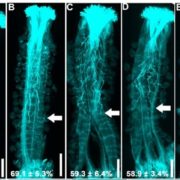
The ADAPTOR PROTEIN-3 complex mediates pollen tube growth by coordinating vacuolar targeting and organization (Plant Physiol)
Plant Science Research WeeklyAdaptor proteins (AP) are involved in sorting proteins and are able to recognize cargo and coat proteins during vesicle formation. AP-3 specifically targets protein cargoes to vacuoles. Feng et al. investigate the role of AP-3 in plant reproduction. ap-3 mutants have reduced seed set that is characterized…
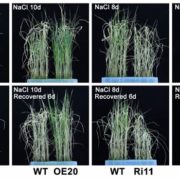
Receptor-like cytoplasmic kinase STRK1 mediates salt tolerance in rice via H2O2 homeostasis ($) (Plant Cell)
Plant Science Research WeeklySalinity is a widespread stressor. Zhou et al. investigated the role of receptor-like kinases (RLKs) in salinity tolerance by identifying RLKs that are transcriptionally upregulated by salt treatment. Candidates were introduced either as overexpression (full-length) or dominant negative (partial) clones,…

Transcriptome landscape of a bacterial pathogen under plant immunity (PNAS)
Plant Science Research WeeklyMany studies have examined how plants respond transcriptionally to pathogen attack. This study investigates how a bacterial pathogen [Pseudomonas syringae pv. tomato DC3000 (Pto)] alters its transcriptome very early in the infection process. To accomplish this, Nobori et al. developed two methods to…
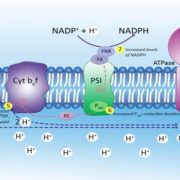
The impacts of phosphorus deficiency on the photosynthetic electron transport chain (Plant Physiol)
Plant Science Research WeeklyPhosphorus deficiency is widespread and can severely limit plant growth. Carstensen et al. investigated how P deficiency affects photosynthesis in barley. They compared chlorophyll a fluorescence transients (OJIP transients) between P-deficient, sufficient and resupplied plants. They observed depletion…