


Regulation of Arabidopsis hypocotyl growth by transcriptional regulators (PNAS)
Plant Science Research WeeklyThe integration of light-based environmental signals with photoreceptors and transcriptional regulators is essential for coordinating plant growth, development and energy production. One such integrator of light and signaling components is the Arabidopsis thaliana TANDEM ZINC-FINGER PLUS3 (TZP). TZP…

Sulfur partitioning between glutathione and protein synthesis determines plant growth (Plant Physiol.)
Plant Science Research WeeklySulfur is incorporated into the amino acid cysteine (Cys) and also the reactive-oxygen scavenger glutathione (GSH). Speiser et al. investigated the effect of restricting both Cys and glutathione production through a double-mutant analysis in Arabidopsis; sir1-1 is a slow-growing sulfite-reductase deficient…

Review: The spring of systems biology-driven breeding ($) (TIPS)
Plant Science Research WeeklyIn this excellent review, Lavarenne et al. provide an accessible introduction to the tools and objectives of gene regulatory network (GRN) analysis. They include a glossary, show diagrams displaying different stages of GRN analysis, and provide links to key papers in which different methods have been…
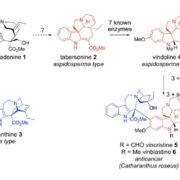
Missing enzymes in the biosynthesis of the anticancer drug vinblastine in Madagascar periwinkle ($) (Science)
Plant Science Research WeeklyPlants make some amazing biologically active natural products, many with impressive applications such as vinblastine, a product of Catharantus roseus (Madagascar periwinkle). Caputi et al. identified key enzymes in vinblastine synthesis, opening the door for its production in alternative systems and…

What We're Reading: May 18th
WWR Full PostReview: Same tune, different song — cytokinins as virulence factors in plant–pathogen interactions?
Many pathogens produce virulence factors that improve their pathogenicity, including in some cases compounds produced by the host, such as the hormone cytokinin. Spallek et al. review the various…
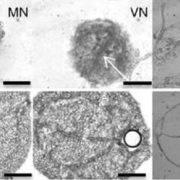
Intra-Organ Regulation of Shade Responses
Plant Physiology: On The InsidePlants beneath a canopy compete with neighboring plants for light by triggering various physiological responses, collectively known as shade avoidance syndrome. Because of the selective absorption of red (R) light by plants in the upper canopy, plants in the shade are exposed to low R to far-red (FR)…
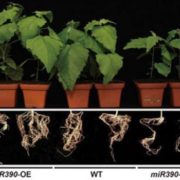
A MicroRNA Regulating Lateral Root Growth in Response to Salt
Plant Physiology: On The InsideSoil salinity is a major threat to crop yields around the world. Salt generally damages plants through osmotic stress in the rhizosphere, interfering with water and nutrient uptake and causing cells to be subjected to ionic toxicity Developmental plasticity in the root system is an important strategy…
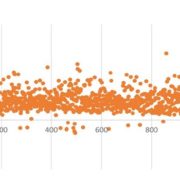
Drugs Triggering Oil Accumulation in a Diatom
Plant Physiology, Plant Physiology: On The InsideOils composed of triacylglycerols (TAGs) have a broad range of applications, ranging from foods to biofuels. Microalgae are promising feedstocks for the production of (TAGs) but obtaining high yields of TAGs is challenging. Conte et al. (10.1104/pp.17.01804) have developed a phenotypic assay for the…
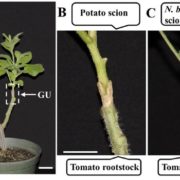
Mechanisms of Long-Distance mRNA Movement
Plant Physiology: On The InsidePhloem has long been recognized as a tissue that transports carbohydrates and amino acids. In recent years, however, it has also been found that this tissue serves as a conduit for signals, e.g., mRNAs, small RNAs, proteins, small peptides, and hormones. Several classical studies have shown that certain…