


Small Peptide PSK Induces Plant Immunity Against Botrytis cinerea
Research, The Plant Cell, The Plant Cell: In a NutshellZhang et al. show how PSK initiates Ca2+- and auxin-dependent immunity https://doi.org/10.1105/tpc.17.00537.
By Huan Zhang, Zhangjian Hu and Kai Shi
Background: During plant-microbe interactions, some small secreted peptides are secreted into the apoplast between plant cells as damage-associated…
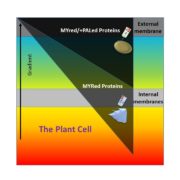
Lipid Anchor: Postal Code for Proteins on the Road to Membranes
Research, The Plant Cell, The Plant Cell: In a NutshellMajeran et al. investigate how plant cells target proteins to membrane compartments https://doi.org/10.1105/tpc.17.00523
By Wojciech Majeran, Thierry Meinnel & Carmela Giglione
Background: Living cells are encased in an oily barrier, the plasma membrane, made up of a double layer of lipids…
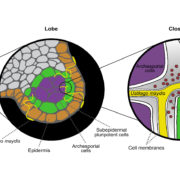
PLANT PROTEIN MEETS HOMER´S TROJAN HORSE
Research, The Plant Cell, The Plant Cell: In a NutshellBy Karina van der Linde and Virginia Walbot
Background: In contrast to animals in which meiotically competent cells develop in embryos, plants switch from vegetative to reproductive growth only during flowering. In maize, the most productive cereal crop, the tassel contains male flowers in which…

A plant phytosulfokine peptide initiates auxin-dependent immunity through cytosolic Ca2+ signaling (Plant Cell)
Plant Science Research WeeklyPlants are exposed to a wide variety of biotic stressors such as herbivores and microbial pathogens. Thus, they have developed a sophisticated response system which involves different signal molecules and accurate signaling pathway responses. Among them, phytosulfokine (PSK), a disulfated pentapeptide,…
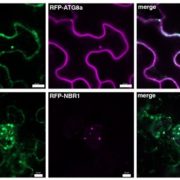
Bacteria exploit autophagy for proteasome degradation and enhanced virulence in plants (Plant Cell)
Blog, Plant Science Research WeeklyAutophagy has been defined as non-specific self-eating to obtain material that will be used for key processes within the cell. Even through authophagy has been demonstrated to be very important, its role during plant-bacteria interactions is not well known. Üstün et al. examined interactions between…
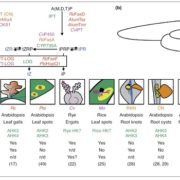
Review: Same tune, different song — cytokinins as virulence factors in plant–pathogen interactions? (COPB)
Plant Science Research WeeklyMany pathogens produce virulence factors that improve their pathogenicity, including in some cases compounds produced by the host, such as the hormone cytokinin. Spallek et al. review the various plant pathogens — spanning from bacteria to parasitic plants — that use cytokinins as virulence factors;…
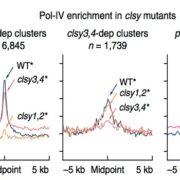
Stay CLASSY: Control of locus-specific de novo DNA methylation by the CLASSY family ($) (Nature Genet.)
Plant Science Research WeeklyDNA methylation is fundamental for genome function and stability, including regulation of gene expression, silencing of transposable elements and control of recombination. While the processes involved in maintenance of DNA methylation are generally well understood, the factors required for locus-specific…

Integration of two RAB5 groups during endosomal transport in plants (OA) (eLIFE)
Plant Science Research WeeklyRAB proteins are membrane-anchored proteins that coordinate and regulate vesicle trafficking. Plants contain two group of RAB5 proteins, canonical (ARA7, RHA1) and plant-specific (ARA6), which share a common activator, VPS9A (Vacuolar Protein Sorting 9A). Ito et al. used an activated (GTP-bound) version…
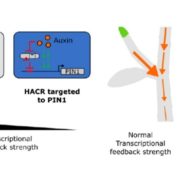
Synthetic hormone-responsive transcription factors can monitor and re-program plant development (eLIFE)
Plant Science Research WeeklyKhakhar et al. have developed a system by which genes can be made exquisitely responsive to specific hormones. They take advantage of the specificity of the guide DNA/Cas9 system, but use a deactivated (dCas9) enzyme that targets but does not cleave the target DNA. By fusing dCAS9 to a hormone-responsive…