

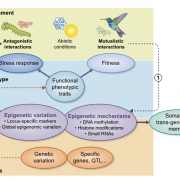
Review: The role of plant epigenetics in biotic interactions (New Phytol.)
Plant Science Research WeeklyPlant phenotypes are influenced by the nature and intensity of biotic interactions. While the role of genetic diversity has been extensively studied, contribution of epigenetics to plant fitness and response to biotic stresses remains elusive. The authors review here the most recent literature about…
What We're Reading: October 19th
WWR Full PostThis week's edition is guest edited by Matthias Benoit, a postdoctoral Research Associate at The Sainsbury Laboratory University of Cambridge. His research focuses on the developmental, environmental and epigenetic regulation of tomato retrotransposons. His favorite models of study are fruit development…

Recognizing Plant Physiology first authors: Cindy L. Sigler
Plant Physiology, Plant Physiology: Author ProfilesCindy L. Sigler, first author of Parts-prospecting For a High-efficiency Thiamin Thiazole Biosynthesis Pathway
Current Position: Graduate Research Fellow, University of Florida, Gainesville, Florida
Education: B.S. (2016) in Plant Science, University of Florida, Gainesville Florida
Non-scientific…

Stress Management: OsIDS1 Modulates Histone Deacetylation to Repress Salt Tolerance Genes
Plant Physiology, Plant Physiology: News and ViewsPlants evolved to react to the changing environment by developing sensing and signal transduction mechanisms, which ultimately lead to changes in gene expression and altered plant performance. Transcription factors (TFs) are key to regulating the expression of individual genes. TFs can confer sequence…

Polycomb Group Transcriptional Repressor: Suppress to Sustain
Plant Physiology, Plant Physiology: News and ViewsEvidence of epigenetic gene regulation in plant immunity was first reported in 1975 (Guseinov et al., 1975) with the demonstration that cytosine methylation is altered in response to pathogen infection. Since then, it has been established that pathogen infection influences DNA methylation and histone…
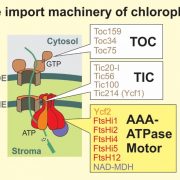
A Force-Generating Machine in the Plant's Power House: A Pulling AAA ATPase Motor Drives Protein Translocation into Chloroplasts
The Plant Cell, The Plant Cell: In BriefMost chloroplast proteins are encoded by the nuclear genome and synthesized on cytosolic ribosomes. N-terminal transit peptides serve as targeting sequences to direct precursors of chloroplast proteins to receptors on the chloroplast surface. These receptors are part of the translocase of the outer envelope,…
Inhibition of TOR, Nitrogen Assimilation, and Amino Acid Biosynthesis: Lessons from Chlamydomonas
The Plant Cell, The Plant Cell: In BriefTo survive, organisms must sense their nutritional status (including nutrient availability and quality) and regulate their growth and metabolism accordingly. In plants, animals, and fungi, the Target of Rapamycin (TOR) kinase regulates metabolism, nutrient sensing, and growth (reviewed in Dobrenel et…
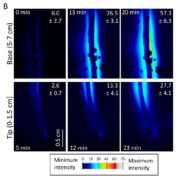
New Advances in the Imaging of Sugars
Plant Physiology, Plant Physiology: On The InsideThe in vivo imaging of sugars is useful for understanding how assimilated carbon, in the form of sugars, moves in plants and how this process is differentially regulated. Voothuluru et al. (10.1104/pp.18.00614) developed a gel-based enzyme-coupled colorimetric and fluorometric assay to image glucose…
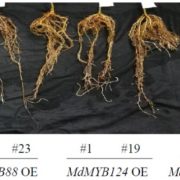
Transcription Factors and Apple Drought Tolerance
Plant Physiology, Plant Physiology: On The InsideWater deficit is one of the main limiting factors in apple (Malus × domestica) cultivation. Root architecture plays an important role in the drought tolerance of plants. Due to the difficulties associated with the visualization of root systems, however, there is currently a poor understanding of the…