

What We're Reading: November 2nd
WWR Full PostEditorial: The challenge of the post-truth era
Why do people persist in thinking that climate change is not happening, or that vaccines cause autism? Scientists need to find better ways to communicate about what we do. In this editorial from Nature Cell Biology, the authors point to the low science…

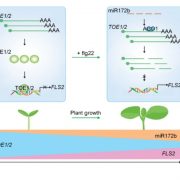
Salicylic Acid and Shade Avoidance
Plant Physiology, Plant Physiology: On The InsideIn response to shading, plants undergo a suite of developmental and physiological responses known as shade avoidance. In agricultural settings, dense planting can cause shade avoidance responses, thereby reducing yields due to changes in carbon allocation that favor stem elongation over seed, fruit,…

Temperature-Responsive RNA Metabolism Proteins in Algae
Plant Physiology, Plant Physiology: On The InsideGlobal climate change is currently affecting the growth and photosynthetic capacities of microalgae, which are major contributors to carbon fixation on Earth. The consequences of global climate change have already had dramatic effects on aquatic ecology. For example, thermal changes have led to coral…

The H+/K+ Antiporters of Endosomal Membranes
Plant Physiology, Plant Physiology: On The InsideThe plant endomembrane system is comprised of the endoplasmic reticulum (ER), the Golgi complex, trans-Golgi network (TGN), pre-vacuolar compartment (PVC) and vacuoles. The endomembrane system, by enabling protein modification and sorting, plays important roles in cell polarity, cytokinesis, cell wall…

Regulation of Cortical Microtubule Array Patterns
Plant Physiology, Plant Physiology: On The InsideThe plant cortical microtubule array is a dynamic self-organizing structure that controls the mechanics of plant growth by guiding the deposition of wall materials. While much is known about the properties of individual microtubules, the mechanism by which plant cells organize the cortical array into…
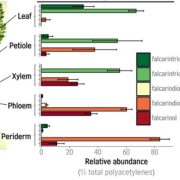
Polyacetylene Biosynthesis in Carrot
Plant Physiology, Plant Physiology: On The InsidePolyacetylenic lipids accumulate in various Apiaceae species after pathogen attack, suggesting
that they are naturally occurring pesticides and potential targets for crop improvement. These chemicals are also of interest because they exhibit cytotoxic activity against human cancer cell lines and slow tumor…
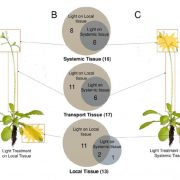
Local and Systemic Metabolic Responses in Response to Light Stress
Plant Physiology, Plant Physiology: On The InsideNot every leaf of a plant is subjected to the same light intensity or quality in nature. As a consequence, plants have evolved multiple signaling pathways to transduce light‐related signals between different leaves. These systemic acclimation processes optimize the overall light perception of the…

Recognizing Plant Physiology first authors: Irene Garcia
Plant Physiology, Plant Physiology: Author ProfilesIrene Garcia, first author of HCN regulates cellular processes through posttranslational modification of proteins by S-cyanylation
Current Position: Distinguished Researcher at the Institute of Plant Biochemistry and Photosynthesis (CSIC-Universidad de Sevilla) Seville, Spain.
Education: PhD in Biological…

Characteristics of the regulation of sweet sorghum stem stalk holding characteristics
The Plant Cell(This press release has been translated from the original)
In the evolution of plants, the production of vascular organizations is a major event. Vascular plants provide structural support and water transport to stems by producing xylem vessels, thickening secondary cell walls, and programmed cell…