

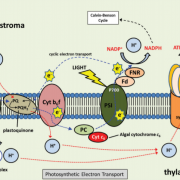
Review. Feeding the world: improving photosynthetic efficiency for sustainable crop production (J Exp Bot)
Plant Science Research WeeklyThe global population is estimated to rise by 2 billion by 2050 placing strains on major food crops. To sustainably feed future populations and reduce the environmental damage of intensive agriculture, crop yields must be improved without increasing the amount of cultivatable land. In this review, Simkin…
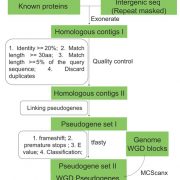
Evolutionary origins of pseudogenes and association with regulatory sequences (Plant Cell)
Plant Science Research WeeklyProtein-coding genes have undergone frameshifts, in-frame stop codons, and truncation to produce pseudogenes (Ψs), which had been thought to be non-functional. Recently, Ψs have been shown to play regulatory roles in gene expression by acting as a source of small interfering RNAs or sequestering microRNAs.…

Metabolism gene prediction using diversiform molecular features (PNAS)
Plant Science Research WeeklyAdvances in sequencing technologies enable scientists to obtain molecular features of genes in high-dimensionality. Features of individual gene like expression, methylation, histone modification, evolutionary signals and sequence itself provide high resolution for distinguishing annotated genes. In plant…
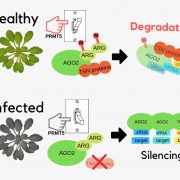
Dual regulation of Arabidopsis AGO2 by arginine methylation (Nature Comms)
Plant Science Research WeeklyPlants have natural mechanisms against pathogen infections. Post-translational modifications (PTMs) on key proteins involved in RNAi pathways are needed to control these immune responses. Argonaute (AGO) proteins are targets of PTMs to direct the silencing of genes. Here, Hu et al. identified the role…

Cell geometry determines symmetric and asymmetric division plane selection in Arabidopsis early embryos (PLOS Comp Biol)
Plant Science Research Weekly
Cells proliferate via symmetric divisions while asymmetric divisions are associated with new cell types, layers and developmental patterns. The correct orientation of cell divisions planes is required for plant tissue architecture and organ morphogenesis. In plants, previous attempts to predict division…
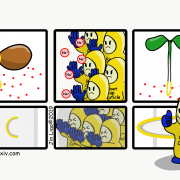
Cuticle is found in the root! The root cap cuticle protects young roots from abiotic stress and helps lateral root outgrowth (Cell) ($)
Plant Science Research WeeklyTo adapt to life on land, plants developed lipid-derived modifications on the surface of aerial organs (shoot). The cuticle forms a multi-layered structure of lipid components at the outermost surface of the organ to protect plant cells from environment stresses. Roots, as the organ specialized for the…
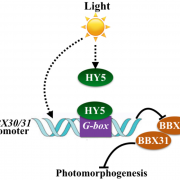
Two novel repressors of photomorphogenesis act downstream of HY5 in Arabidopsis (Plant Physiol)
Plant Science Research WeeklyHigher plants rely on a sophisticated photo-sensory system to cope with the vast variety of environmental stimuli. Under light conditions, young seedlings display photomorphogenic development to maxize the usage of light. Recently, YQ Heng et al. discovered two B-box containing proteins, BBX30 and BBX31,…
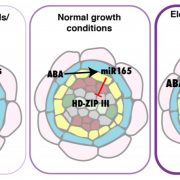
Root xylem formation and vascular acclimation to water deficit involves endodermal ABA signaling via miR166 ($) (Development)
Plant Science Research WeeklyAbiotic stress influences plant development, with the phytohormone ABA playing an important role. Ramachandran et al. have demonstrated ABA mediated activation of microRNA 166, which regulates expression levels of the HD-ZIP III transcriptional factor family. Exogenously supplied ABA alters xylem patterning…
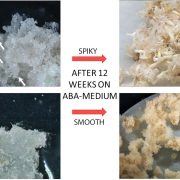
New approaches to optimize somatic embryogenesis in maritime pine (Front Plant Sci)
Plant Science Research WeeklyPinus pinaster Aiton, commonly known as maritime pine, is a coniferous tree, native to the Mediterranean region, and presently used as a model plant when studying coniferous trees due to the interest in its environmental adaptability. Maritime pine breeding programs use somatic embryogenesis, a biotechnological…