

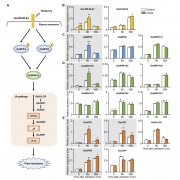
The volatile indole primes rice defense against caterpillar attack (Plant Cell)
Plant Science Research WeeklyHerbivore-induced volatiles have been shown to prime plant defense response in multiple species. A new study by Ye et al. unveils some of the early signaling events in volatile-mediated defense priming in rice. The authors show that rice plants release increased amounts of the volatile indole when attacked…
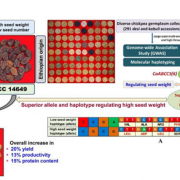
ABC transporter-mediated transport of glutathione conjugates enhances seed yield and quality in chickpea (Plant Physiol)
Plant Science Research WeeklyIdentifying the genetic determinants of yield and quality traits is essential for crop improvement. Chickpea is the third-most cultivated legume species and is a prominent source of protein to global consumers. Genetic improvement of chickpea, in terms of enhancing its seed size and weight, has been…
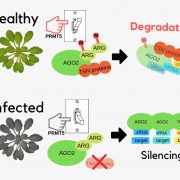
Plant Science Research Weekly: March 1
WWR Full PostReview: The metabolic response to drought ($)
Understanding environmental stress in plants is undoubtedly important due to the consequences of climate change in crop productivity and survival of plants. Metabolomics based on liquid chromatography and gas chromatography coupled to mass spectrometry…

How Stress Experience Strengthens a Tree
Research, The Plant Cell, The Plant Cell: In a NutshellGeorgii et al. uncover transcriptomic memory in poplar trees after recovery from drought-heat stress, which changes with stress frequency and intensity and involves a complex interplay of common and tissue-specific factors. Plant Cell https://doi.org/10.1105/tpc.18.00431
By Elisabeth Georgii…
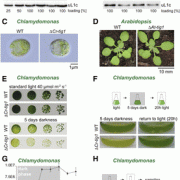
The Role of Trigger Factor in Chloroplasts
Plant Physiology, Plant Physiology: On The InsideChloroplasts contain a small genome that encodes only a minor fraction of approximately 60 to 100 proteins of the entire 3,000 proteins localized in the chloroplast. Chloroplast-encoded proteins, however, are major subunits of important protein complexes involved in gene expression and photosynthesis.…

A Calcium Sensor Involved in Salt Tolerance
Plant Physiology, Plant Physiology: On The InsideIt is estimated that 20% of irrigated land is negatively impacted by salt and 1% to 2% of irrigated land is lost each year due to the accumulation of salt. Salt, particularly sodium chloride (NaCl), negatively affects plant growth in several ways. The accumulation of salt in the soil restricts water…
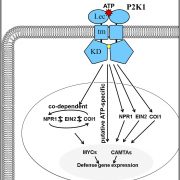
Extracellular ATP-Induced Transcriptome
Plant Physiology, Plant Physiology: On The InsideTransmembrane receptors monitor changes in extracellular ATP concentration in order to detect either the uncontrolled ATP release caused by the necrosis of nearby cells or to instigate active ATP release following pathogen detection. Extracellular ATP can be perceived, therefore, as a sign of damaged…

Desiccation Tolerance Arose via Gene Duplication
Plant Physiology, Plant Physiology: On The InsideDesiccation tolerance was a critical adaptation for the colonization of land by early nonvascular plants. Perhaps the most spectacular adaptations relating to vegetative dehydration tolerance are exhibited by “resurrection plants” that have the ability to recover from conditions of almost complete…

Light Acclimation in a Colonial Green Alga
Plant Physiology, Plant Physiology: On The InsideThe responses of leaves and unicellular algae to supra-optimal levels of light are well-studied but little is known about the responses of colonial algae to such stresses. To investigate differences between single cellular and colonial species, Van den Berg et al. (10.1104/pp.18.01499) have studied the…