


Recognizing Plant Physiology first authors: Laise Rosado-Souza
Plant Physiology, Plant Physiology: Author ProfilesLaise Rosado-Souza, first author of Appropriate thiamin pyrophosphate levels are required for acclimation to changes in photoperiod
Current Position: Postdoctoral Researcher at the Max Planck Institute for Molecular Plant Physiology, Germany
Education: PhD in Molecular Plant Physiology at Max Planck…

Transcription factors regulate wood formation
Research, The Plant Cell, The Plant Cell: In a NutshellChen et al. construct a transcriptional regulatory network governing wood formation. Plant Cell http://doi.org/10.1105/tpc.18.00620
By Hao Chen, Department of Plant and Microbial Biology, North Carolina State University
Jack Wang, Forest Biotechnology Group, Department of Forestry and Environmental…

Daily Rhythms of Leaf Hydraulics: a Matter of the Clock and Phosphorylation
Research, The Plant Cell, The Plant Cell: In a NutshellPrado et al. uncover a mechanism that tunes the hydraulics of leaf tissues to synchronize water supply with day and night cycles, thereby optimizing plant growth. Plant Cell https://doi.org/10.1105/tpc.18.00804
Background: Plants must cope with daily fluctuations in temperature, light, and humidity.…
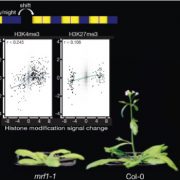
Phloem Companion Cell-Specific Transcriptomics and Epigenomics
Research, The Plant Cell, The Plant Cell: In a NutshellBy conducting phloem companion cell-specific transcriptomic and epigenomic analyses, You et al. identify MRF1, a novel regulator of flowering. Plant Cell https://doi.org/10.1105/tpc.17.00714
By Yuan You1,2 and Markus Schmid1,3
1 Max Planck Institute for Developmental Biology, Department of Molecular…
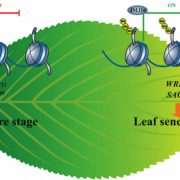
The Epigenetics of Leaf Senescence
Research, The Plant Cell, The Plant Cell: In a NutshellLiu et al. explore the mechanism underlying the epigenetic reprograming of senescence-associated gene expression during leaf senescence. Plant Cell https://doi.org/10.1105/tpc.18.00693
By Peng Liu, Jing Bo Jin, and Xiaofeng Cao, Chinese Academy of Sciences, Beijing, China.
Background: Leaf…

SME1 shapes plant development and freezing tolerance
Research, The Plant Cell, The Plant Cell: In a NutshellHuertas et al. show that SME1 modulates spliceosome activity to shape plant development and tolerance to freezing temperatures. Plant Cell https://doi.org/10.1105/tpc.18.00689
By Raúl Huertas, Noble Research Institute, Admore, Oklahoma, USA. Rafael Catalá, Centro de Investigaciones Biológicas-CSIC,…
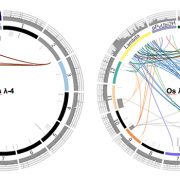
Impact of Biolistic Transformation on the Genome
Research, The Plant Cell, The Plant Cell: In a NutshellLiu et al. show that biolistic transformation can cause extensive damage and rearrangements, including deletions, duplications, chromosome fusions, and copy number variations. Plant Cell https://doi.org/10.1105/tpc.18.00613
By Jianing Liu and R. Kelly Dawe, Department of Genetics, University…
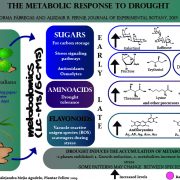
Review: The metabolic response to drought (J Exp Bot) ($)
Plant Science Research WeeklyUnderstanding environmental stress in plants is undoubtedly important due to the consequences of climate change in crop productivity and survival of plants. Metabolomics based on liquid chromatography and gas chromatography coupled to mass spectrometry (LC-MS, GC-MS) allows an understanding of the metabolic…
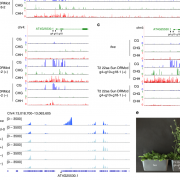
Site-specific manipulation of Arabidopsis loci using CRISPR-Cas9 SunTag systems (Nature Comms)
Plant Science Research WeeklySteve Jacobsen’s group has been developing a broad range of synthetic biology tools to interrogate DNA-methylation in plants (see Gallego-Bartolomé et al., 2018, and Gallego-Bartolomé et al., 2019). Among them, they use the CRISPR-Cas9 SunTag system, in which the dCas9 protein is fused to SunTag,…