

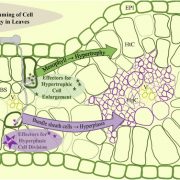
Cell type specific transcriptional reprogramming during Ustilago maydis and maize interaction (bioRxiv)
Plant Science Research Weekly
Ustilago maydis is a model biotrophic fungus which causes smut disesase in maize, characterized by tumorous symptoms on all aerial parts. Tumor formation in leaves of the host is a result of massive reprogramming by modulation of two processes, hypertrophy (cell expansion) and hyperplasia (cell division).…
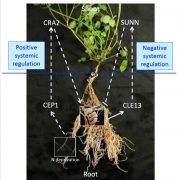
Two opposing pathways independently regulate symbiotic nodulation in Medicago truncatula ($) (Plant Physiol)
Plant Science Research WeeklyTo optimize usage of nutrient, legumes utilize multiple strategies to regulate root nitrogen-fixing symbiotic nodulation. Excessive nodulation may hamper plant’s normal growth, so fine-tuning it is important for plant survival. Laffont et al. report that there are two independent pathways systematically…
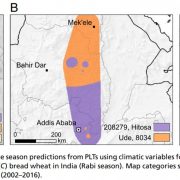
Crop variety management for climate adaptation supported by citizen science (PNAS)
Plant Science Research WeeklyCurrent research is focused on developing better crop varieties that could withstand the adversities posed by climate change; however, these varieties might perform worse than the locally-grown varieties in field conditions. This could be due to the release of varieties to farmers without performing…

Plant Science Research Weekly: March 8th
WWR Full PostReview: Evolutionary and ecological insights from herbicide resistant weeds: what have we learned about plant adaptation, and what is left to uncover?
Weeds represent a problem for the economy due to their easy resistance of pesticides, but they are also a model for adaptation, ecology and evolution.…

Recognizing Plant Physiology first authors: Jan Gunther
Plant Physiology, Plant Physiology: Author ProfilesJan Gunther, first author of Separate pathways contribute to the herbivore-induced formation of 2-phenylethanol in Populus trichocarpa
Current Position: PhD student at the Max Planck Institute for Chemical Ecology
Education: Master of Science in Biochemistry (Friedrich-Schiller-University Jena),…

Recognizing Plant Physiology first authors: Uri Hochberg
Plant Physiology, Plant Physiology: Author ProfilesUri Hochberg, first author of Visualizing embolism propagation in gas-injected leaves
Current Position: Researcher in Department of Soil Water and Environmental sciences, Agriculture Research Organization, Volcani Center, Israel
Education: Ph.D in Ben Gurion University of the Negev
Non-scientific…
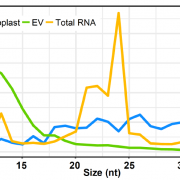
tyRNA Bubbles: Extracellular Vesicles Carry 10–15-nt Small RNAs and Specific Groups of MicroRNAs
Research, The Plant Cell, The Plant Cell: In BriefPlant and animal cells produce various types and sizes of extracellular vesicles (EVs). Mammalian EVs function in intercellular communication and plant EVs carry defense compounds, defense-related proteins, and RNAs and participate in the defense against fungal pathogens (reviewed in Hansen and Nielsen,…

Recognizing Plant Cell first author: Xiaoying Li
The Plant Cell, The Plant Cell: Author ProfilesXiaoying Li, first author of ETR1/RDO3 Regulates Seed Dormancy by Relieving the Inhibitory Effect of the ERF12-TPL Complex on DELAY OF GERMINATION1 Expression
Current Position: Postdoctoral fellow, Key Laboratory of Plant Molecular Physiology, Institute of Botany, Chinese Academy of Sciences, Beijing,…
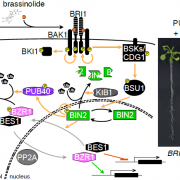
Plants on (Brassinos)steroids: Degradation of the Transcription Factor BZR1 by the E3 Ubiquitin Ligase PUB40
Research, The Plant Cell, The Plant Cell: In BriefBrassinosteroids (BR) are the only plant hormones with an animal counterpart: steroid hormones. Analysis of BR signaling demonstrated that steroid receptors could reside at the plasma membrane and modulate growth and gene expression, an observation that is now becoming appreciated in non-plant systems…