


Recognizing Plant Cell first author: Pablo Ignacio Calzadilla
The Plant Cell, The Plant Cell: Author ProfilesPablo Ignacio Calzadilla, co-first author of The cytochrome b6f complex is not involved in cyanobacterial state transitions
Current Position: Postdoctoral researcher, Kirilovsky lab, Institute for Integrative Biology of the Cell (I2BC), CEA, CNRS, Gif sur Yvette, France
Education: PhD in Biological…

An RNA splicing factor functions in plant seed development
Research, The Plant Cell, The Plant Cell: In a NutshellBai et al. show that an RNA splicing factor promotes normal cell differentiation and stops excessive cell proliferation in the corn kernel.
Plant Cell https://doi.org/10.1105/tpc.18.00754
By Fang Baia, Jacob Corllb, and A. Mark Settlesa
aHorticultural Sciences Department and Plant Molecular…
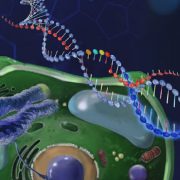
Pseudogenes in Plants: Their Associations with Long Noncoding RNAs and MicroRNAs
Research, The Plant Cell, The Plant Cell: In a NutshellXie et al. applied a multifaceted approach to study plant pseudogenes, combining RNA-seq, comparative genomics, and molecular biology. They conclude that rapid rewiring of psuedogene transcriptional regulatory regions is a major mechanism driving the origin of novel regulatory modules. Plant Cell https://doi.org/10.1105/tpc.18.00601
Background:…
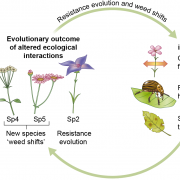
Review: Evolutionary and ecological insights from herbicide resistant weeds (New Phytol)
Plant Science Research WeeklyWeeds represent a problem for the economy due to their easy resistance of pesticides, but they are also a model for adaptation, ecology and evolution. In this review Baucom focusses on three areas: the genetic basis of adaptation, evolutionary constraints, and experimental evolution. Weed resistance…

Review: Alternate grassy ecosystem states are determined by palatability-flammability trade-offs ($) (Trends Ecol Evol)
Plant Science Research WeeklyGrassy ecosystems tend towards two stable states. One, the grazing-lawn state, is dominated by shoter grasses that thrive when grazed by herbivores, and the other, the fire-grass state, is dominated by taller grasses thrive when periodically controlled by burning. The flux between fire-grass and grazing-lawn…
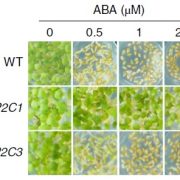
An aberrant protein phosphatase 2C confers abscisic acid tolerance and drives high transpiration during drought conditions in a parasitic plant, Striga ($) (Nature Plants)
Plant Science Research WeeklyStriga hermonthica is a parasitic plant which infects major crops in arid environments. The rate of transpiration in Striga is higher than that of the host plant, thus maintaining a water potential gradient from the host to the Striga plant. Until recently, the exact mechanism has been poorly understood.…
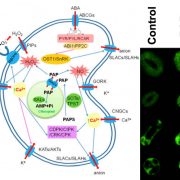
Evolution of chloroplast retrograde signaling facilitates green plant adaptation to land (PNAS)
Plant Science Research WeeklyThe evolution of signaling pathways in plants enabled the water to land transition, during which drought response was crucial for the adaptation to terrestrial habitats. Here, Zhao et al. reveal the role of drought- induced phosphoadenosine (PAP) in the regulation of abscisic acid (ABA) synthesis in…

Synergistic pectin degradation and guard cell pressurization underlie stomatal pore formation
Plant Science Research Weekly
This is a very interesting paper published by Rui et al. on the molecular mechanisms for stomatal pore formation, which includes pore initiation followed by pore enlargement. Each pore is surrounded by a pair of guard cells, which regulate the aperture of the pore and control gas exchange and water…

NERD1, a novel regulator of ovule number in Arabidopsis (PLOS Genetics)
Plant Science Research WeeklySeed number is a critical component of crop yield; the number of ovules determines the number of seeds. Ovule initiation in the carpel margin meristem (CMM) is controlled by genetic (i.e., AINTEGUMENTA, LEUNIG, SEUSS) and hormonal factors (auxins, cytokinins, gibberellins, and brassinosteroids). Most…