

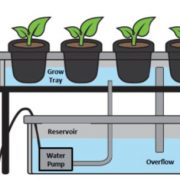
A diversity of traits contributes to salinity tolerance of wild Galapagos tomatoes seedlings (bioRxiv)
Plant Science Research WeeklyDomestication has been accompanied by a decrease in genetic diversity, so efforts to improve stress tolerance can be aided by exploring the crop’s wild relatives. Here, Pailles et al. examined salt tolerance in Galapagos tomatoes (Solanum cheesmaniae and Solanum galapagense), which grow “constantly…
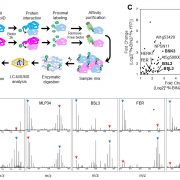
Application of TurboID-mediated proximity labeling for mapping a GSK3 Kinase signaling network in Arabidopsis (bioRxiv)
Plant Science Research WeeklyIn this preprint Kim et al., have provided an optimized method for determining protein-protein interaction in plants using TurboID-mediated labelling. TurboID is an engineered promiscuous biotin ligase that marks proteins it comes in contact with. Identification of interacting partners of a protein…
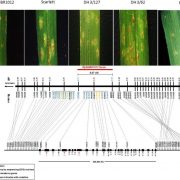
High resolution mapping of RphMBR1012 conferring resistance to Puccinia hordei in barley (Front Plant Sci)
Plant Science Research WeeklyBarley leaf rust (Puccinia hordei) is a biotrophic fungus, in which mutations cause newly virulent races (pathothypes) with severe effects on cultivars. Marker-assisted Selection for Rph (Resistance to P. hordei) genes has been studied to provide sustainable control of this disease. Fazlikhani et al.…
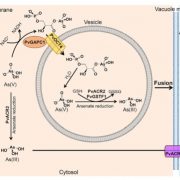
A simple arsenic detoxification strategy in the fern Pteris vittata ($) (Curr Biol)
Plant Science Research WeeklyArsenic contamination is a growing human health threat. The fern Pteris vittata demonstrates a remarkable capacity to accumulate and sequester high levels of the toxic heavy metal arsenic from contaminated environments. Cai et al. used an ‘omics’-guided approach to identify and characterize the molecular…

Plant Science Research Weekly: May 31st
WWR Full PostReview: Integration of sulfate assimilation with C and N metabolism in transition from C3 to C4 photosynthesis
“Cysteine (HO2CCH(NH2)CH2SH) synthesis is the converging point of the three major pathways of primary metabolism: carbon, nitrate, and sulfate assimilation.” These metabolic connections…

Roles of the clock in controlling starch metabolism
Plant Physiology, Plant Physiology: News and Views, ResearchAuthor: Masanori Izumi
Affiliation: Frontier Research Institute for Interdisciplinary Sciences, Tohoku University, Sendai 980–8578, Japan
Plants are photoautotrophs that grow via photosynthetic energy production. Under irradiation, chloroplasts in the plant’s green tissues convert light energy…

Structure of Methylthioalkylmalate Synthase
Research, The Plant Cell, The Plant Cell: In a NutshellKumar et al. uncover the molecular basis for the diversification of the agriculturally important methionine-derived glucosinolates in plants. Plant Cell https://doi.org/10.1105/tpc.19.00046
Background: The chemical diversity of specialized metabolites in plants helps them to better adapt and survive…

Six Days, Seven Nights: The Transcriptional Speed of Seed Development
Research, The Plant Cell, The Plant Cell: In BriefThe development of the seed is a complex dance of cell division and differentiation, including transcriptional and genomic repatterning. Measuring gene expression by high-throughput RNA-Seq is routine in laboratories, and numerous seed transcriptomes and microarrays have long been published for maize…
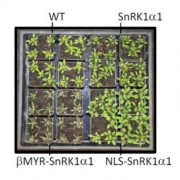
Default activation and nuclear translocation of the plant cellular energy sensor SnRK1 ($) (Plant Cell)
Plant Science Research WeeklyWhen I’m using my laptop without it being plugged in, at some point it enters battery saving mode as it senses that the battery charge is getting low. Organisms also sense their low energy reserves and activate alternate metabolic processes to ensure survival. The core energy sensor is a hetero-trimeric…