


Recognizing Plant Direct first authors: Sumio Iwai
Plant Direct, Plant Direct: Author ProfilesSumio Iwai, first author of Guard cell photosynthesis is crucial in abscisic acid-induced stomatal closure
Current Position: Professor Emeritus, Kagoshima University, Japan
Education: Ph.D. in Plant Nutrition, Agricultural Chemistry, Kyusyu University, Japan
Non-scientific Interests: Baseball,…

Recognizing The Plant Cell first authors: Lu Li
The Plant Cell, The Plant Cell: Author ProfilesLu Li, first author of DGD1 SUPPRESSOR 1 is a subunit of mitochondrial contact site and cristae organizing system in Arabidopsis thaliana and affects mitochondrial biogenesis
Current Position: Postdoctor in School of life science, Shandong University, China
Education: PhD in Botany, School of life…

Recognizing Plant Physiology first authors: Jordan Zager
Plant Physiology, Plant Physiology: Author ProfilesJordan Zager, first author of Gene Networks Underlying Cannabinoid and Terpenoid Accumulation in Cannabis
Current Position: President, Co-Founder Dewey Scientific
Education: B.Sc. Biochemistry & Molecular Biology; B.Sc. Biology; PhD Molecular Plant Sciences
Non-scientific Interests: Skiing,…
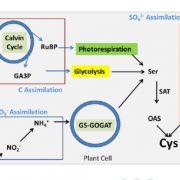
Review: Integration of sulfate assimilation with C and N metabolism in transition from C3 to C4 photosynthesis (J Exp Bot)
Plant Science Research Weekly“Cysteine (HO2CCH(NH2)CH2SH) synthesis is the converging point of the three major pathways of primary metabolism: carbon, nitrate, and sulfate assimilation.” It’s hard enough to coordinate two pathways, let alone three; but these metabolic connections are revealed in that a deficiency in one nutrient…
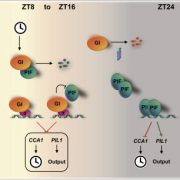
Multi-level modulation of light signaling by GIGANTEA regulates both the output and pace of the circadian clock ($) (Devel Cell)
Plant Science Research WeeklyThe daily cycle of light and dark controls many facets of plant growth and development, but these cycles depend on and are most efficient when integrated with the rhythms of the circadian clock. Nohales et al. have identified a key mechanism that directly links the regulation of light-responsive genes…

Accelerated flowering time reduces lifetime water use without penalizing reproductive performance in Arabidopsis (Plant Cell Environ)
Plant Science Research WeeklyAs climate change proceeds, the availability of fresh water is decreasing. Luckily, the variation in water use efficiency within and between species provides tools necessary to breed plants for future climate. However, water use is often studied at the vegetative level. Ferguson et al. observed that…

Three-dimensional time-lapse analysis of maize root system archictecture (Plant Cell)
Plant Science Research WeeklyRoot system architecture (RSA) profoundly affects plant nutritent uptake and response to drought, and is also famously extremely developmental plastic, which makes it difficult to identify genes that control root growth traits. Here, Jiang et al. analyzed 3D growth patterns over time of three maize lines…

GRANAR, a new computational tool to better understand the functional importance of root anatomy (bioRxiv)
Plant Science Research WeeklyUptake of water by plants depends on root conductivity, which in turn is determined by hydraulic properties of individual cells and cell anatomy. Quantification of radial root anatomy is a time-consuming process, limiting our understanding of root anatomical features contributing to water uptake. Heymans…

A growth-based framework for leaf shape development and diversity (Cell)
Plant Science Research WeeklyThe leaf shape is one of the features defining the diversity in the plant kingdom. However, it is still not understood how action of individual genes is linked to this morphological diversity. Kierzkowski et al. developed an imaging protocol to study the leaf primodium development to understand the cellular…