


Phosphorylation-mediated dynamics of nitrate transceptor NRT1.1 regulate lateral root growth (Plant Physiol)
Plant Science Research WeeklyNitrate is an important plant nutrient and multiple transporters have been identified in different plant species. NRT1.1 (NITRATE TRANSPORTER 1.1) belonging to the MFS (Major Facilitator Superfamily) has been shown to transport nitrate and auxin (IAA, Indole 3-acetic acid). This dual affinity transporter…
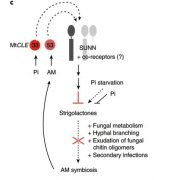
A CLE–SUNN module regulates strigolactone content and symbiosis (Nature Plants)
Plant Science Research WeeklyThe symbiosis between plants and arbuscular mycorrhizal fungi is conditional. Plants that are limited for phosphate release strigolactones into the soil, promoting changes in the fungi that facilitate the symbiosis. Müller et al. found that a Medicago gene encoding a CLE peptide, MtCLE53, is induced…
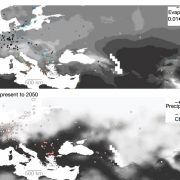
Natural selection on the Arabidopsis thaliana genome in present and future climates (Nature)
Plant Science Research WeeklyThe rapidly changing climate will have profound effects on Earth’s ecosystems, but as yet it is difficult to determine exactly what these effects will be. Exposito-Alonso et al. have set up a large experiment to try to identify how a population’s genetic diversity will enable it to survive a future…
Plant Science Research Weekly: September 6th
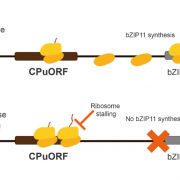
Blog, WWR Full PostReview: Metabolite control of translation by conserved peptide uORFs: The ribosome as a metabolite multi-sensor
Not all mRNAs are translated equally. Between 25–50% of eukaryotic mRNAs have an upstream open reading frame (uORF) that affects translation of the main ORF (mORF). Usually the presence…
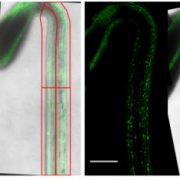
Light Triggers the Search for Light
Plant Physiology, Plant Physiology: News and Views, ResearchPlants rely on light for photosynthesis. As a consequence, plant growth is strongly shaped by light availability, to optimize photon absorbance in the green tissues. Seedlings that germinated underground grow quickly to escape from the darkness, while plants that are threatened to be overgrown by neighbors…
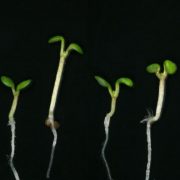
Avoiding Shade to Grow Taller but Not Always Stronger: Phytochrome–Jasmonic Acid Interplay
Research, The Plant Cell, The Plant Cell: In BriefThe environment plays a major role in determining whether, when, and how growth occurs, and resource allocation towards growth is an important factor in many contexts. For example, plants whose defenses against pathogens are activated often grow less, and plants that must grow taller to reach the light…

Date Palm Germination: Mysteries Unlocked
Research, The Plant Cell, The Plant Cell: In a NutshellXiao et al. investigate date palm germination. Plant Cell (2019) https://doi.org/10.1105/tpc.19.00008
By Ting Ting Xiao and Ikram Blilou
Background: Desert plants have evolved different strategies to survive desert climate. Developmental mechanisms underlying these adaptive strategies…
Recognizing Plant Physiology first authors: Charlotte Volpe
Plant Physiology, Plant Physiology: Author ProfilesCharlotte Volpe, co-first author of Loss of ALBINO3b insertase results in a truncated light-harvesting antenna in diatoms
Current Position: PhD candidate at the Department of Biotechnology and Food Science - Norwegian University of Science and Technology (NTNU) – Trondheim, Norway
Education: PhD…
Recognizing Plant Physiology first authors: Marianne Nymark
Plant Physiology, Plant Physiology: Author ProfilesMarianne Nymark, co-first author of Loss of ALBINO3b insertase results in a truncated light-harvesting antenna in diatoms
Current Position: Research scientist at the Cell, Molecular Biology and Genomics group at the Norwegian University of Science and Technology (NTNU)
Education: PhD in Biology from…