


UMP pyrophosphorylase-a moonlighting protein with essential functions in chloroplast development and photosynthesis establishment
Plant Physiology, Plant Physiology: News and Views, ResearchPyrimidine nucleotides (e.g., dCTP, dTTP, UTP, and CTP) are essential building blocks for DNA and RNA synthesis in all organisms. In plants, sucrose and cell wall polymer synthesis depend on pyrimidine nucleotide-derived substrates, such as UDP-glucose, and important classes of membrane lipids are made…
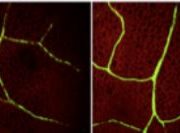
Moving on Up: An MCTP-SNARE Complex Mediates Long-distance Florigen Transport
Research, The Plant Cell, The Plant Cell: In BriefFlowering plants integrate endogenous and external cues to accurately time the transition from vegetative to reproductive growth (Cho et al., 2017). Many plants, including Arabidopsis thaliana, sense changes in day length (photoperiod) to transition to flowering as the season changes. Decades of careful…
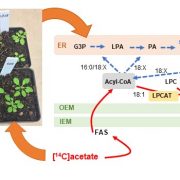
The “Ins and Outs” of ER–Chloroplast Lipid Trafficking
Research, The Plant Cell, The Plant Cell: In a NutshellKarki et al. revisit the long-standing question of how and where lipid trafficking occurs during galactolipid synthesis. They report evidence for metabolically distinct pools of phosphatidylcholine, suggesting an underlying spatial organization in the ER–chloroplast metabolic interactions. Plant Cell…

Heat shock proteins support refolding and shredding of misfolded proteins
Plant Physiology, Plant Physiology: News and Views, ResearchAuthor: Masanori Izumi
Affiliation: RIKEN Center for Sustainable Resource Science, Wako 351-0198, Japan
Newly synthesized proteins must be folded to form their proper 3D structures. Stresses perturb protein folding, thereby leading to the hyperaccumulation of misfolded or aggregated proteins. Such…
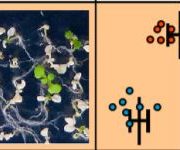
Developmental timing is everything (part II): gating of high temperature responses by the circadian clock
Research, The Plant Cell, The Plant Cell: In BriefArabidopsis thaliana seedlings exposed to heat stress (>42ºC) suffer high lethality rates unless exposed to milder heat (37ºC) beforehand. This pre-exposure distinguishes basal from acquired thermotolerance and has been extensively studied over the years. However, experimental conditions used to…

Gene Responsible for Lutein Esterification in Bread Wheat Identified
Blog, The Plant Cell: NewsResearchers have identified and confirmed the gene responsible for lutein esterification in bread wheat. The activity of this gene controls the timing of esterification in grain, which is related to storage and nutritional qualities of bread wheat and other grains.
Researchers Jacinta Watkins and Barry…
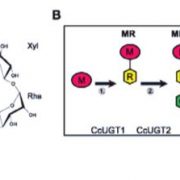
How plants and synthetic biology could help us fight diabetes
Plant Physiology, Plant Physiology: News and Views, ResearchDr. Raimund Nagel
Iowa State University
Plants produce a plethora of natural products that function as defensive compounds are frequently used by humans for medicinal purposes. A majority of these natural products, however, are either found in low concentrations, in slow growing plants, or are…

Recognizing Plant Physiology first authors: Dorota Kawa
Plant Physiology, Plant Physiology: Author ProfilesDorota Kawa, first author of SnRK2 protein kinases and mRNA decapping machinery control root development and response to salt
Current Position: Postdoctoral researcher, Plant Biology & Genome Center, University of California, Davis
Education: PhD University of Amsterdam, the Netherlands (2017);…

Illuminating photosynthesis in the mesophyll of diverse leaves
Plant Physiology, Plant Physiology: News and Views, ResearchMeisha Holloway-Phillips
Department of Environmental Sciences, University of Basel, Switzerland
[email protected]
Since Terashima and Saeki (1983) demonstrated that light attenuation through the leaf was accompanied by spectral changes, there has been increasing interest in how light…