


Ongoing accumulation of plant diversity through habitat connectivity in an 18-year experiment ($) (Science)
Plant Science Research WeeklyDuring the course of time, we have realized the importance of biodiversity for the maintenance of the ecosystem. However, the world has already been fragmented in small parts which resulted in a huge loss of habitat and threatening to biodiversity. Habitat connectivity, which means the degree to which…

A phyB-PIF1-SPA1 kinase regulatory complex promotes photomorphogenesis in Arabidopsis (OA) (Nature Communications)
Plant Science Research WeeklyCONSTITUTIVE PHOTOMORPHOGENIC 1 (COP1) is one of the best characterized E3 ubiquitin ligases with broad roles as a central repressor of light signaling in plants to cancer biology in mammals. In plants, COP1 interacts with SUPPRESSOR OF PHYA-105 1 family members (SPA1-SPA4) and forms a stable COP1/SPA…

BZU2/ZmMUTE controls symmetrical division of guard mother cell and specifies neighbor cell fate in maize (OA) (PLOS Genetics)
Plant Science Research WeeklyStomatal development has been studied thoroughly in the dicot model plant Arabidopsis thaliana, but stomatal development fundamentally differs between dicot and monocot for the subsidiary cells, a pair of dumbbell-shaped cells adjacent to the guard cell, formation. In this study, Wang et al., identified…
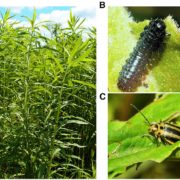
Insect herbivory selects for volatile-mediated plant-plant communication ($) (Current Biology)
Plant Science Research WeeklyPlants release volatile organic compounds (VOCs) in response to insect herbivory. The potential for VOCs to serve as diffusible signals has long been recognized. For example, VOCs can signal neighbors to prime for defense, signal distant parts of the emitting plant, and even attract predatory insects…
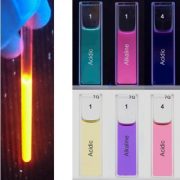
Auronidins are a previously unreported class of flavonoid pigments that challenge anthocyanin biosynthesis evolved in plants (OA) (PNAS)
Plant Science Research WeeklyPlants produce pigments as a protective strategy against biotic and abiotic stress. In angiosperms, anthocyanins are the main flavonoids that play a role in this function. As the early-diverging land plant, Marchantia polymorpha also produces red pigments in response to environmental conditions, it was…

The bracteatus pineapple genome and domestication of clonally propagated crops (OA) (Nature Genetics)
Plant Science Research WeeklyYou probably know well the sweet and yellow “smooth cayenne” pineapple (Ananas comosus). This fruit was domesticated a few millennia ago in South America. Pineapple domestication targeted fiber production, color, and sugar accumulation. How it happened remained mysterious. To resolve this mystery,…
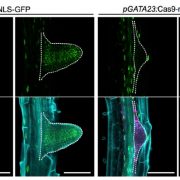
CRISPR-TSKO: A technique for efficient mutagenesis in specific cell types, tissues, or organs in Arabidopsis ($) (Plant Cell)
Plant Science Research WeeklyThe ability to introduce base-specific changes through CRISPR/Cas9 gene editing has given scientists fantastic tools with which to understand and modify the genes that control plant development and physiology. New tools and refinements to this toolkit are being developed rapidly. In this new work, Decaestecker…

Genome editing retraces the evolution of toxin resistance in the monarch butterfly ($) (Nature)
Plant Science Research WeeklyWhen a few species from several distantly related groups produce a similar but unusual trait, we usually assume that this trait is an example of convergent evolution; starting from different places but ending up at the same place. The ability to eat plants that produce cardiac glycosides, which are toxic…
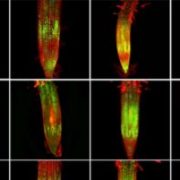
The same but different: CoMoVa, an algorithm to identify functional variation in cis regulatory elements
Research, The Plant Cell, The Plant Cell: In BriefTranscription factors (TFs) act through TF binding sites (TFBSs) to control the transcription of associated genes. TFBSs are short and degenerate sequences that are often depicted using a Position Weight Matrix, which contain invariant nucleotides that are crucial for TF binding and variable nucleotides…