


Mesostigma viride genome and transcriptome provide insights into the origin and evolution of Streptophyta (Adv. Sci)
Plant Science Research WeeklyMulticellularity has arisen independently many times across the eukaryotic tree of life (e.g., in plants, animals and fungi). Comparisons of green algae with land plants is likely to identify the genetic toolkit of multicellularity as well as the colonization of terrestrial habitats. Here, Liang et al.…

A MYC-dependent transcription factor network regulates water spray-responsive gene expression and jasmonate levels ($) (PNAS)
Plant Science Research WeeklyPlants perceive and respond to touch and other physical contact including wounding. Van Moerkercke et al. explored the network of rapid gene responses to a gentle water spray, simulating rainfall. Many of these mecho-induced genes are also responsive to jasmonate, the hormone involved in response to…
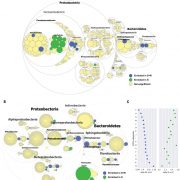
Pathogen-induced activation of disease-suppressive functions in the endophytic root microbiome ($) (Science)
Plant Science Research WeeklyDisease-suppressive soils have long been known, although it hasn’t always been clear how they function. Previous studies have suggested that soil microbes are responsible for disease suppression, because the suppressive property can be transferred to other soils and is lost when soil is sterilized.…
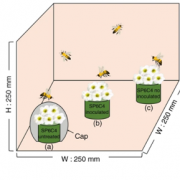
A mutualistic interaction between Streptomyces bacteria, strawberry plants and pollinating bees (Nature Comms)
Plant Science Research WeeklySome species of Streptomyces bacteria produce antimicrobial compounds that have been shown to enhance plant resistance to pathogens. Kim et al. show that his protection can extend to a pollinator. The Streptomyces defends the plant against Botrytis cinerea and protects the bees against insect pathogens…
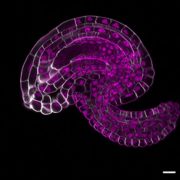
Protocol for rapid clearing and staining of fixed Arabidopsis ovules for improved imaging by confocal laser scanning microscopy (Plant Methods)
Plant Science Research WeeklyThis is a very interesting paper that provide a new, fast and easy protocol, with specific step-by-step instructions, for a trustworthy imaging with cellular resolution of fixed Arabidopsis ovules at different developmental stages. The authors combine two previously outlined techniques: clearing of fixed…
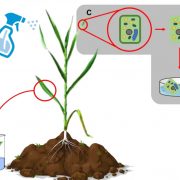
Gene-editing in somatic cells can be achieved by spray-on of carbon dots (bioRxiv)
Plant Science Research WeeklyIt’s known to all that plant biotechnology can enhance food security, but there are also inevitable disadvantages of these new approaches. At present, introducing DNA into a plant genome is slow and expensive. Recently, Doyle et al. developed a new method which claims to be simple, inexpensive, fast,…
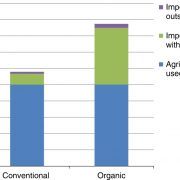
The greenhouse gas impacts of converting food production in England and Wales to organic methods (Nature Comms)
Plant Science Research WeeklyMany discussions about organic food production are dominated by dogma rather than pragmatism. Nevertheless, here’s a useful report that examines the impact of organic farming methods in England and Wales on greenhouse gas (GHG) emissions. Are the well-documented lower yields offset by differences in…
Plant Science Research Weekly: November 8
Blog, WWR Full PostReview: Exchange of small regulatory RNAs between plants and their pests
Trans-species small RNAs are the latest class in the family of signals that move between plants and their attackers. Hudzik et al. review this topic, covering small RNAs that move from plant to pest and from pest to plant. The…
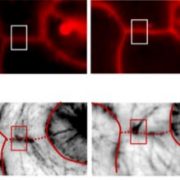
Seeing the Cell Wall in a New Light
Plant Physiology, Plant Physiology: News and Views, ResearchSidney L. Shaw
Dept. of Biology (and Physics), Indiana University, Bloomington, IN 47405
[email protected]
How cell expansion is controlled to achieve a specific cell morphology remains one of the frontier questions in plant biology. The carefully guided extension of the plant…