


Reciprocal cybrids reveal how organellar genomes affect plant phenotypes (Nature Plants)
Plant Science Research WeeklyA cybrid is a cytoplasmic hybrid; in other words, a cell or organism in which the cytosolic genomes (mitochondria and plastid) have a different origin than the nuclear genome; the nuclear genome is inherited solely from the paternal parent, and the cytosolic genomes from the maternal parent. Starting…
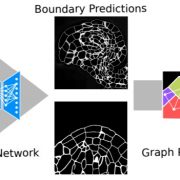
Accurate and versatile 3D segmentation of plant tissues at cellular resolution (bioRxiv)
Plant Science Research WeeklyAdvances in microscopy allow biologists to document and understand phenotypic changes at the tissue level. Despite this advancement, analysis of microscopic images to characterize changes in phenotypes is still under development. In this paper, Wolny et al. have developed an image analysis tool PlantSeg…
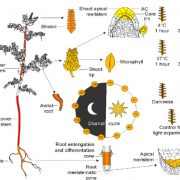
Expression atlas of Selaginella moellendorffii provides insights into the evolution of vasculature, secondary metabolism, and roots (Plant Cell)
Plant Science Research WeeklyLycophytes, including the model species Selaginella moellendorffii, are extant (still alive today) seedless vascular plants that were particularly abundant around 400-300 million years ago (and major contributors to the formation of coal). To further understand the biology of some of these oldest extant…
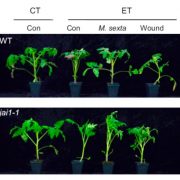
Insect herbivory antagonizes leaf cooling responses to elevated temperature in tomato (PNAS)
Plant Science Research WeeklyPlants have strategies to cool themselves when the temperature is hot. These include increasing their rate of transpirational cooling through stomatal opening and raising their leaves, which can enhance air flow. Previous studies have shown a role for the heat shock proteins (HSPs) and their cochaperone…
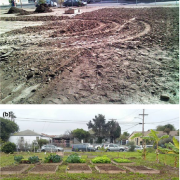
Monitoring and mitigation of toxic heavy metals and arsenic accumulation in food crops: A case study of an urban community garden (Plant Direct)
Plant Science Research WeeklyUrban gardens are a great way to introduce people to plant science, to bring fresh food into areas underserved by grocery stores (“food deserts”), and can promote a sense of community. But as Cooper et al. observe, many potential sites can be contaminated with heavy metals (lead, cadmium) and metalloids…
Plant Science Research Weekly: February 7
Blog, WWR Full PostReview. Gossypium genomics: Trends, scope, and utilization for cotton improvement
Cotton (Gossypium spp.) provides the world’s most important natural fiber, and I suspect with our growing realization of the problems with plastics there will be still more demand for it. Yang et al. review the current…

Endosymbiotic Pseudomonas stutzeri within Rhodotorula mucilaginosa JGTA-S1
Research, The Plant Cell, The Plant Cell: In a NutshellPaul, Saha, et.al investigated the Improvement of nitrogen nutrition in rice by interaction with the basidiomycete Rhodotorula mucilaginosa and its N2-fixing endobacteria. Plant Cell https://doi.org/10.1105/tpc.19.00385
By Karnelia Paul1, Chinmay Saha1,2,3 and Anindita Seal1
1Department of Biotechnology…

Recognizing Plant Physiology authors: María José Sánchez-Barrena
Plant Physiology, Plant Physiology: Author ProfilesMaría José Sánchez-Barrena, first author of Recognition and activation of the plant AKT1 potassium channel by the kinase CIPK23
Current Position: Associate Scientist, Department of Crystallography and Structural Biology, Institute “Rocasolano”, Spanish National Research Council, Madrid, Spain
Education:…

Recognizing Plant Direct authors: Nitya Subrahmanian
Plant Direct, Plant Direct: Author ProfilesNitya Subrahmanian, first author of Chlamydomonas reinhardtii as a plant model system to study mitochondrial complex I dysfunction
Current Position: Post-doctoral researcher at The Ohio State University, Columbus, OH
Education: Ph.D. in Plant Cellular and Molecular Biology at The Ohio State University,…